
Description
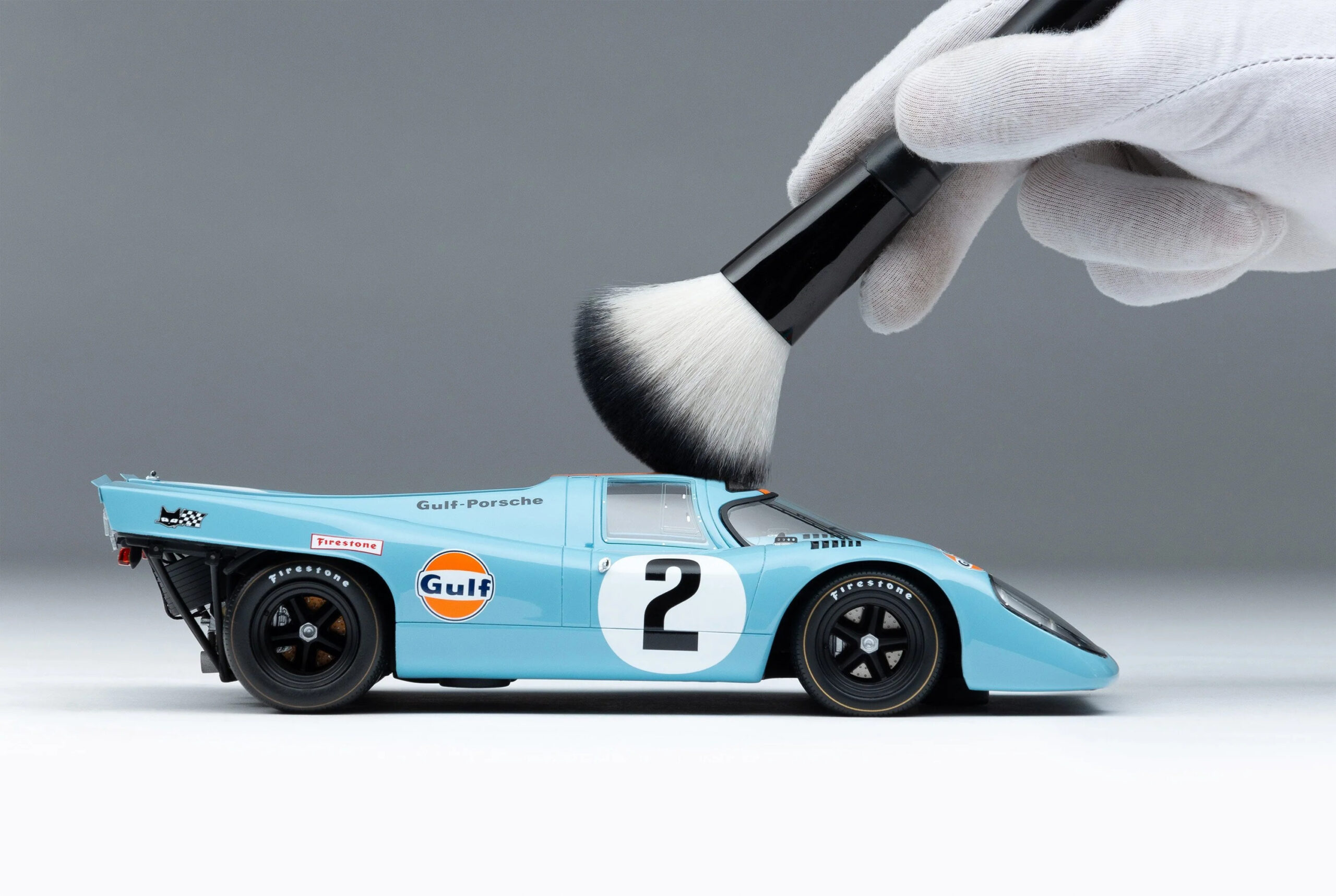
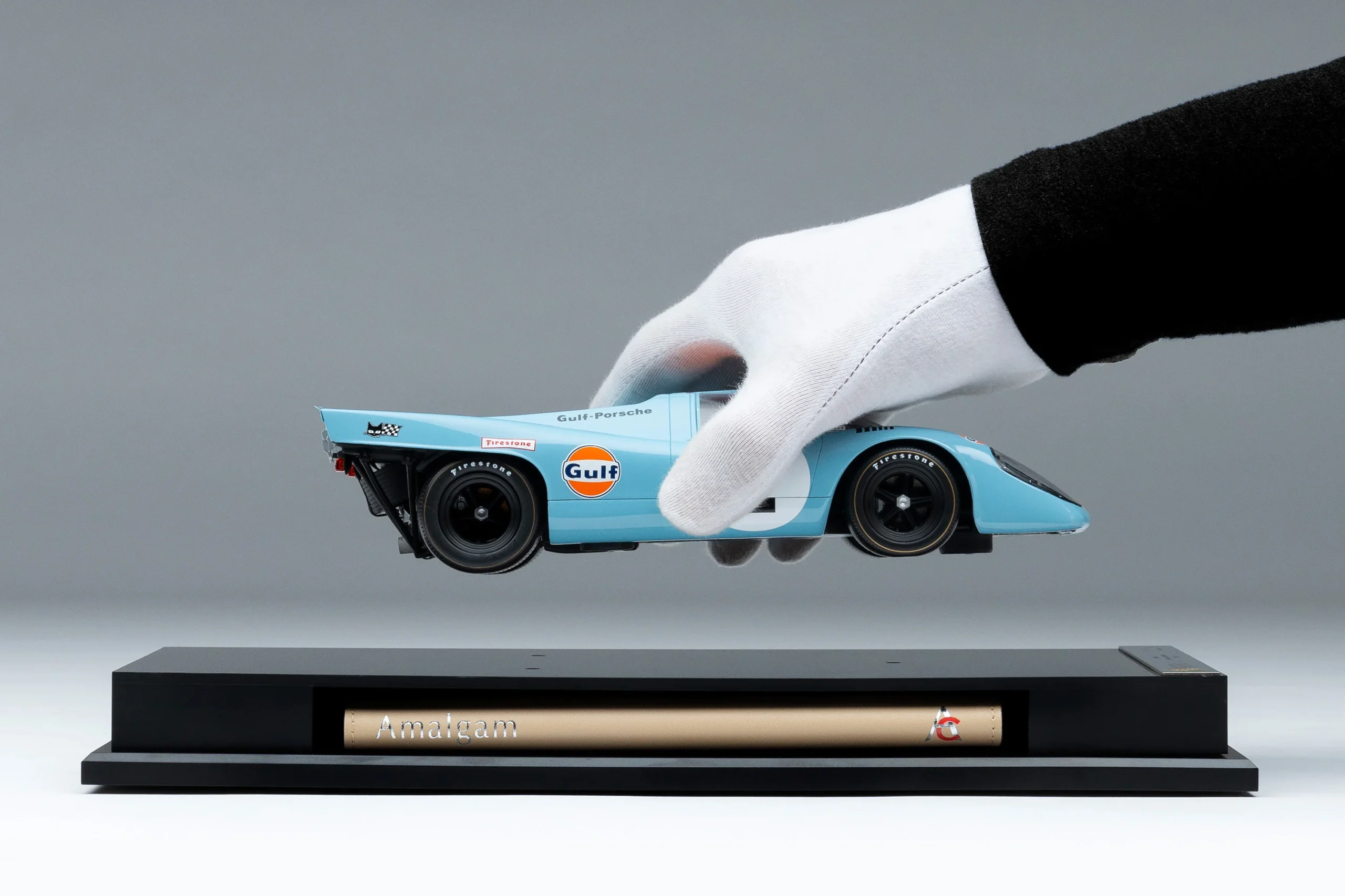
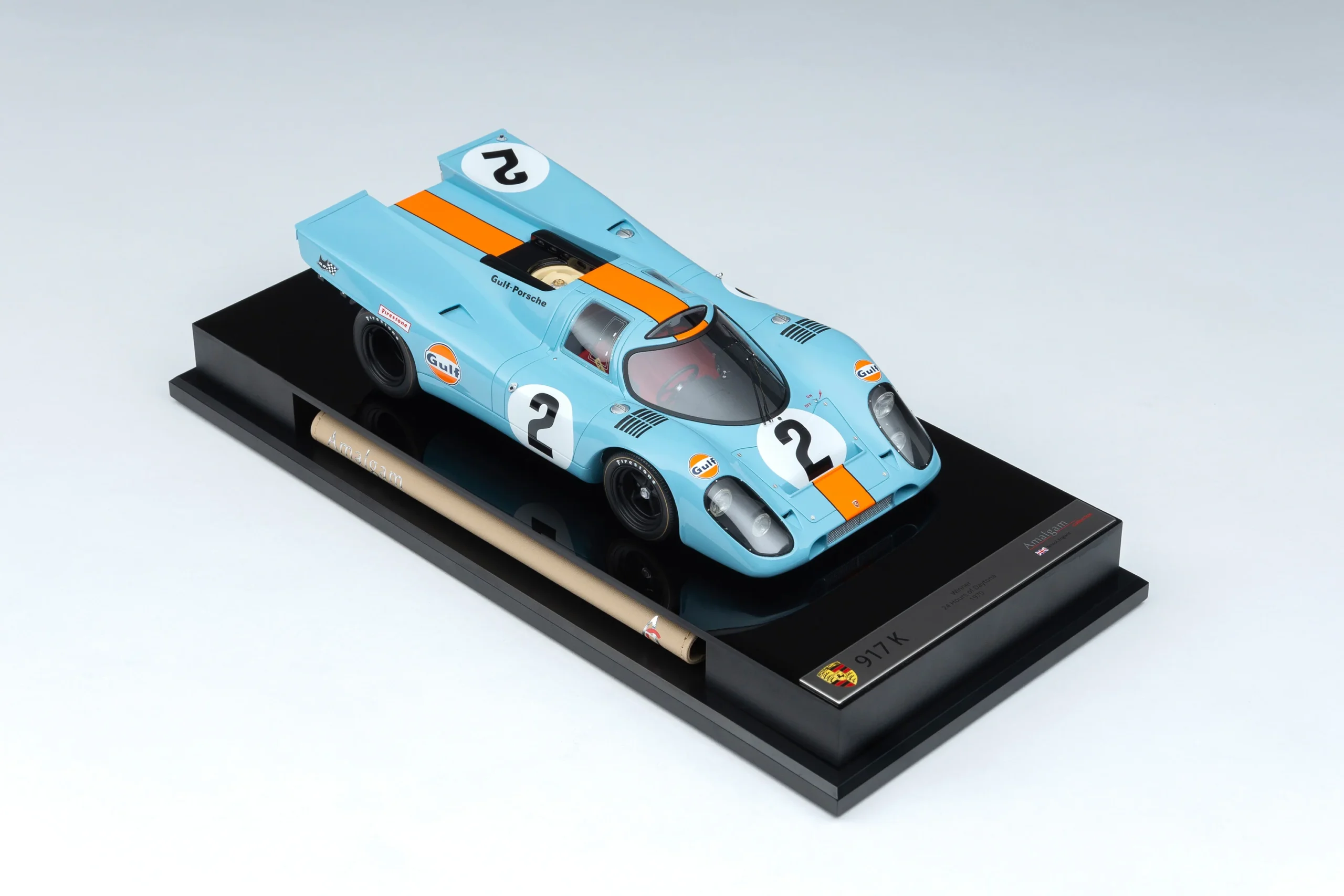
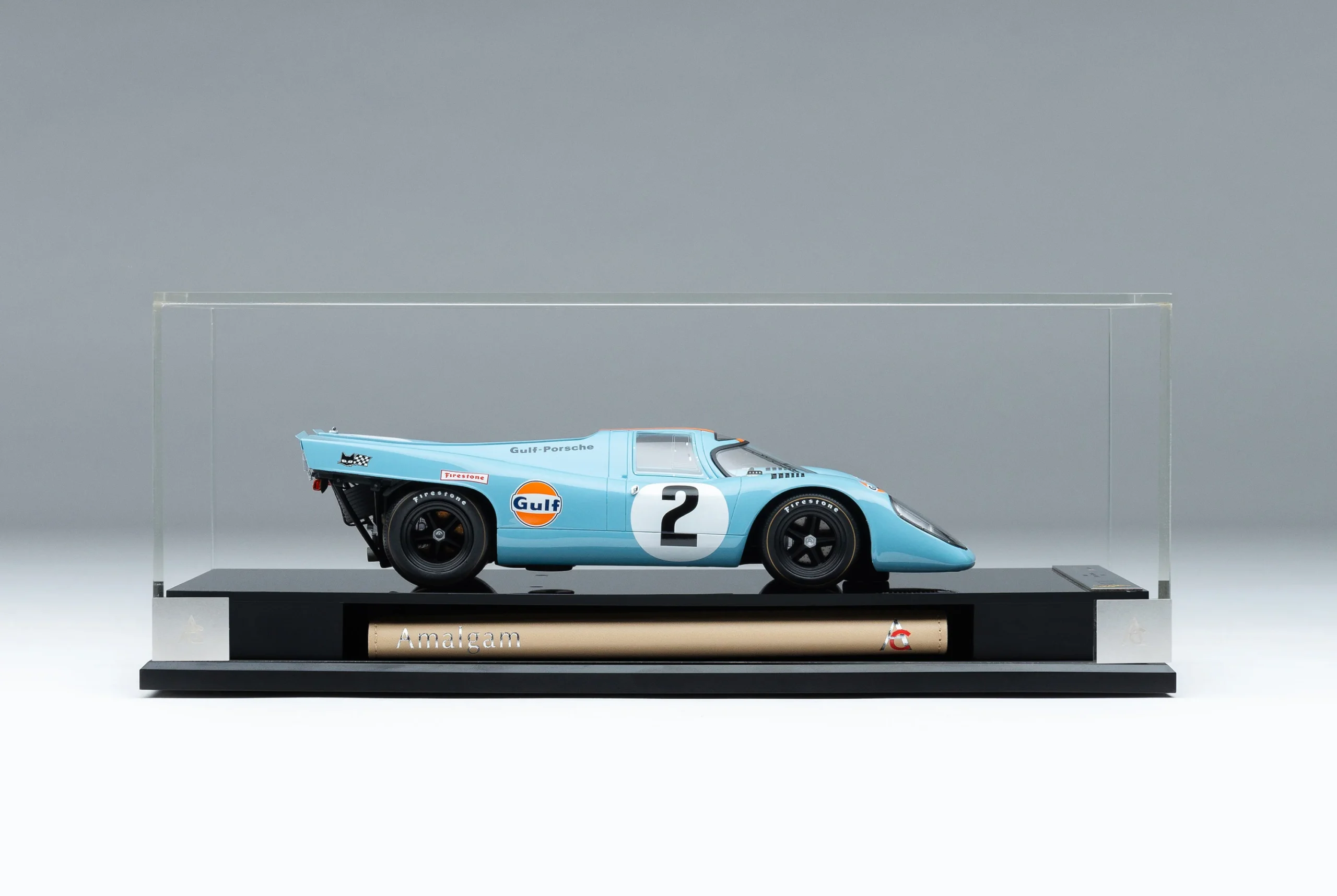
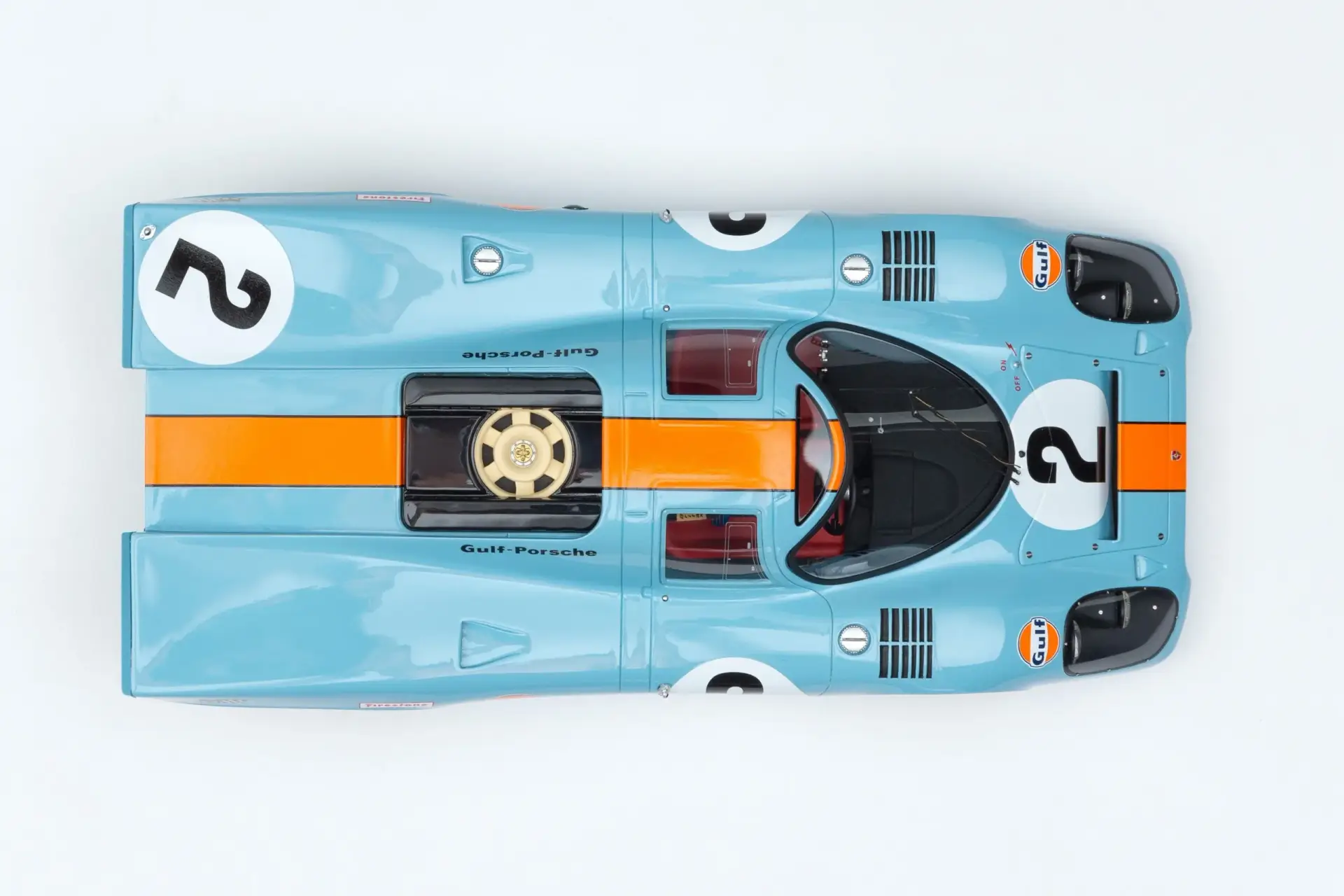
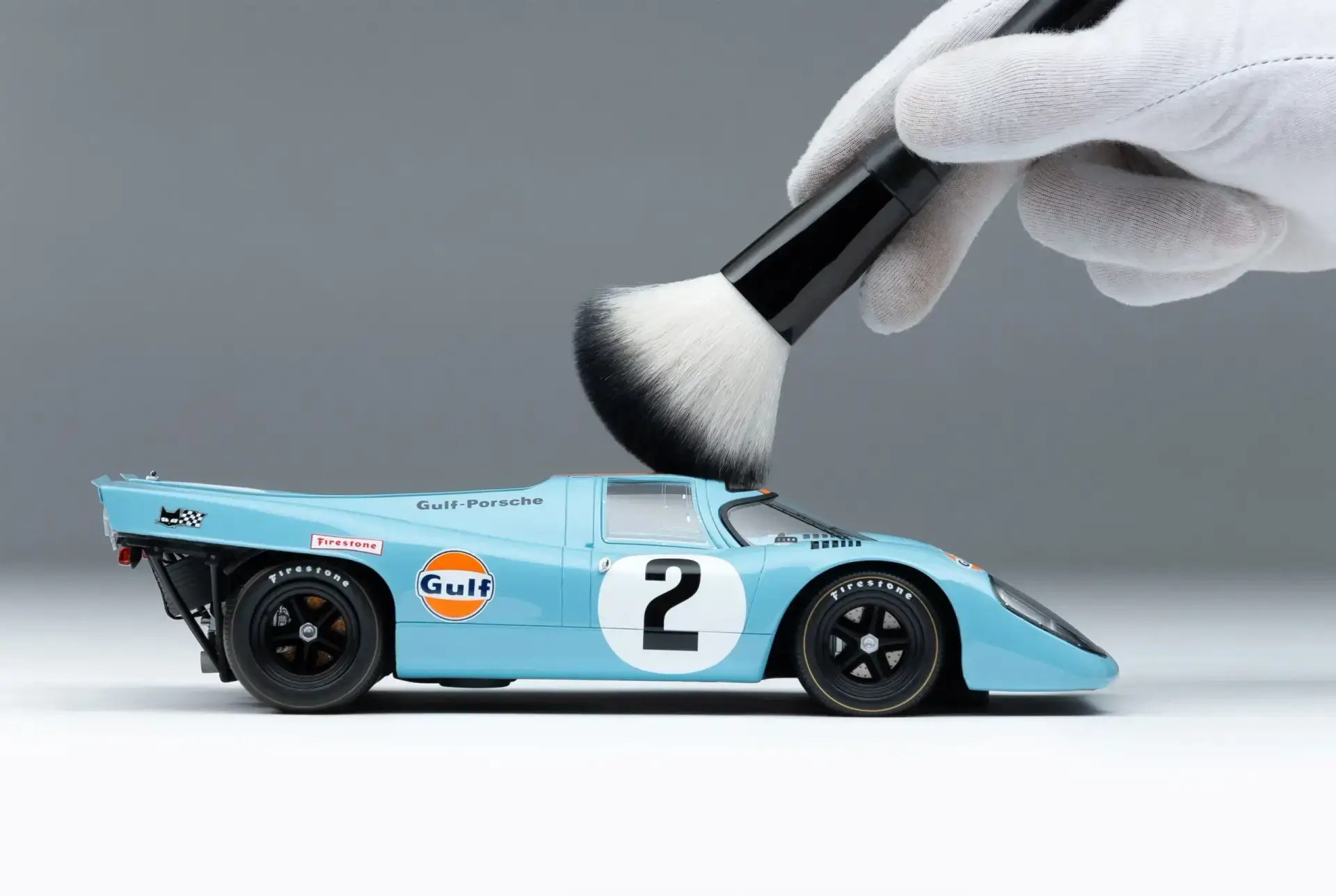
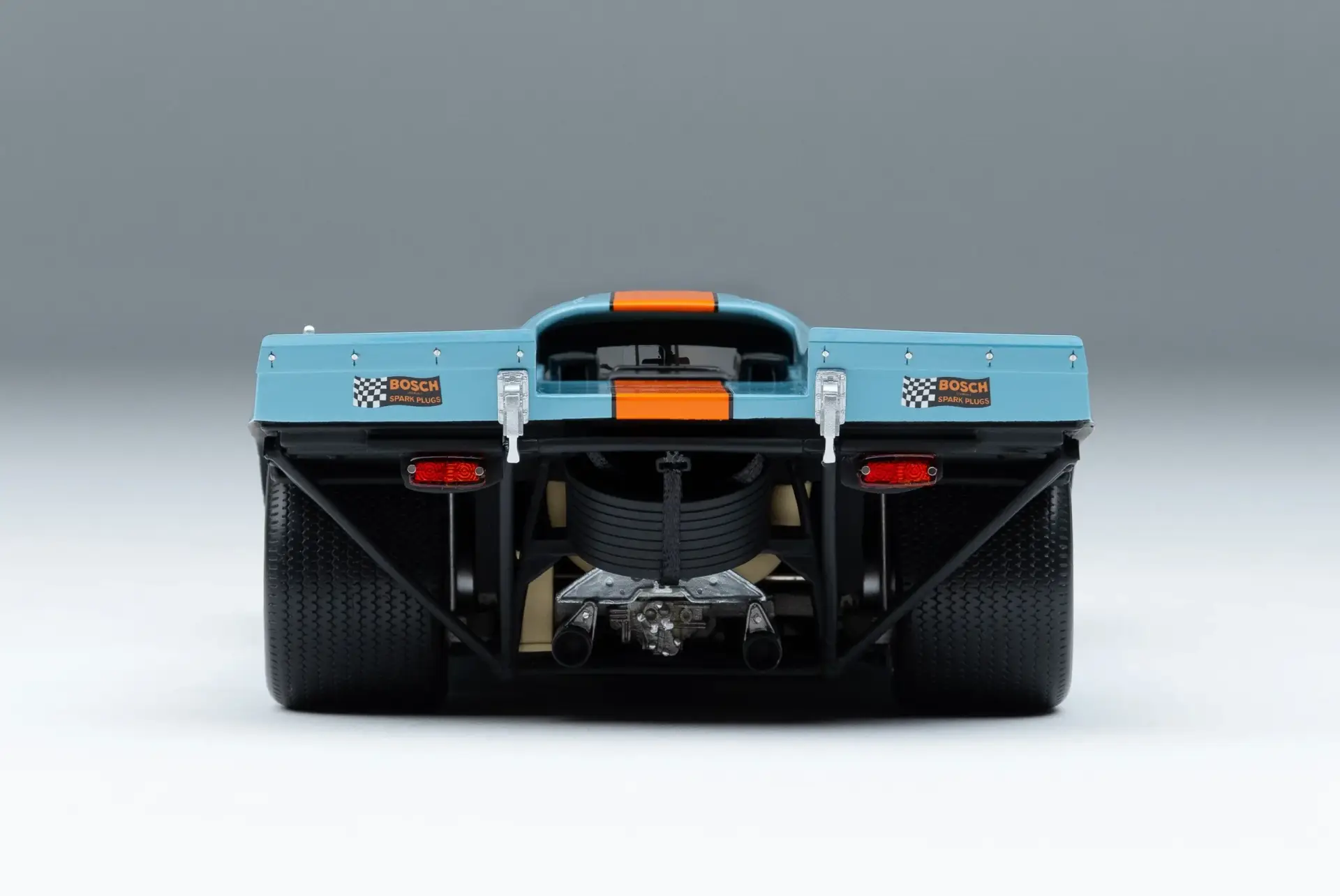
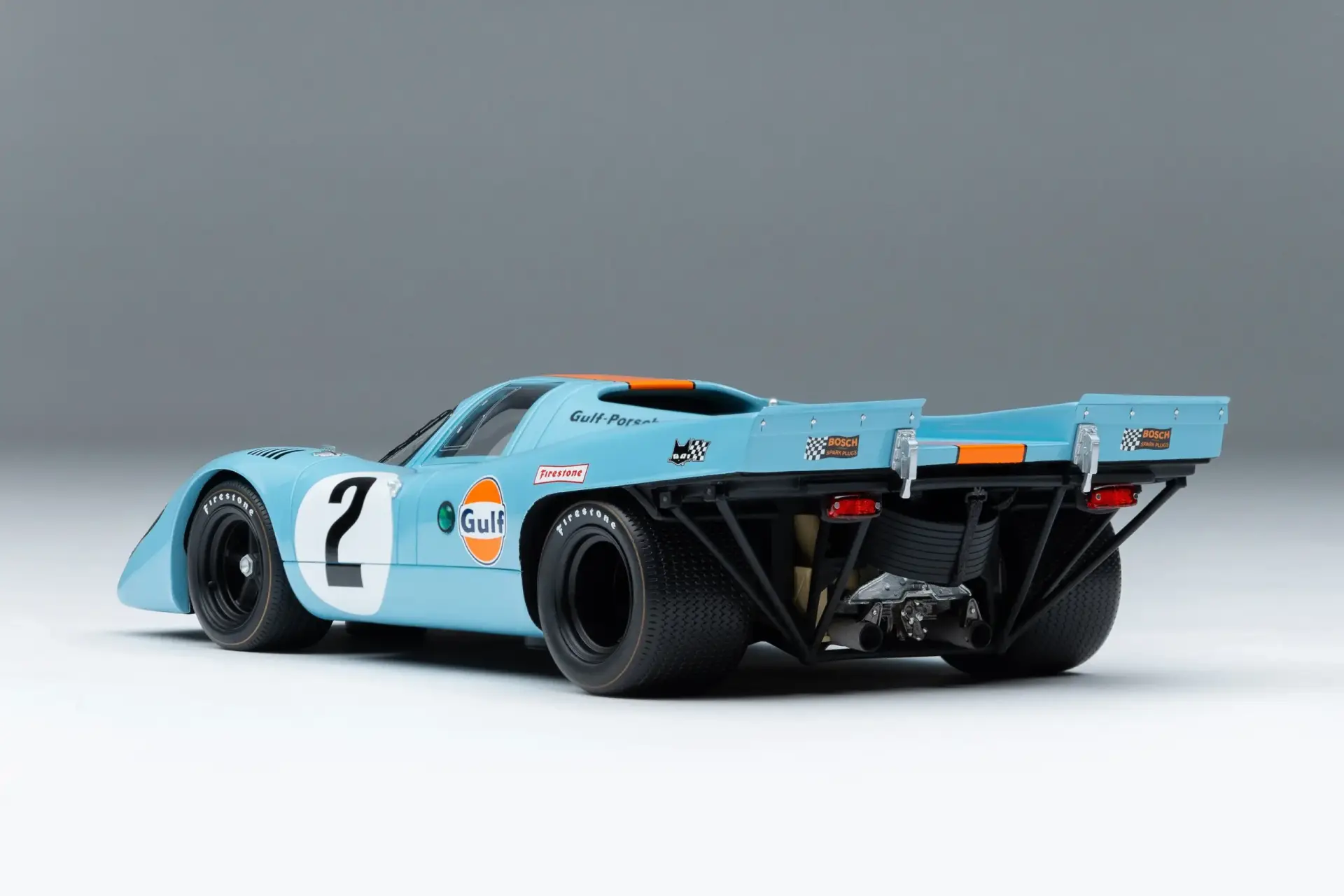
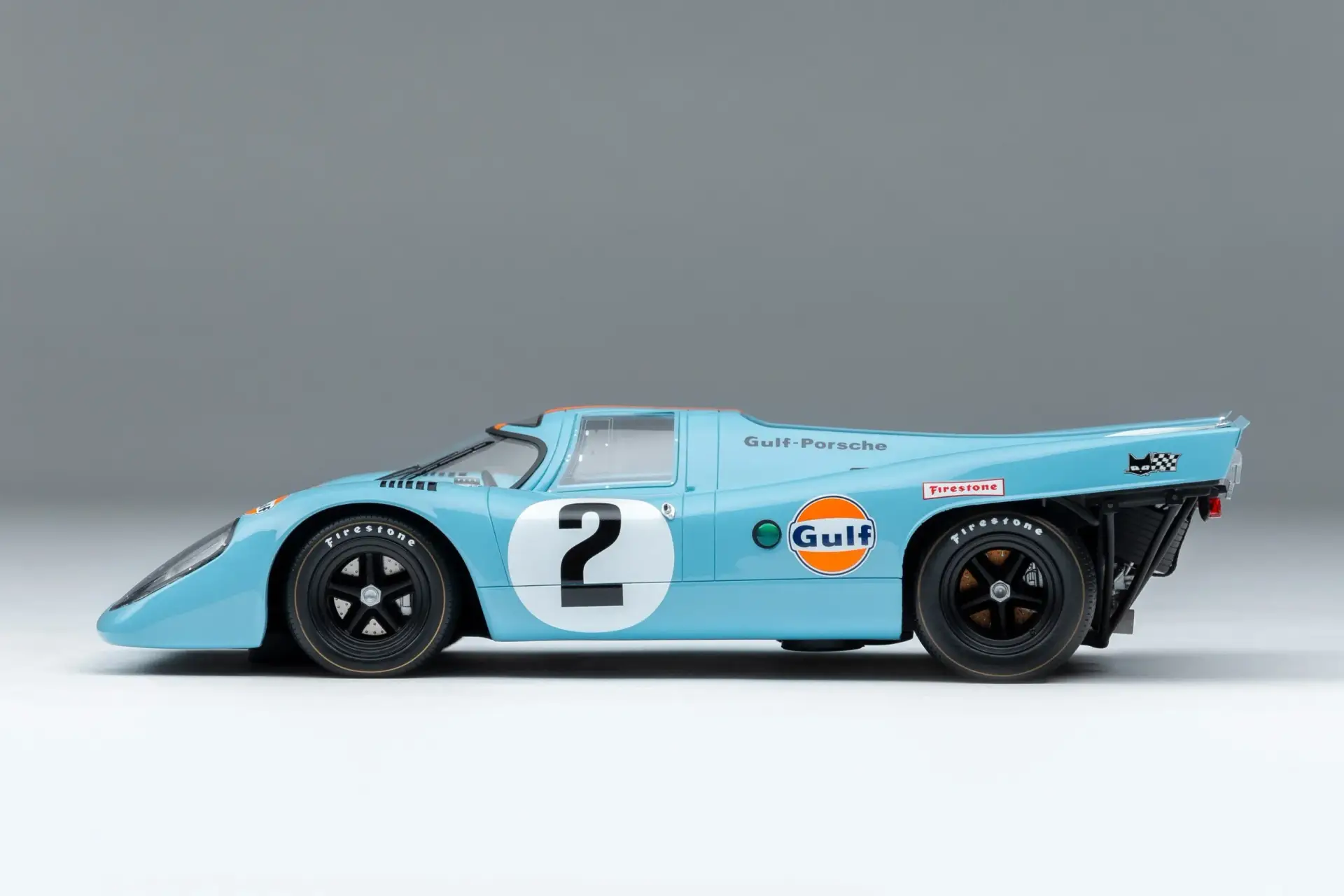
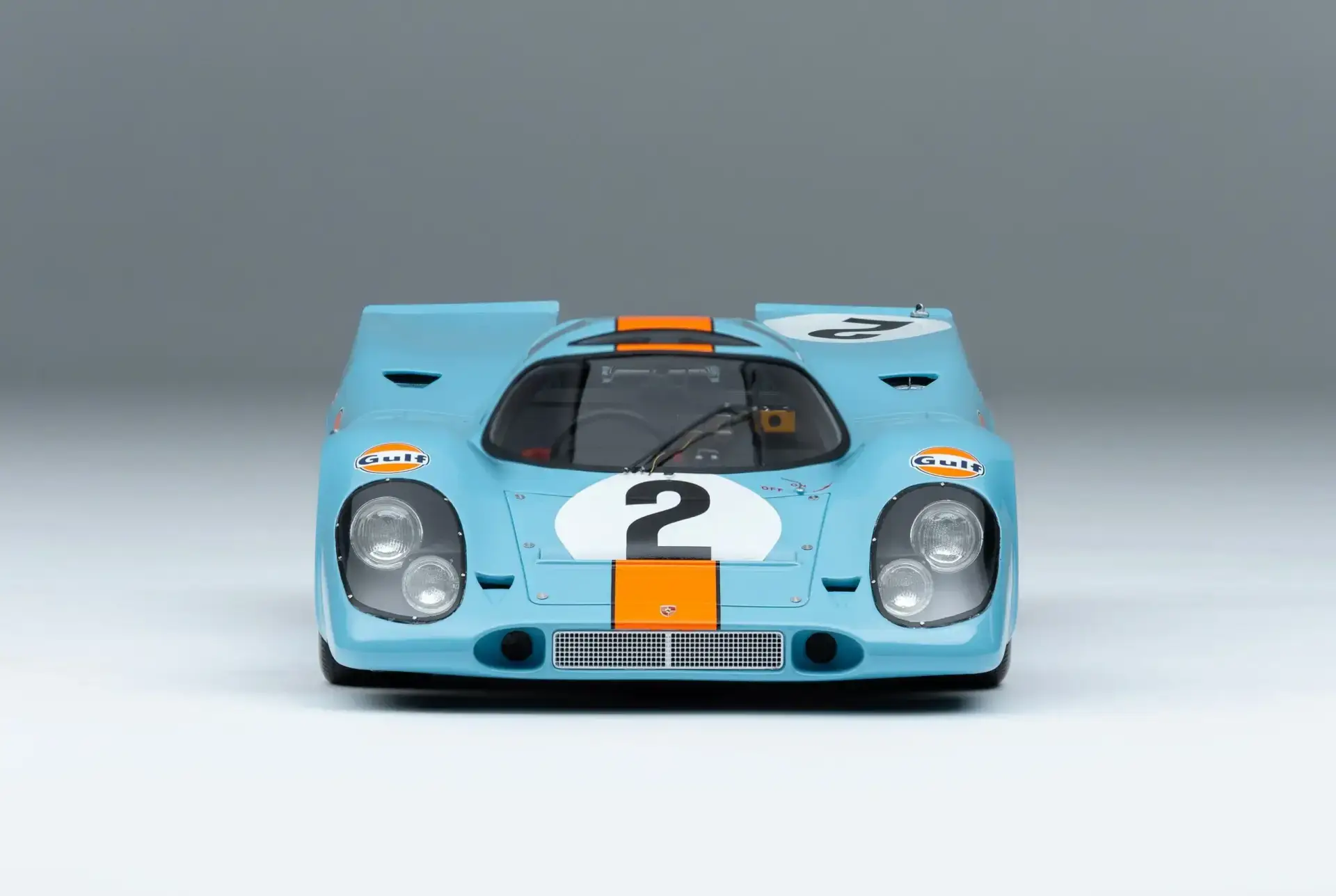
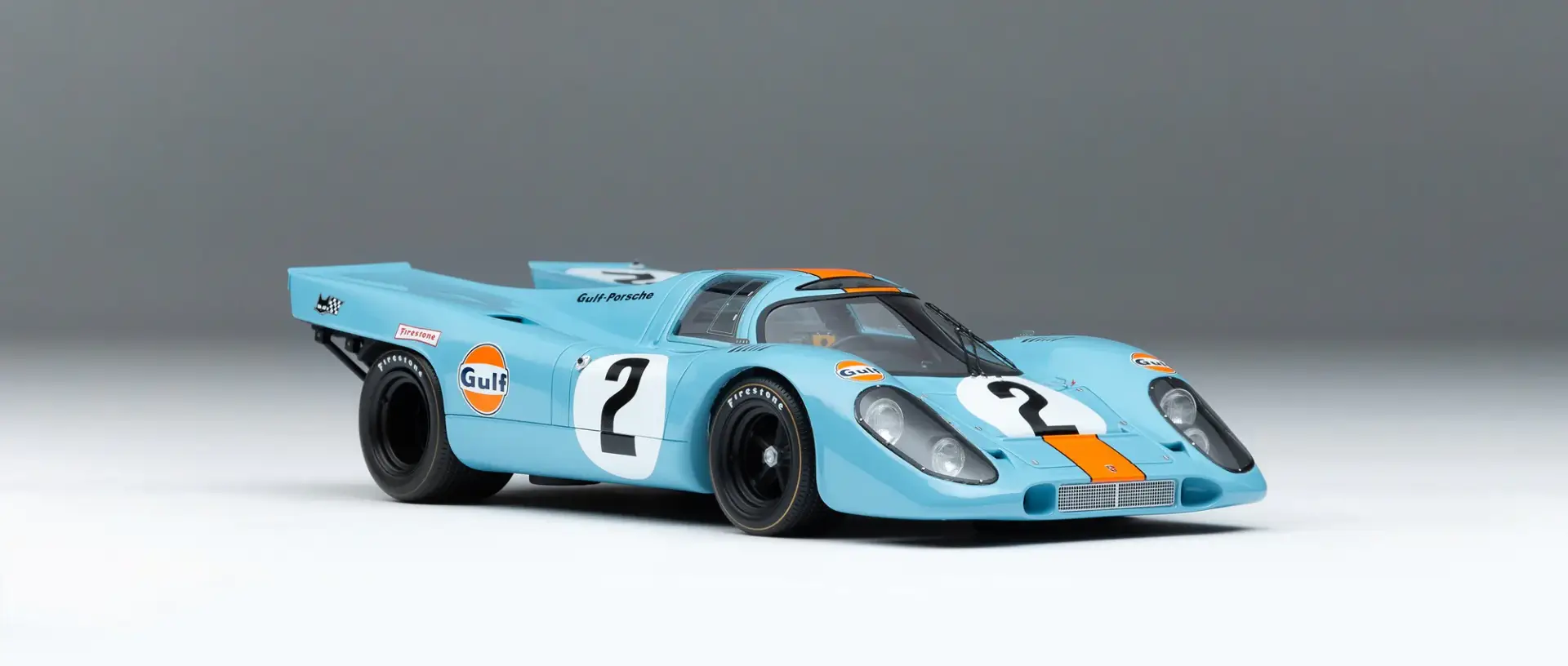
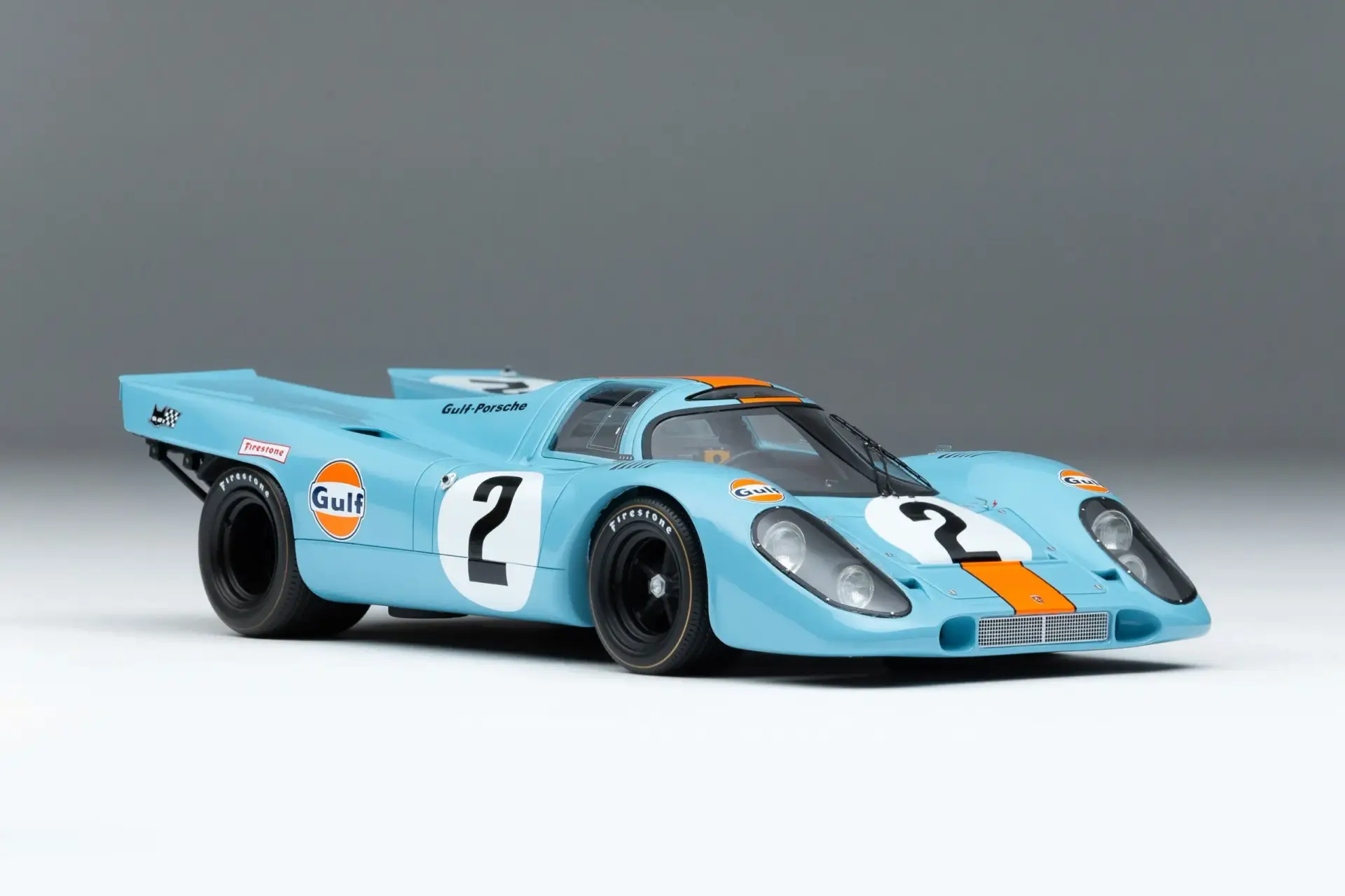
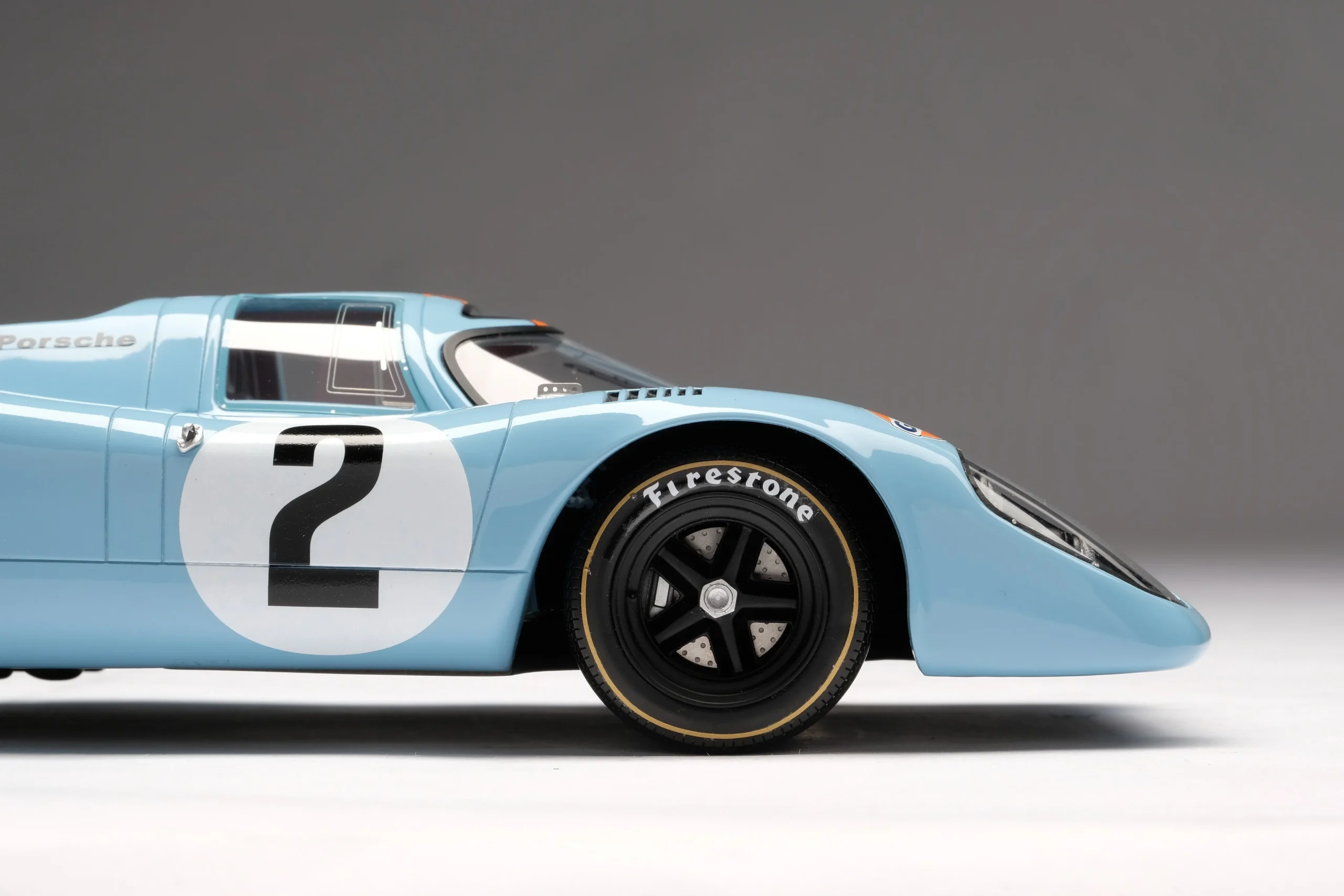
Amalgam Porsche 917K - 1970 Daytona winner - Gulf paintwork - Road & Track. High-quality collector's model in 1:18 scale.
The conception of the Porsche 917K, arguably one of the most iconic racing cars in the history of motorsport, can be traced back to an unexpected change by the Commission Sportive Internationale, then the independent competition arm of the FIA, which sanctioned the rules. After the 1967 racing season, it was announced that all future prototype engines would be limited to 3.0 litres in order to reduce speeds on the fast endurance circuits and at the same time entice manufacturers who were already building three-litre Formula 1 engines into endurance racing. Knowing that few manufacturers were immediately up to the challenge, the CSI also announced a new Group 4 sports car series that allowed displacements up to 5.0 litres but required at least 25 units for homologation. Porsche, already hard at work polishing its 3.0-litre race car, the 908, stunned the world by unveiling a second prototype race car for the Group 4 category: the 917. Despite the FIA's doubts, Porsche presented 25 units to the FIA just three weeks after the 917's debut at the Geneva Motor Show in March 1969.
The early 917 was powered by a 4.5-litre flat-12 engine developed by renowned Porsche engineer Hanz Mezger. To reduce development costs, the engine borrowed heavily from its 3.0-litre counterpart in the Porsche 908, and the 1969 racing engines produced 580 hp and 376 lb-ft of torque. Later models had the option of larger displacement engines of 4.9, 5.0 and finally 5.4 litres, each offering a corresponding increase in power. The flat-12 was to become the most distinctive feature of the 917.
Whilst the engine was an instant success, the body and aerodynamics of the car were anything but. Early tests were worrying. The car wandered badly under braking and was diabolical in high-speed corners. None of the regular Porsche drivers wanted to drive it. But Porsche engineers pressed on, eventually adding wider rear wheels and a few other changes that made the 917 a more controllable machine. Short and long-tail versions of the car were developed, but while the 917 long-tail is a beauty, the form made famous by a winning streak is the short version, better known as the 917K, for „Kurtz.“.
The 917K didn't have to wait long for success. In its public debut at the 1970 24 Hours of Daytona, John Wyer's Gulf-sponsored team finished 1-2, with the winning car breaking the distance record by 190 miles. This victory effectively began the 917K's dominance of the World Sportscar Championship for the next two seasons. Porsche's first overall victory at the 24 Hours of Le Mans soon followed, a momentous occasion for the German marque, but just one of many to come. The triumphs that year came swiftly and overwhelmingly, and in total the 917K's first full year of competition would bring seven major victories. 1971 was no different, with six major victories, capped by another overall win at Le Mans. Later that year, development began on the Can-Am version, a car so dominant that the series lost popularity in the United States and never returned.
Today, the 917K is revered as one of the most iconic racing cars of all time. It was the car that gave Porsche its first overall victory in the world's toughest race, and the car that would go on to set one of the most impressive prototype racing series dominance records the world has ever seen. If its racing achievements alone were not enough, the car is immortalised on the big screen by Steve McQueen in the film „Le Mans“.
This beautiful 1/8th scale model of the Porsche 917K is based on the #2 car driven to victory by Pedro Rodríguez and Leo Kinnunen in the 1970 24 Hours of Daytona with a single stint by Brian Redman -Grad High Bankings of Daytona Speedway, ex-Aston Martin race team manager John Wyer's Gulf-sponsored team finished 1-2, with Jo Siffert and Redman (in his actual car) taking second place on the podium. The #2 leading car annihilated its rivals and broke the distance record by 190 miles, 48 laps ahead of the #28 factory Ferrari in third. It was the first race in which the iconic Porsche 917K took part, and this victory effectively marked the beginning of the 917K's dominance in the WSC for the next two seasons.
This model was handcrafted in our workshops with the cooperation and support of Porsche and finalised with regard to original surfaces, materials, archive images and drawings. The use of highly accurate digital scans of the original car has enabled us to perfectly replicate every detail in scale. In addition, it has undergone detailed scrutiny by both engineering and design teams to ensure complete accuracy of representation.
Each 1:18 scale Amalgam model is supplied in a luxurious black box with a protective outer carrying case. Each model is mounted on a polished black acrylic base protected by a clear acrylic dust cover. Inside the base is a booklet containing the certificate of authenticity as well as information and accompanying material about the car. The model title and original branding are displayed on a polished stainless steel plaque at the front end of the base.
Note: This is a „notcheside“ model and has no moving parts.
Item number: M6240-SC1

 German
  English
  Italian
  French
  Spanish
  Arabic
  Japanese
Reviews
There are no reviews yet.