
Description
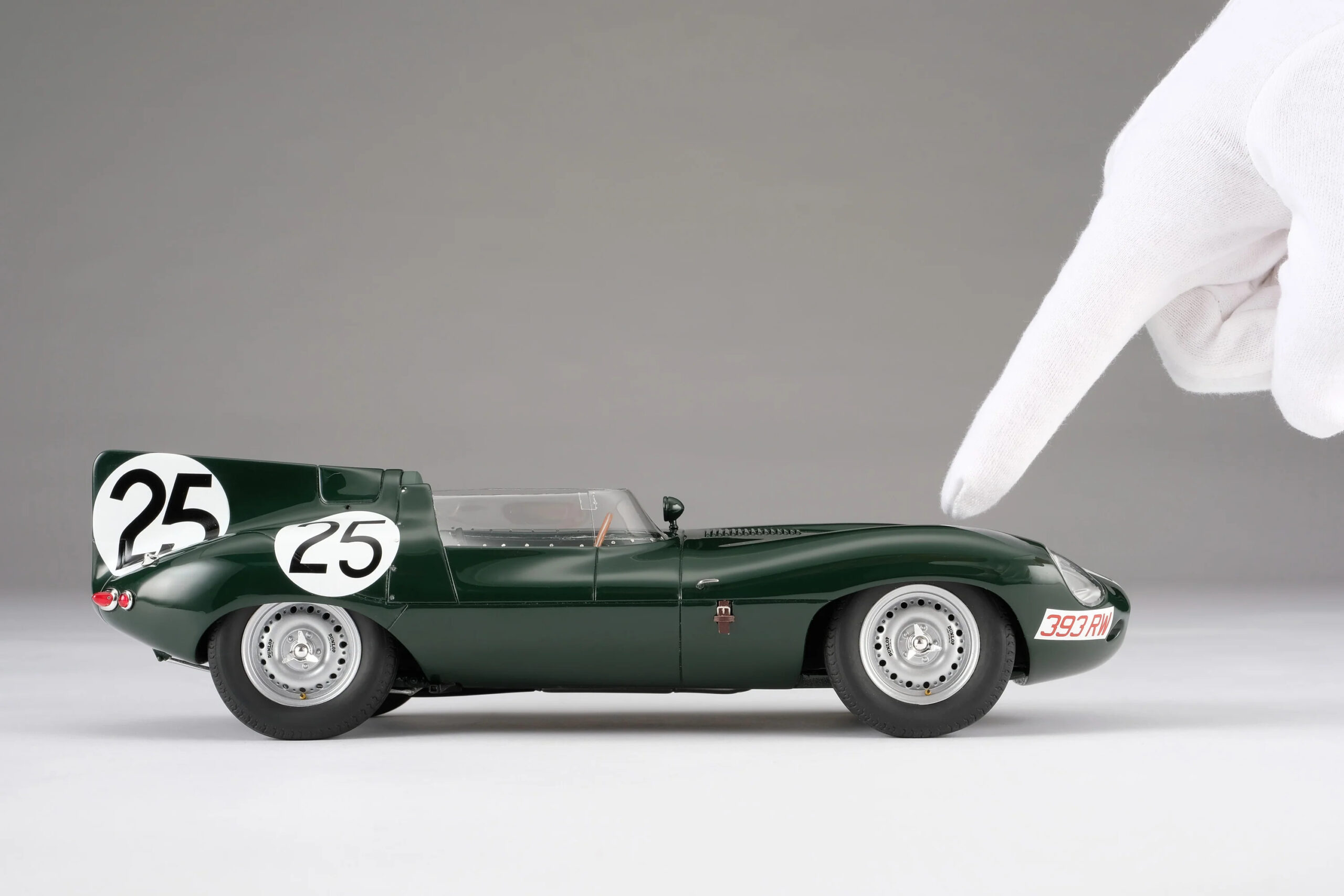
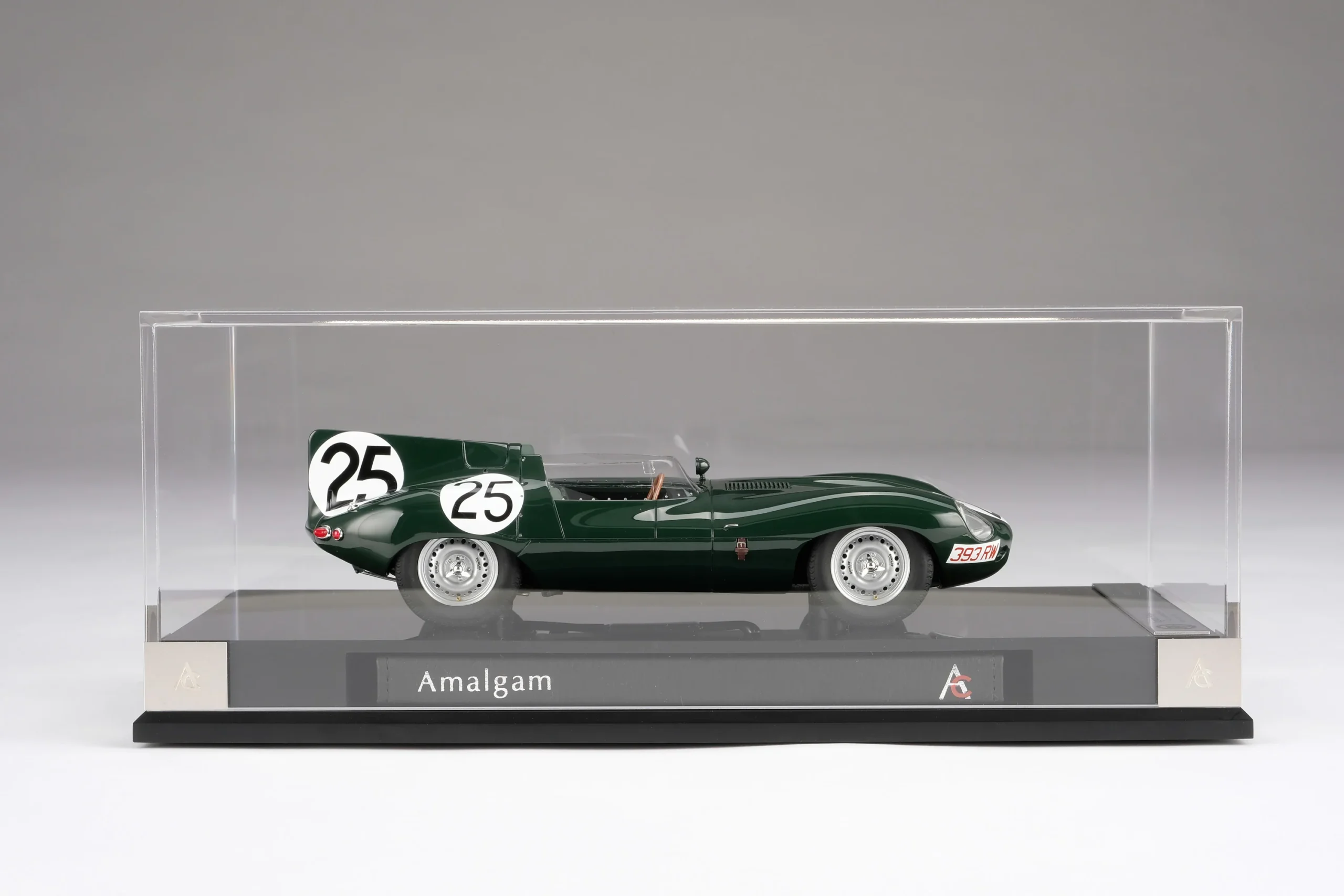
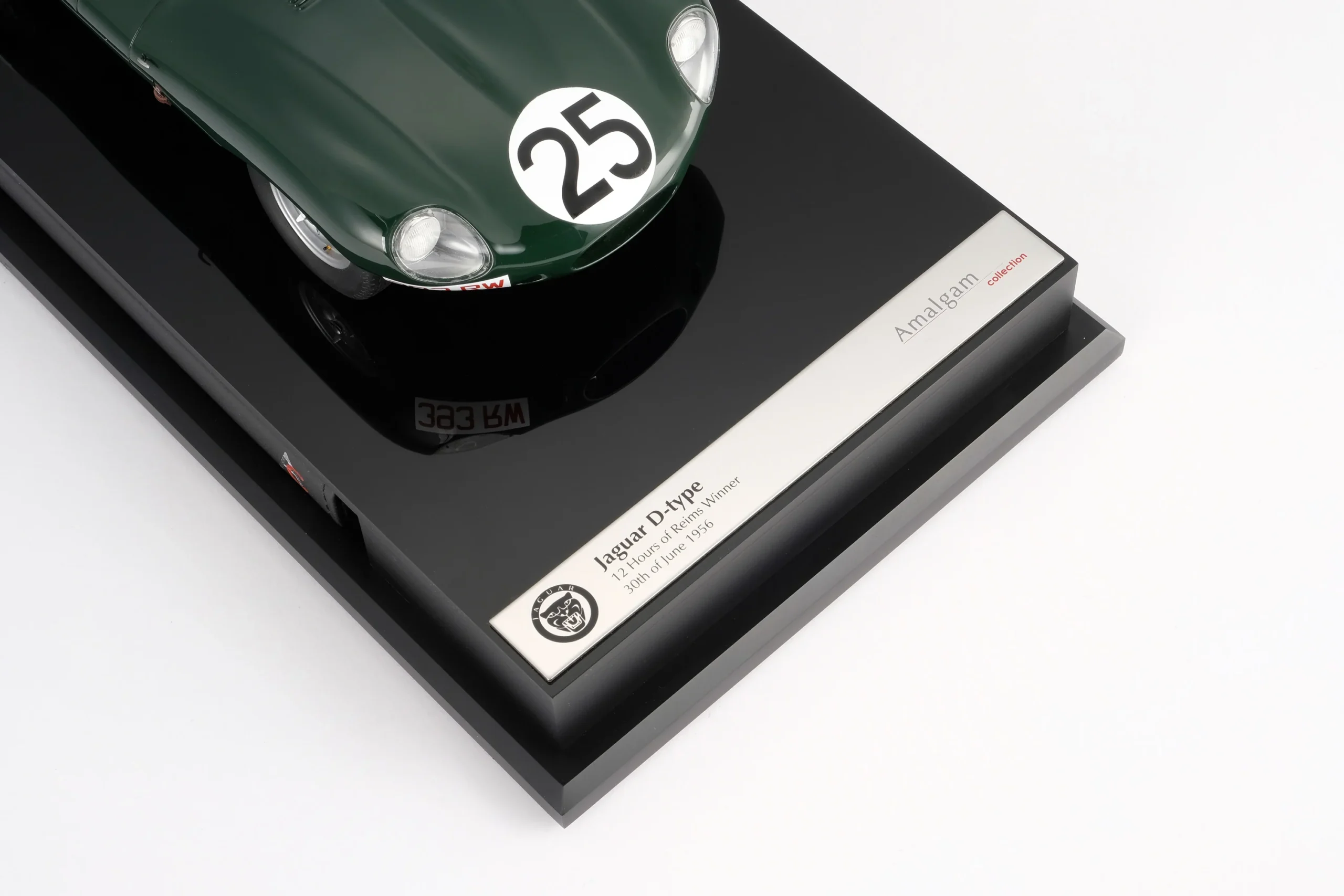
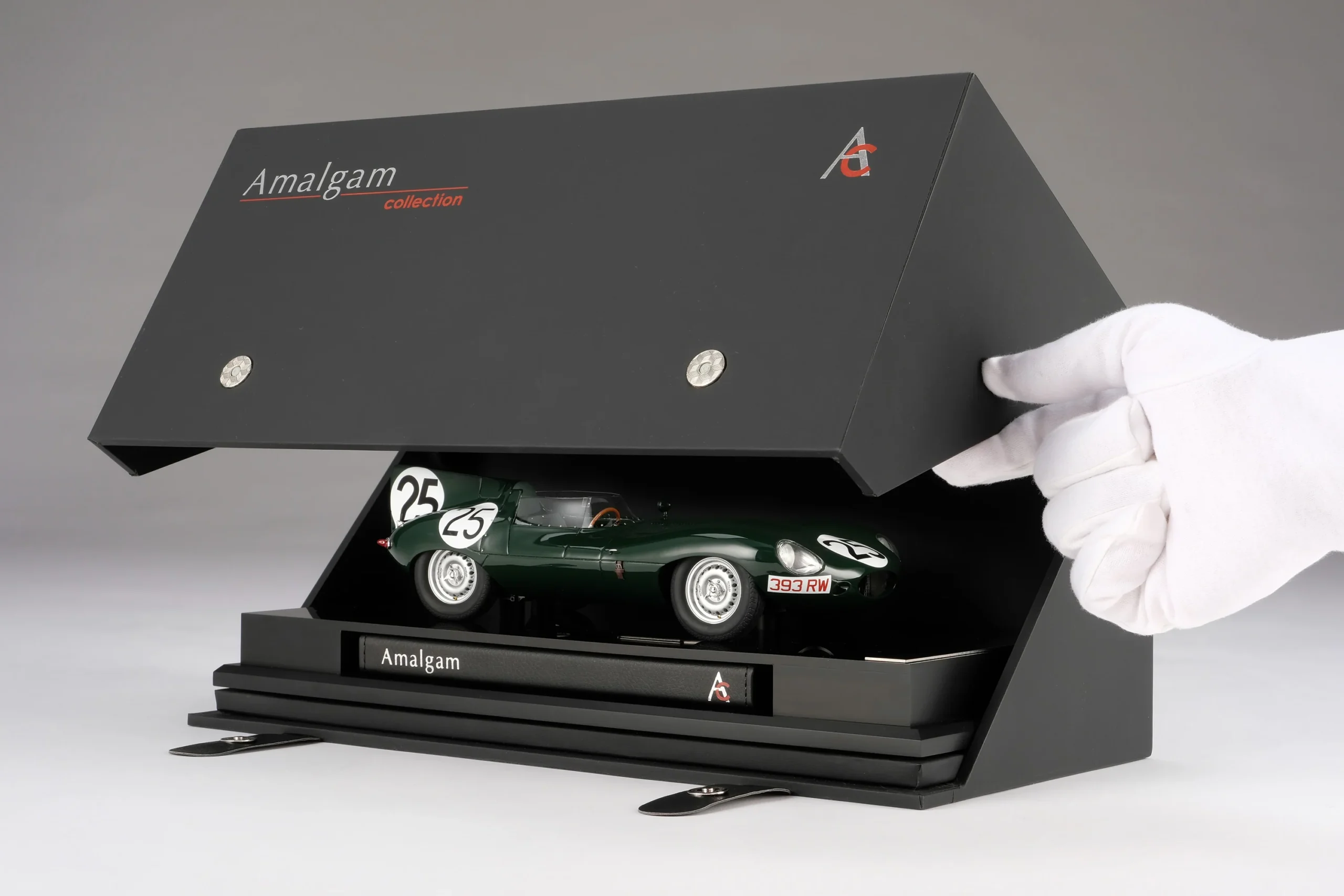
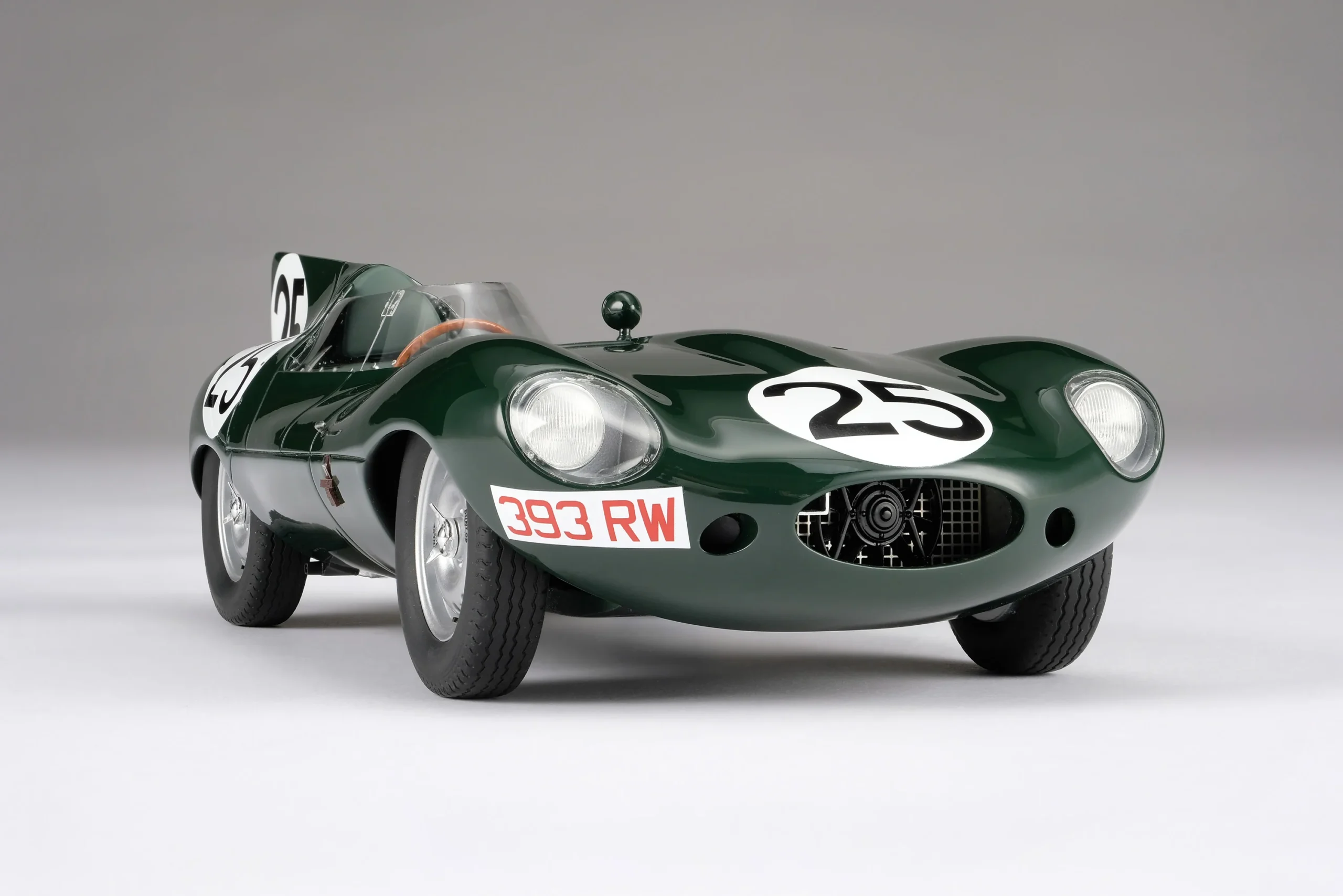
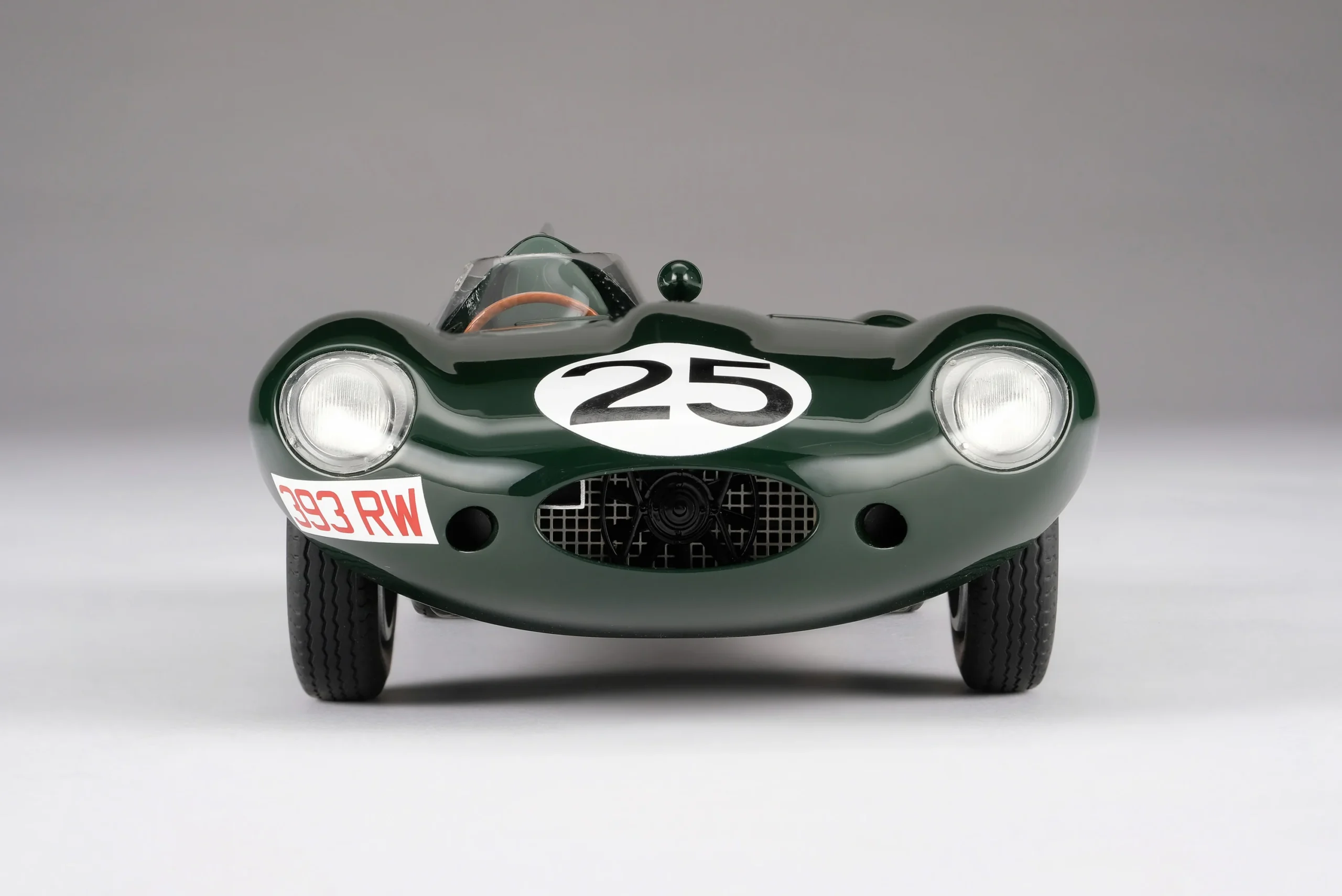
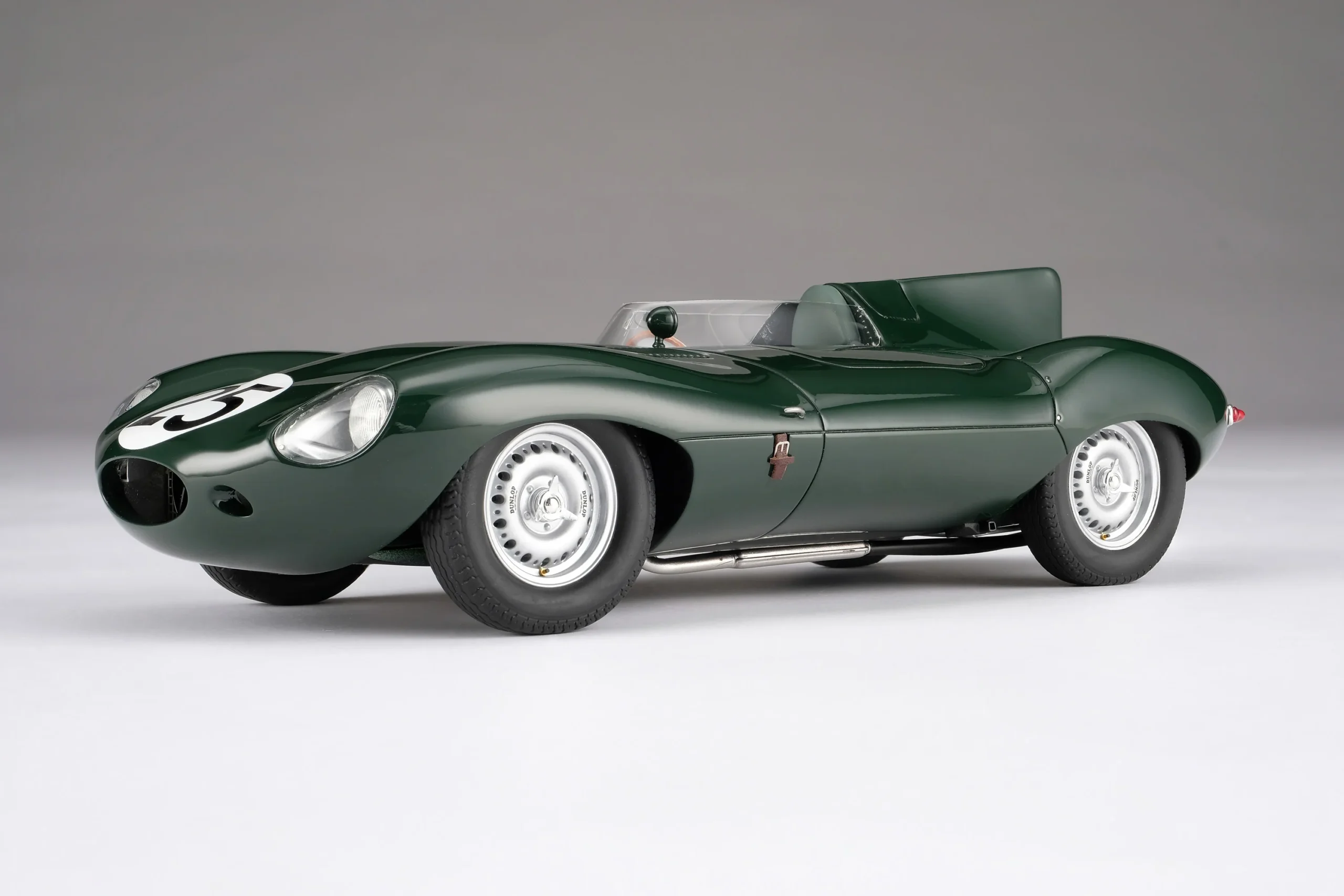
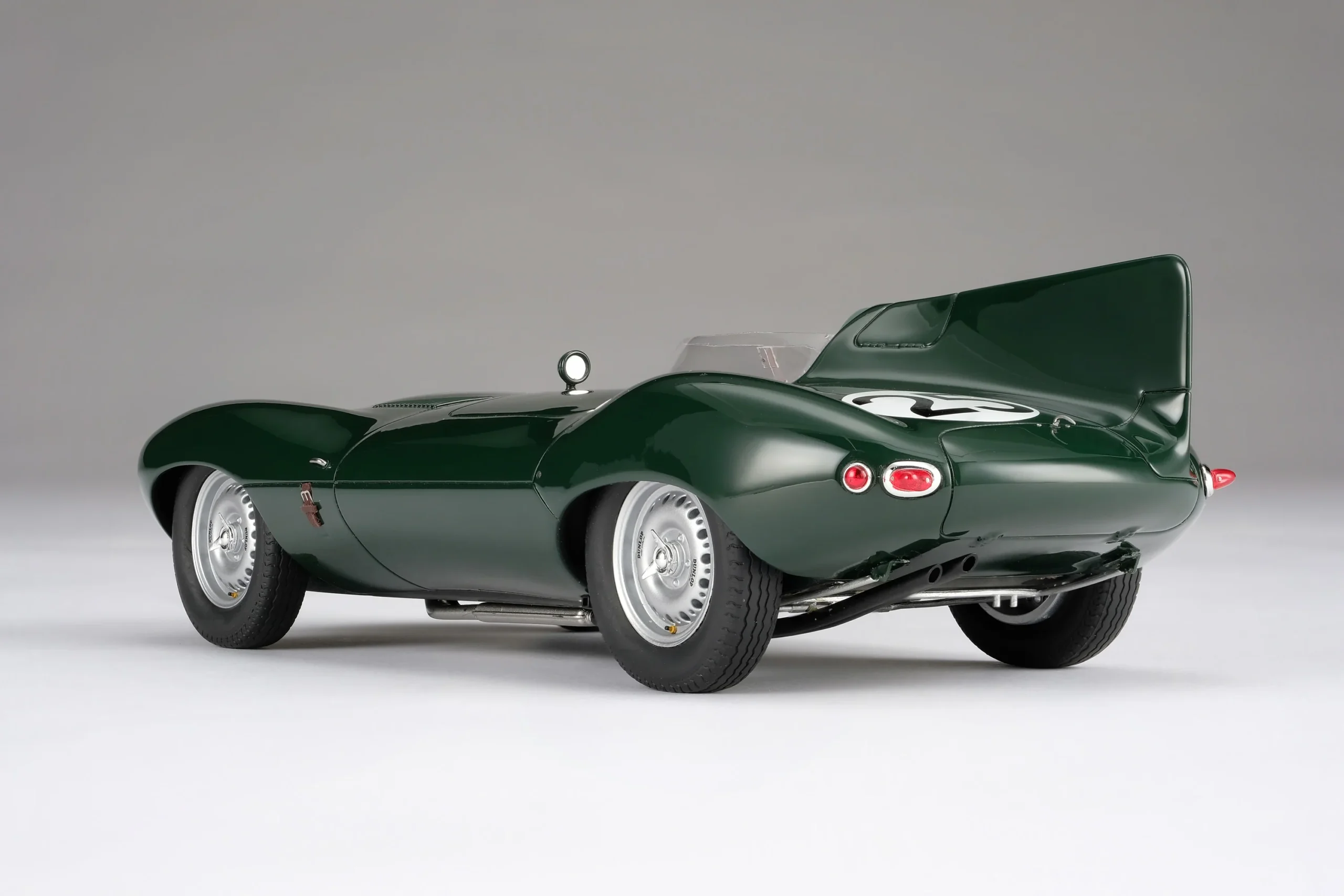
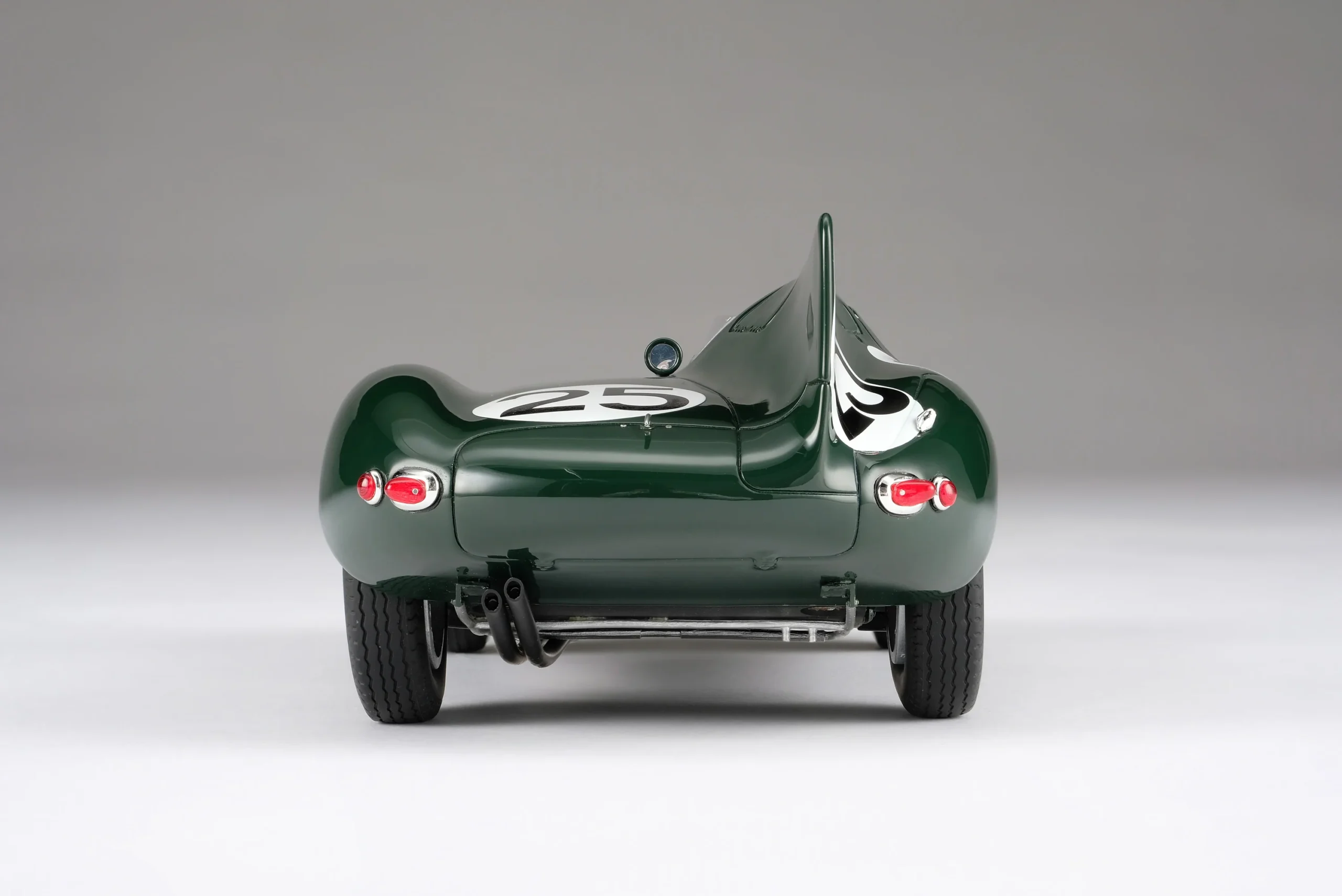
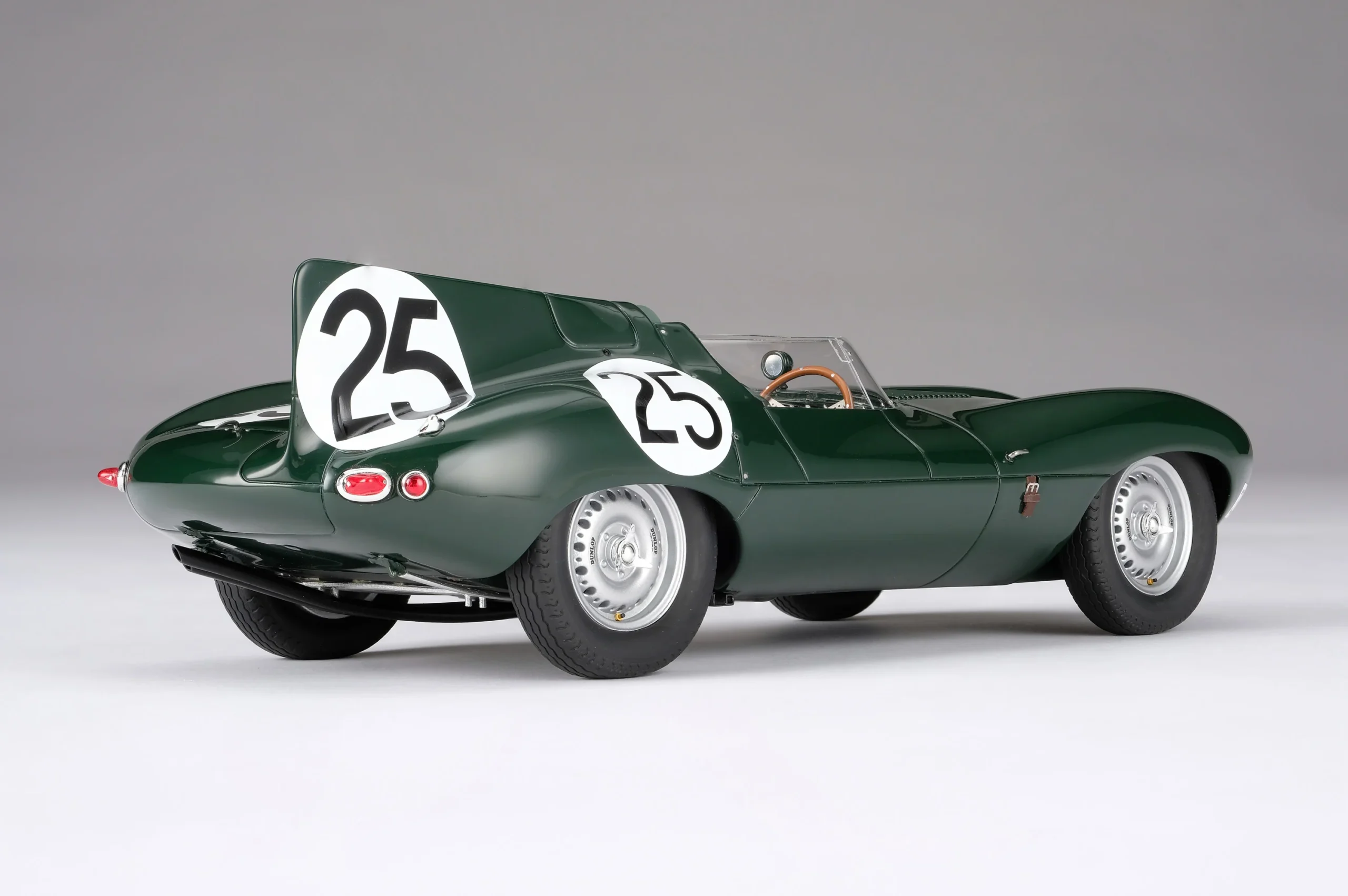
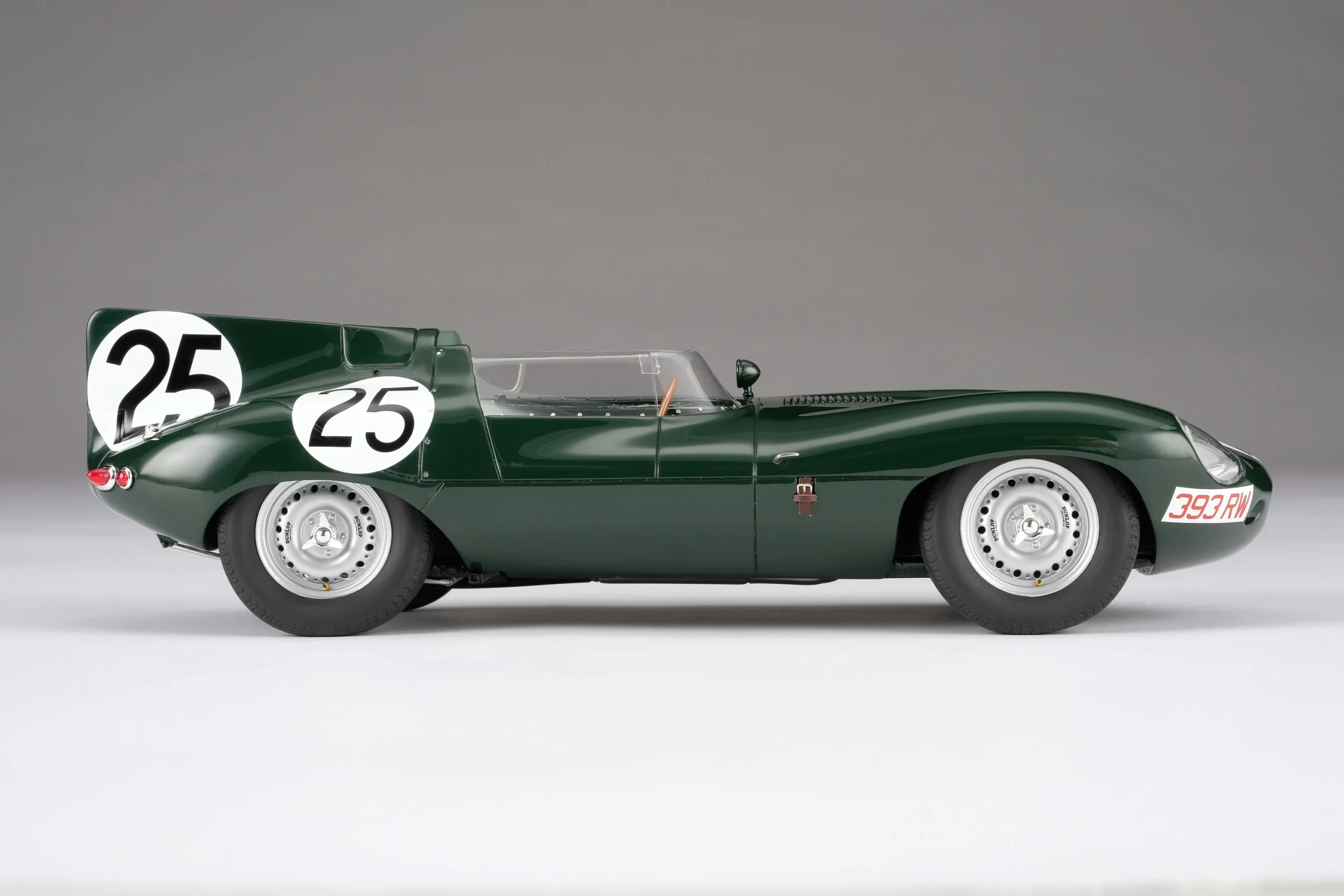
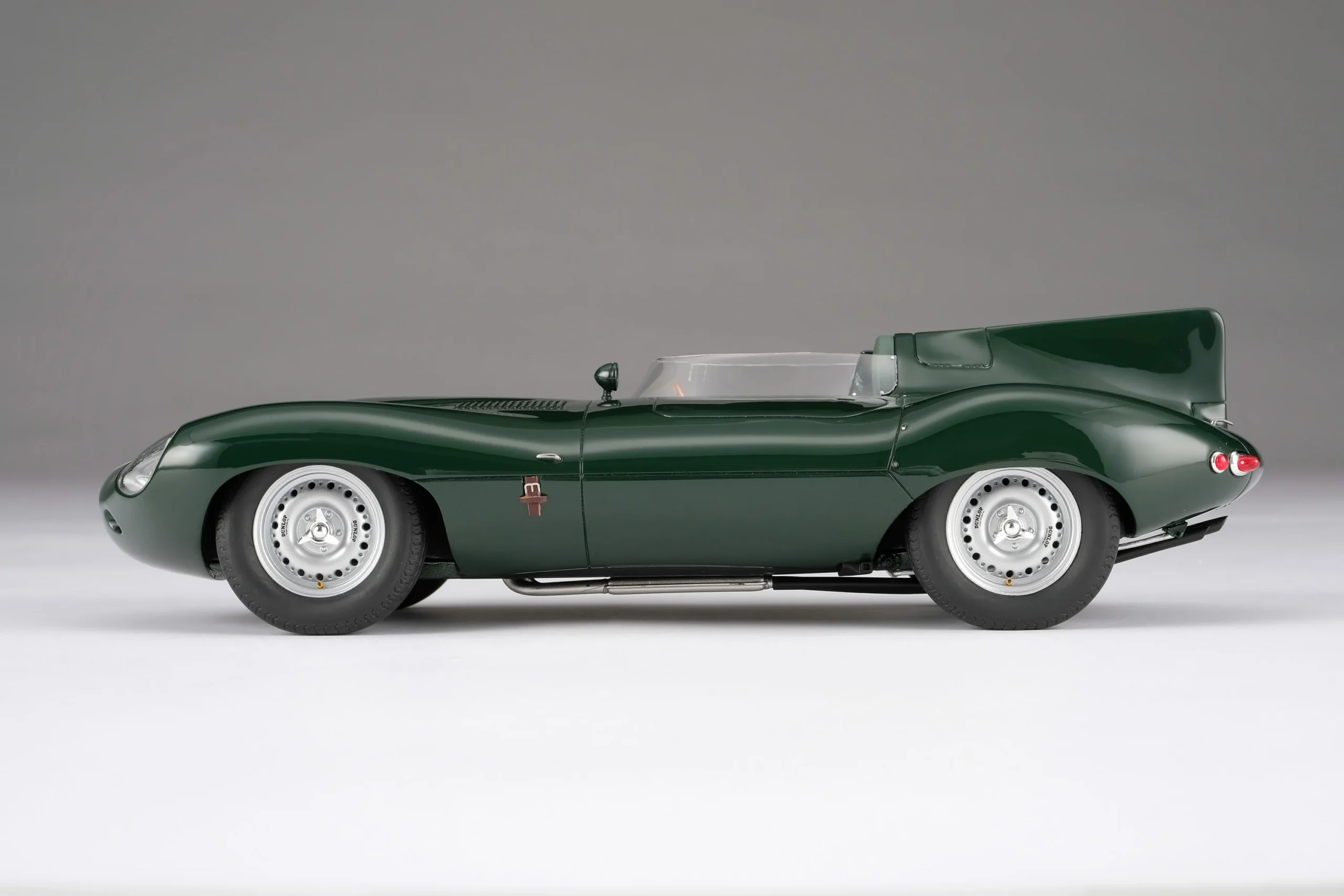
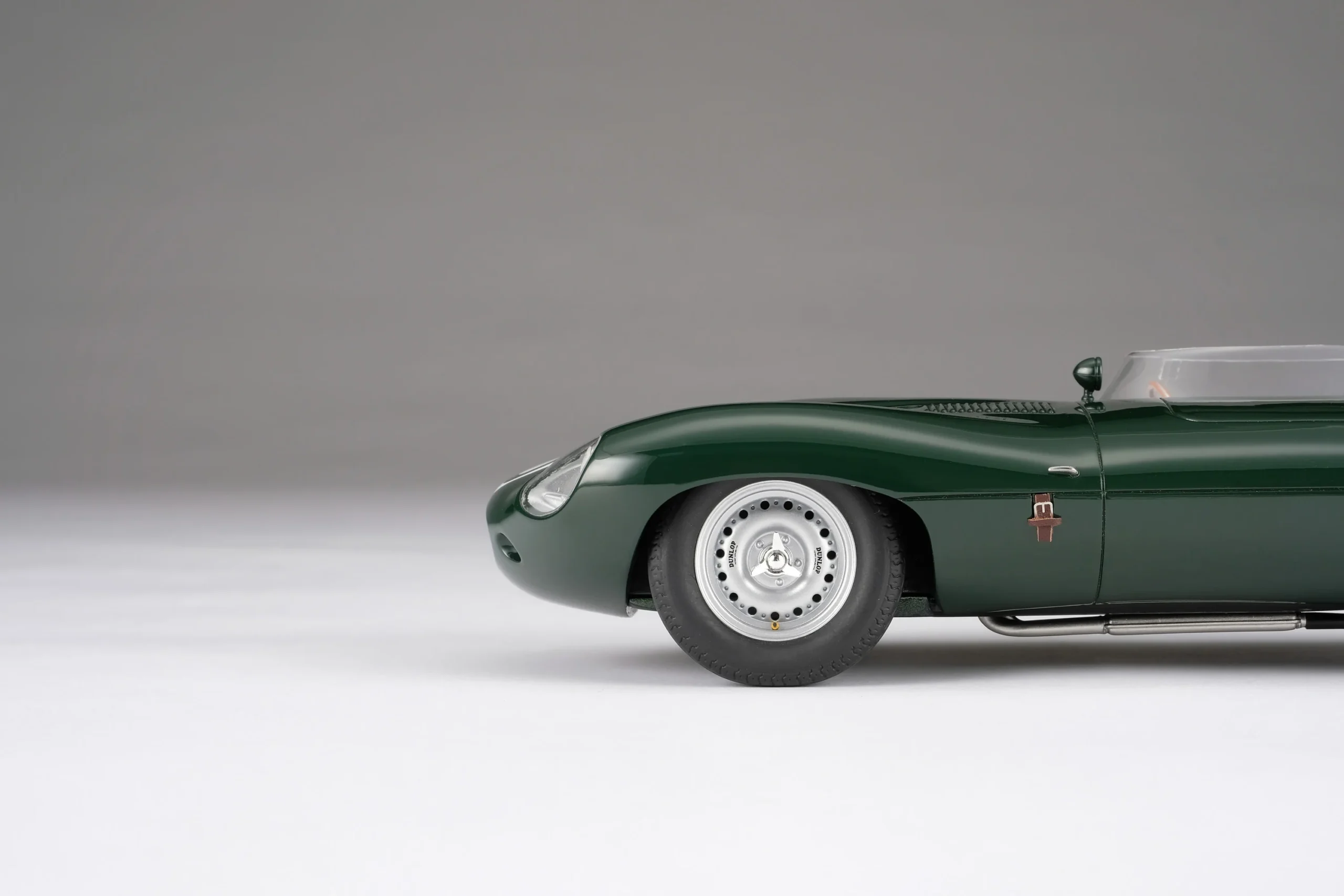
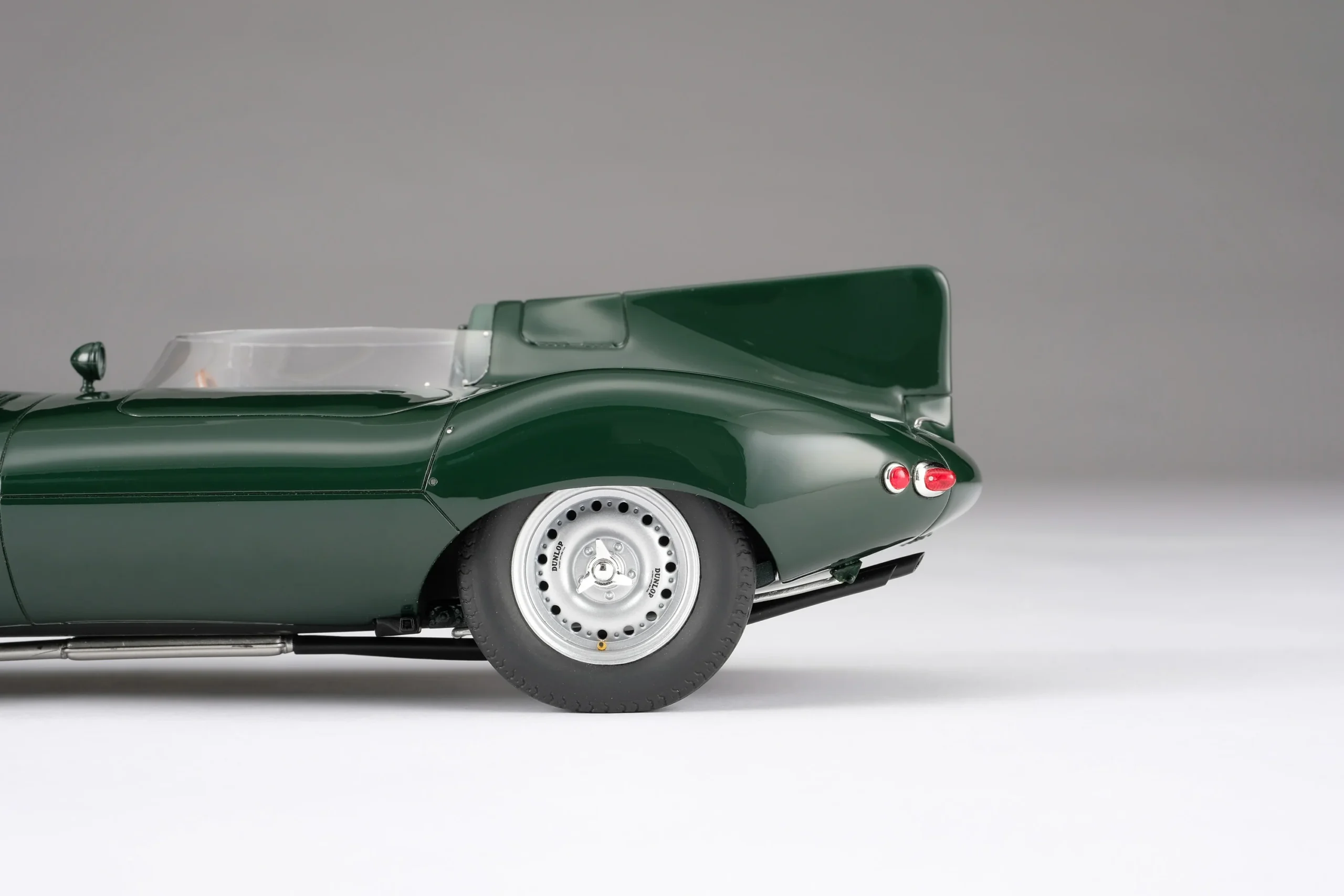
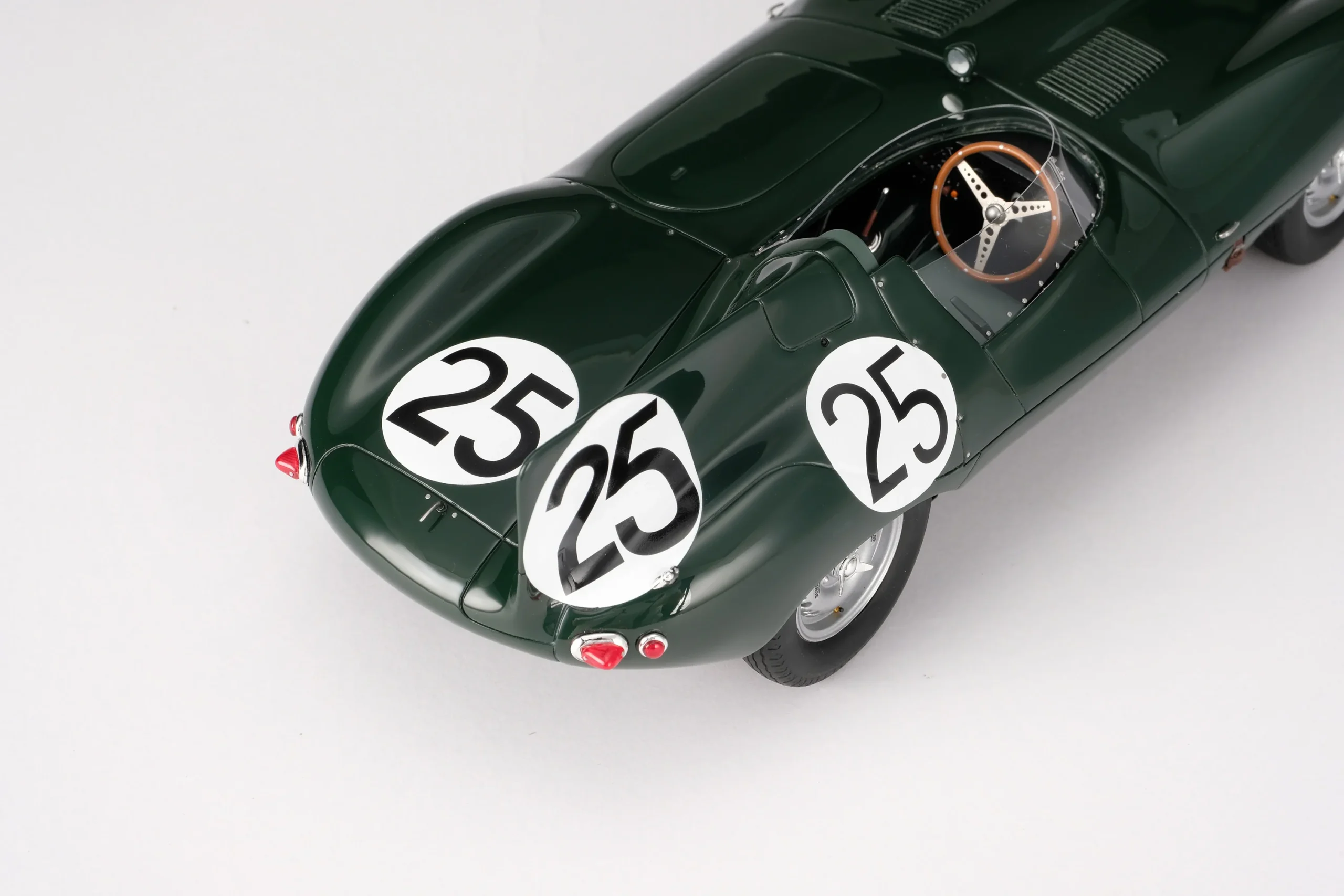
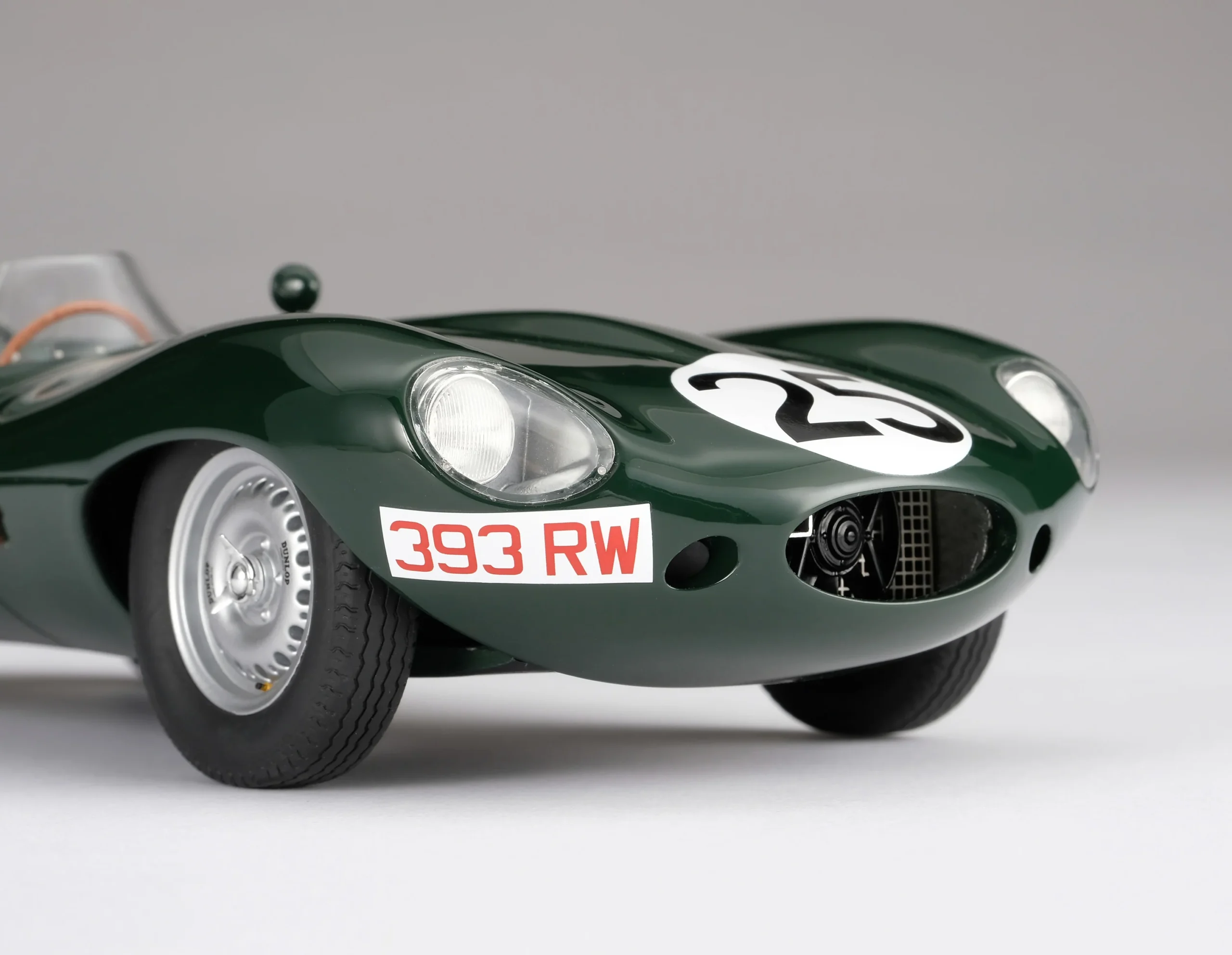
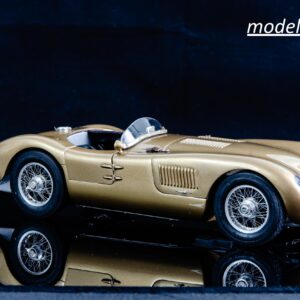
Amalgam Jaguar D-type - Winner of Reims 1956, high-quality collector's model in 1:18 scale.
The Jaguar D-Type was designed and built with a specific goal in mind: to win the 24 Hours of Le Mans. Although the C-Type had clearly beaten Europe's best at Le Mans in 1951 and 1953, the threat from Alfa Romeo, Aston Martin, Ferrari and Mercedes-Benz made Jaguar team manager „Lofty“ England and engineer Bill Heynes realise that a new car was needed. The result was the D-Type - stronger, lighter and faster than the C-Type, yet powered by a 245bhp evolution of the same XK engine. This meant that private owners could easily buy and maintain these cars, providing useful support for the works team. The D-Type proved extremely successful in its mission and became one of the most dominant cars in Le Mans history, winning in three of the four years of participation between 1954 and 1957. The D-Type's success was not limited to the track, but eventually became the road-going XKSS and inspired many of the most famous cars of all time, the legendary E-Type.
The D-Type was produced between 1954 and 1956 and shared many mechanical components with its predecessor, the C-Type. Its front and rear suspension and innovative all-round disc brakes were retained, as was the legendary 3.4-litre inline six-cylinder XK engine, which was reworked to achieve an output of 245 hp thanks to a shorter block, larger valves and triple Weber carburettors. Structurally, however, the D-type was completely different. The revolutionary aluminium alloy monocoque construction was a marked departure from the space-frame chassis and softer body design of the C-Type and was inspired by aeronautical technology to maximise aerodynamic efficiency. The design was so successful that the prototype XKC 401 chassis broke the Le Mans lap record by a full five seconds during testing in 1954. The reduction in underbody drag had contributed to the car's high top speed; later, for stability reasons, a fin was fitted behind the driver, with a view of the long Mulsanne straight. For the 1955 season, the factory cars were fitted with a longer nose, lengthening the car by 7½ inches, and the headrest fairing and aerodynamic fin were combined into a single smooth unit, improving the aerodynamic profile, reducing weight and further increasing the car's top speed.
On its debut in 1954, the D-Type driven by Duncan Hamilton and Tony Rolt was denied immediate success by terrible conditions and lost just under three minutes to Ferrari, about half a lap (roughly less than 5km). the track, even after a staggering top speed of 170mph was recorded. The following year, however, Mike Hawthorn and Ivor Bueb crossed the chequered flag to give the D-Type its first Le Mans title - an event sadly marred by the deadliest accident in motorsport history, which caused their closest rivals Mercedes-Benz to retire from the race. In 1956, Jaguar scored another victory when the small Edinburgh-based Ecurie Ecosse team saw its D-Type, driven by Ninian Sanderson and Ron Flockhart, leave the pursuing Aston Martin, piloted by Stirling Moss and Peter Collins, trailing by a single lap to the chequered flag. Although Jaguar withdrew from motorsport at the end of the 1956 season, 1957 proved to be the D-Type's most successful year. Privateer teams still represented the D-Type and Ecurie Ecosse won again in 1957, securing a D-Type hat-trick that included previous winners Flockhart and Bueb. They won convincingly, finishing eight laps ahead of their sister car driven by Sanderson and John „Jock“ Lawrence. The D-Type dominated the rankings this year, not suffering a single retirement and taking five of the top six places. This cemented its place in Le Mans history as one of the most successful cars in the race.
Away from the Circuit de la Sarthe, the D-Type was still an incredibly successful racing car, taking victories in Europe and the United States at tracks such as Aintree, Goodwood, Silverstone, Watkins Glen, Willow Springs and Daytona. The Briggs Cunningham team scored a major victory with a D-Type at the Sebring 12 Hours in 1955: Mike Hawthorn and Phil Walters led all but one lap and were first to the chequered flag. A further two wins came from the Jaguar Works team at the 12 Hours of Reims; in 1954, less than a month after the narrow defeat at Le Mans, Ken Wharton and Peter Whitehead sealed the D-Type's first victory, while Duncan Hamilton and Ivor Bueb repeated the feat a year later. Such was the D-Type's ability that, in experienced hands, it was still scoring minor victories against far stronger opponents a decade later.
Jaguar had planned to build 100 D-Types before retiring from motorsport at the end of the 1956 season. Production of the car was discontinued after only 75 models had been built. The 25 remaining chassis were to be repurposed for the road-going XKSS. However, a fire at the company's Browns Lane factory destroyed most of these chassis and brought the D-Type/XKSS story to an abrupt end. But 62 years later, after the last D-Type was built, Jaguar Classic announced that they would complete the original production run of 100 cars and painstakingly hand-build 25 new examples. Using the originally planned chassis numbers, these continuation cars were not mere replicas, but quite literally a new car built in Warwickshire to the original engineering, utilising many of the authentic materials and methods used by competition manager Lofty England and his original plans, exactly as the car was built in the 1950s. Customers of the D-Type could opt for either the 1955 Series Shortnose with the „single hump“ or the 1956 Series Longnose with the „tail fin“, with both specifications including the six-cylinder XK engine with wide-angle cylinder head and quick-change calipers. The Continuation cars were designed entirely for racing in classic car events and were built like the original down to the smallest detail, including the intention to win.
This fine 1:18 scale model of the Jaguar D-Type is an exact replica of the XKD 605 chassis, exactly as Duncan Hamilton and Ivor Bueb drove it to victory in its classic British Racing Green at the Reims 12 Hours at Reims-Gueux 30 June 1956. Built in March 1956 as one of twelve Longnose cars, the XKD 605 is the penultimate D-Type and was allocated to the Jaguar Works racing team on its completion. Reims was the car's competition debut, where Hamilton and Bueb drove the car to a commanding victory. Bueb and Mike Hawthorn raced the XKD 605 at Le Mans the following month, but were held back by persistent misfires that were eventually blamed on a ruptured fuel injection pipe. They finished sixth with 280 laps and set the fastest lap. The car was rebuilt after Le Mans and fitted with a five-speed gearbox. Following Jaguar's withdrawal from racing, the car was supplied to the Briggs Cunningham team as a used car. Painted in the racing colours of white with blue stripes and fitted with a new 3.8-litre works engine, the XKD 605 took part in Walt Hansgen's second consecutive SCCA championship for modified Class C sports cars and was driven to third place by Mike Hawthorn and Ivor Bueb at Sebring. The car remained in the USA until 1961 and then returned to England, where it was repainted in its original „British Racing Green“ colour. It was then loaned to the National Automobile Museum of Italy, where it remained for almost twenty years before returning to the Jaguar factory. The XKD 605 is one of the original surviving D-Types and still retains its 1956 Le Mans windscreen, passenger seat and door, and proudly bears its original registration number 393 RW, which was re-registered with the DVLA in 1996, and the race number 25 from its victory at Reims.
This model was handcrafted and finished in our workshops with the co-operation and support of Jaguar in terms of original finishes, materials, archive images and drawings. The use of extremely accurate digital scans of the XKD 505/601 chassis has enabled us to perfectly replicate every detail in scale. In addition, it has been subjected to detailed scrutiny by both engineering and design teams to ensure complete accuracy of representation.
Note: This is a ‚notcheside‘ model and has no moving parts.
Item number: M-XKSS

 German
  English
  Italian
  French
  Spanish
  Arabic
  Japanese
Reviews
There are no reviews yet.