
Description
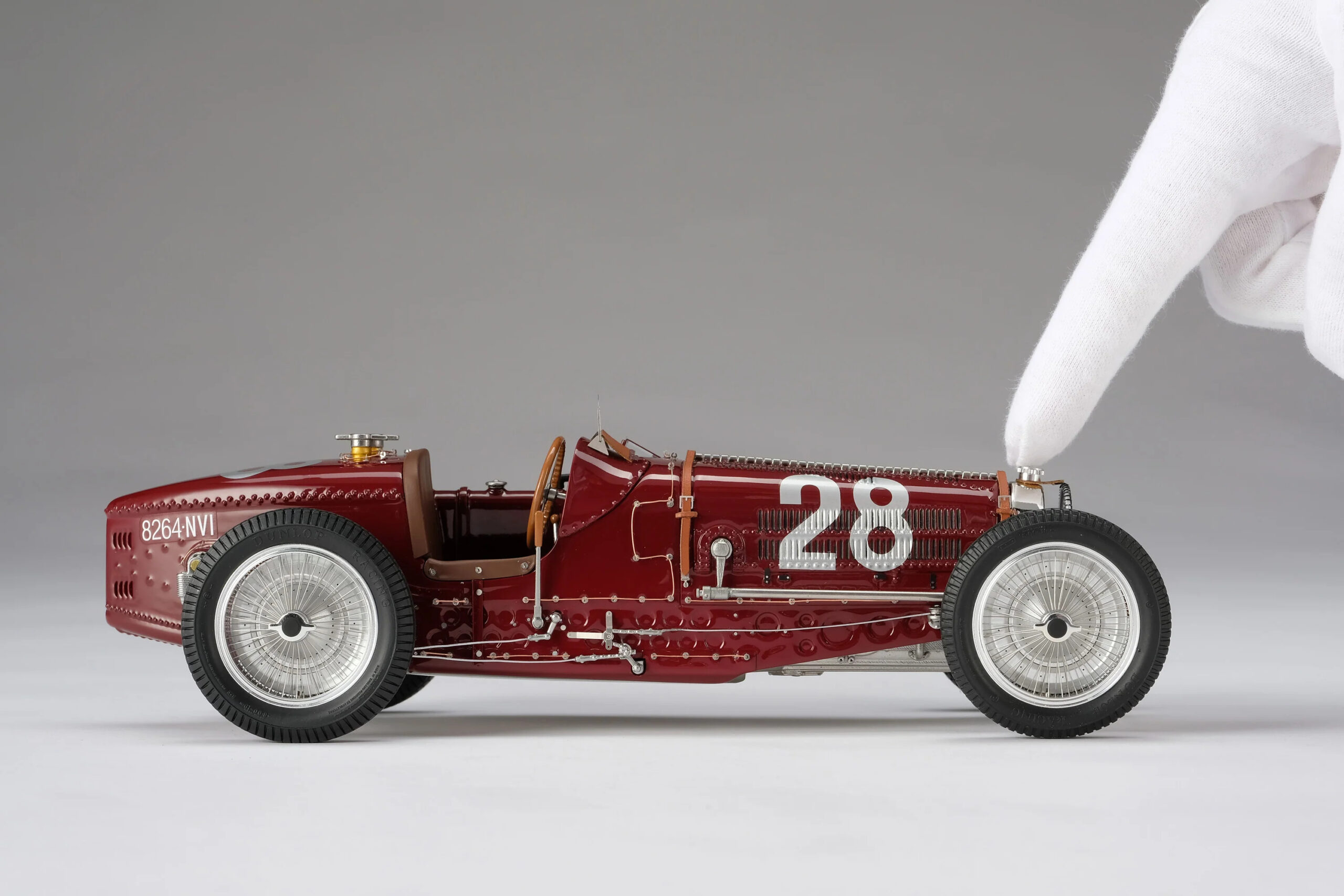
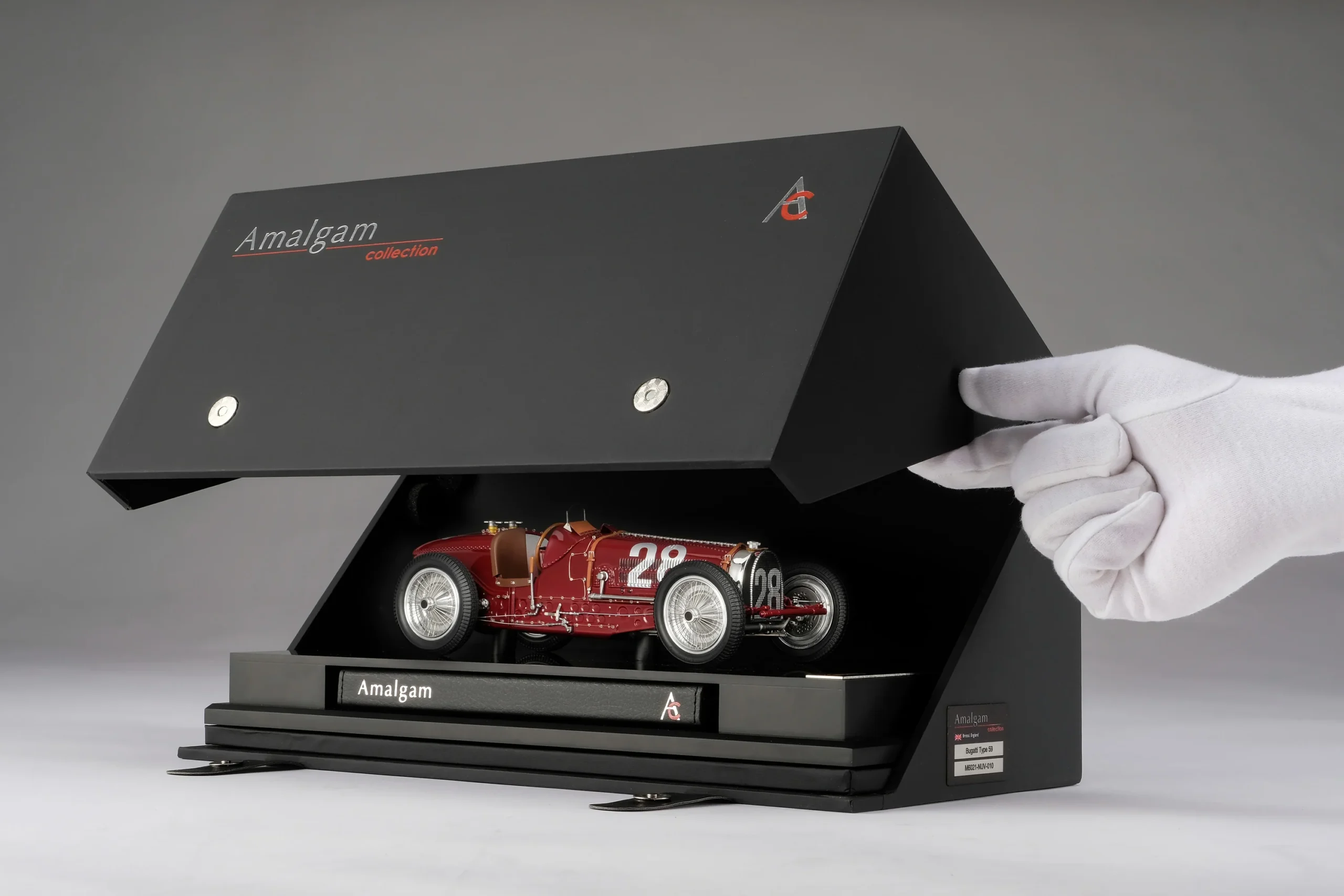
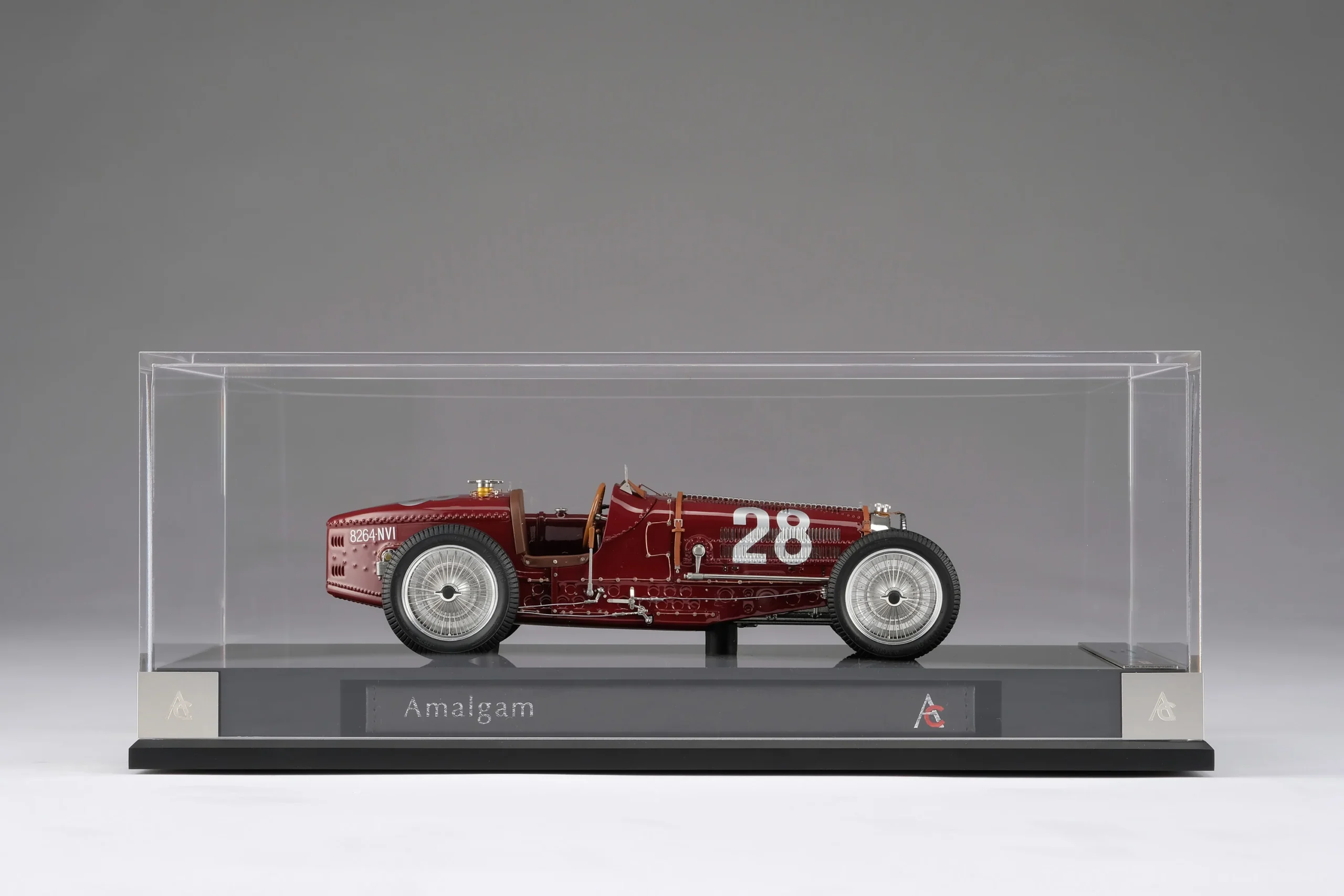
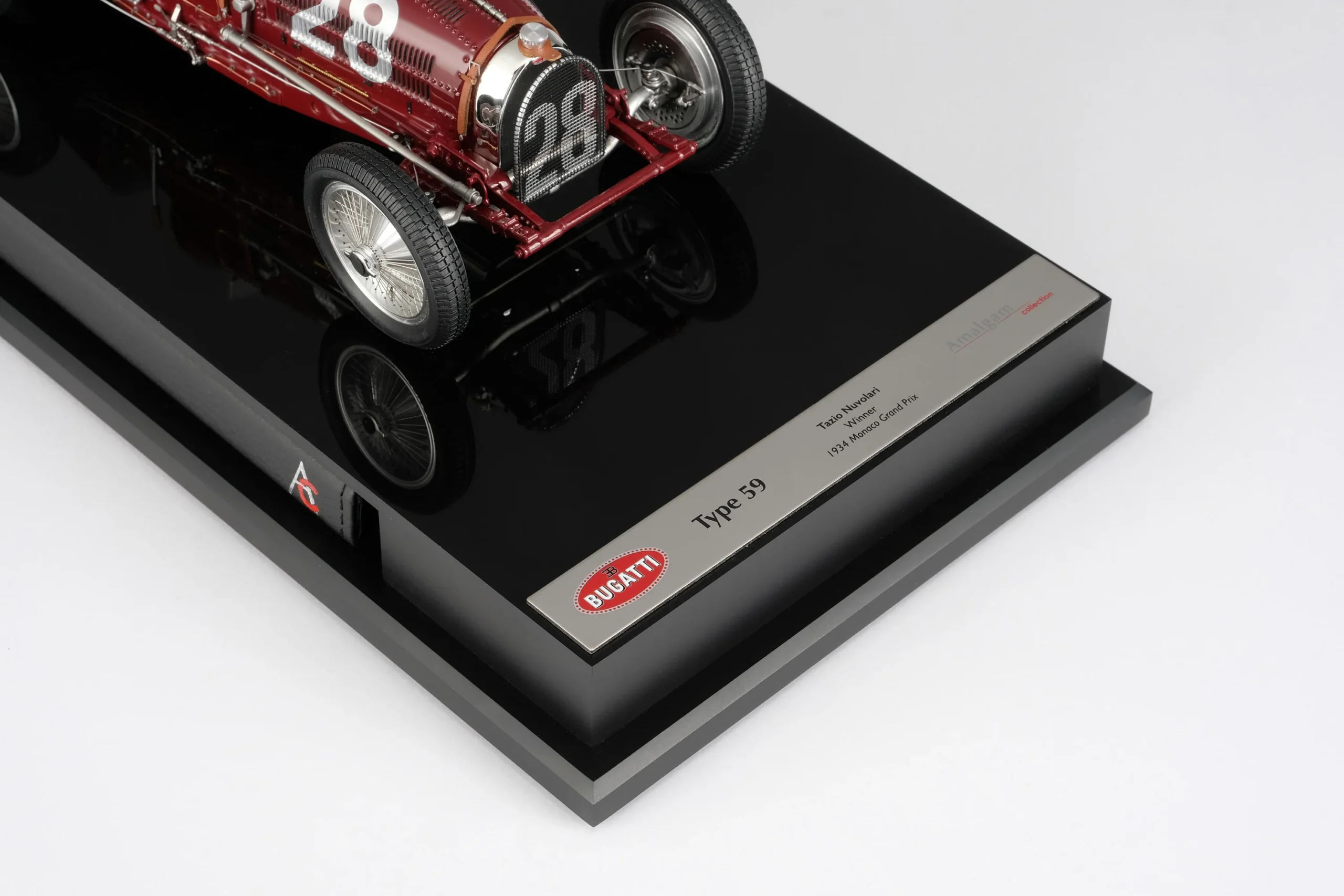
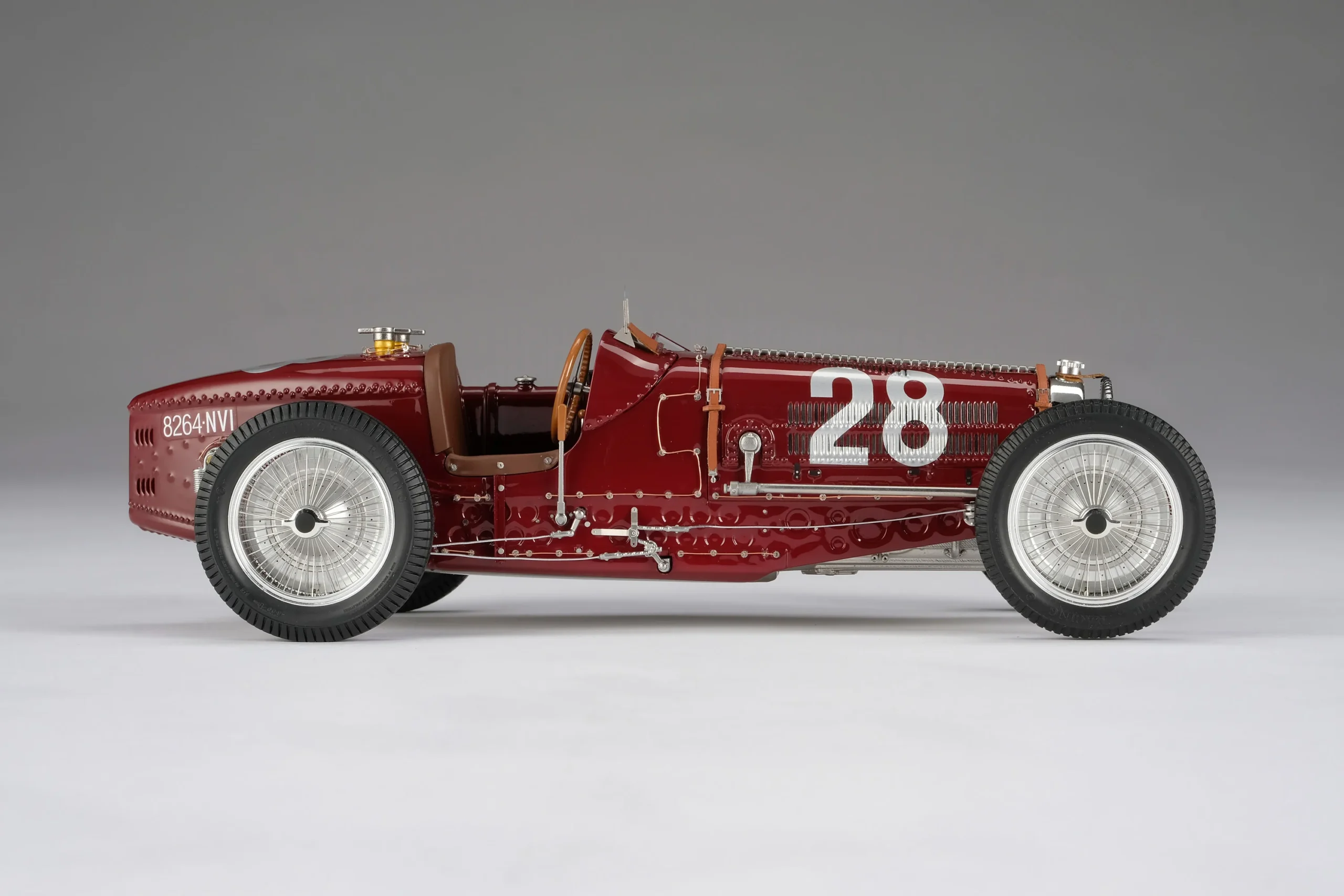
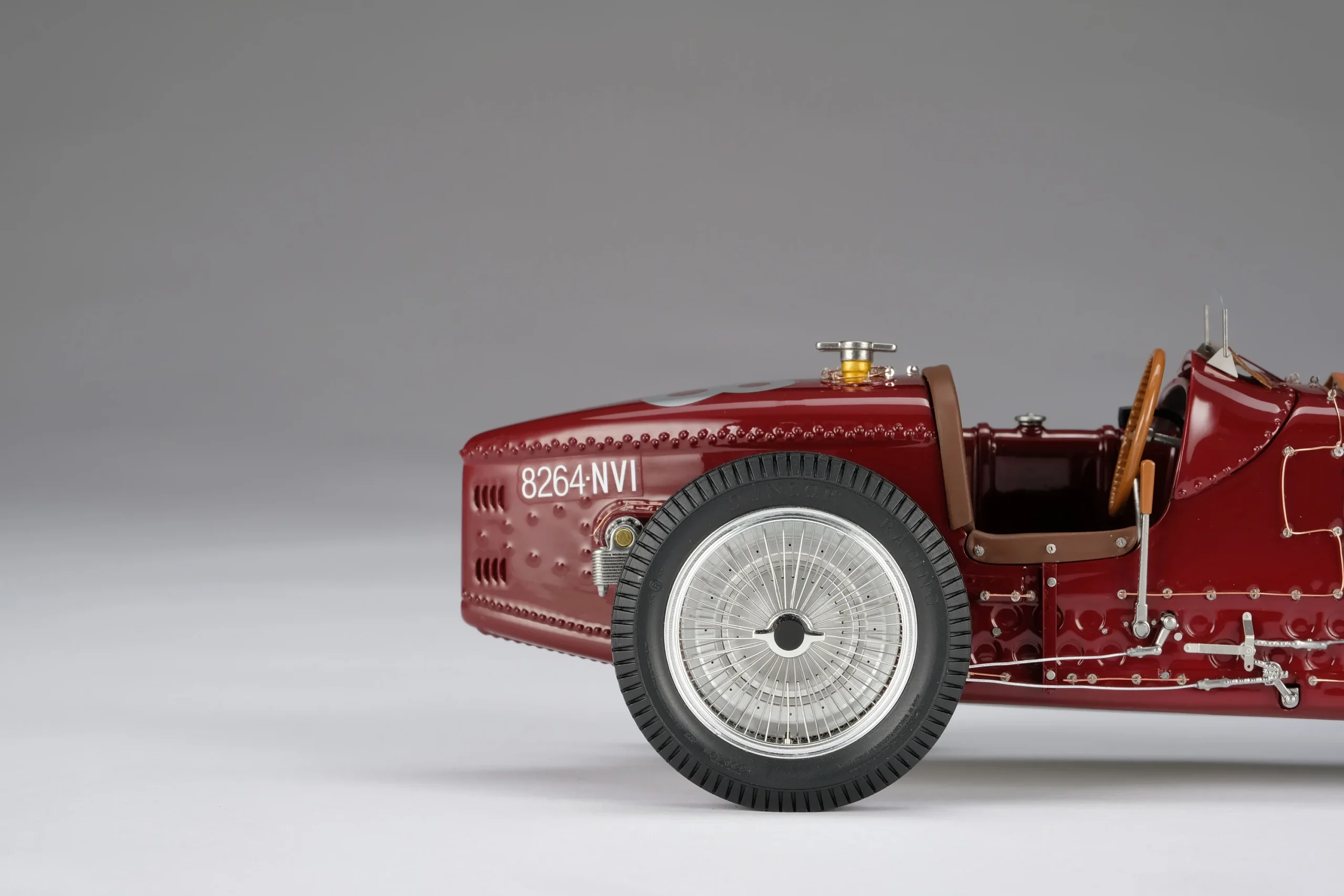
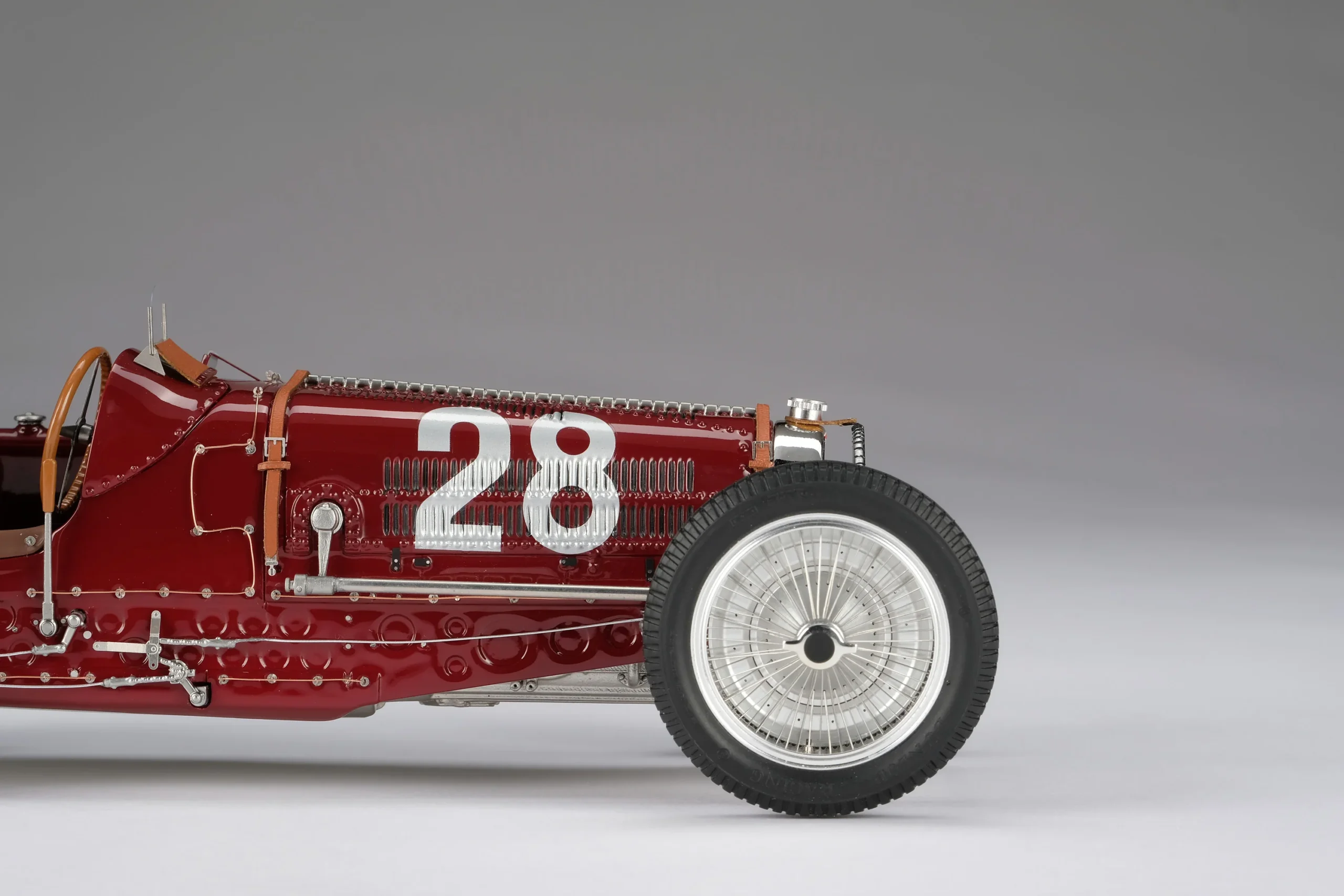
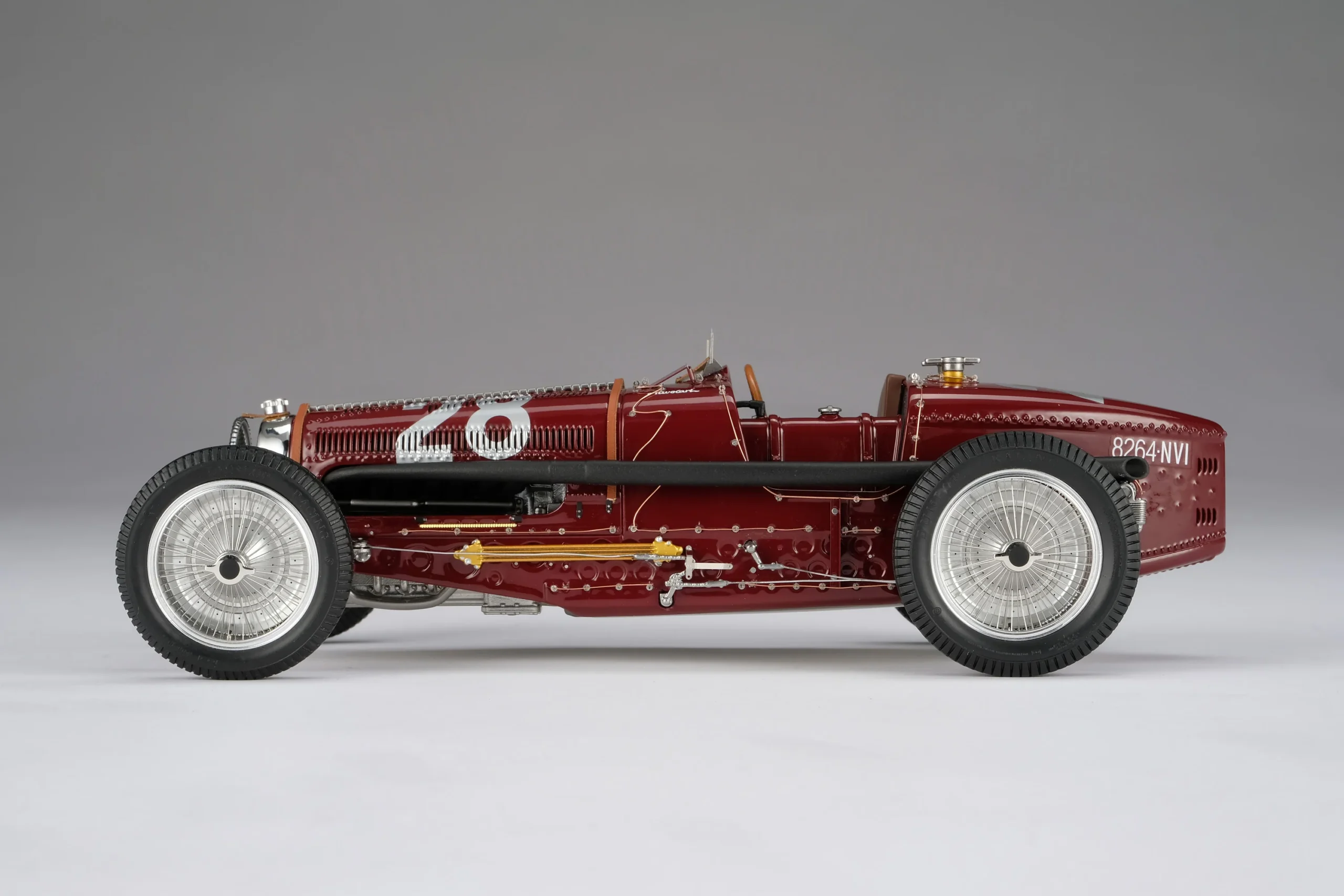
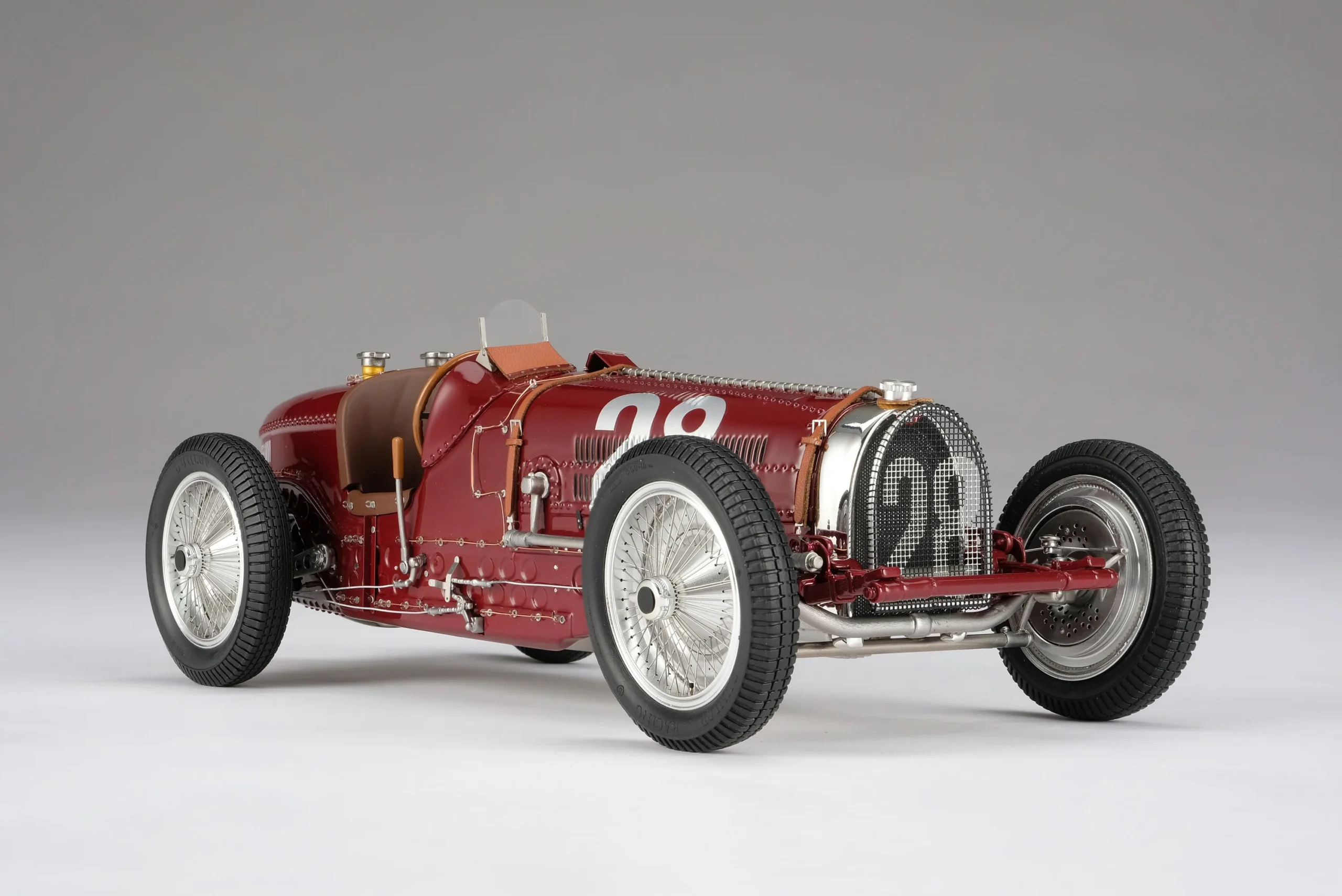
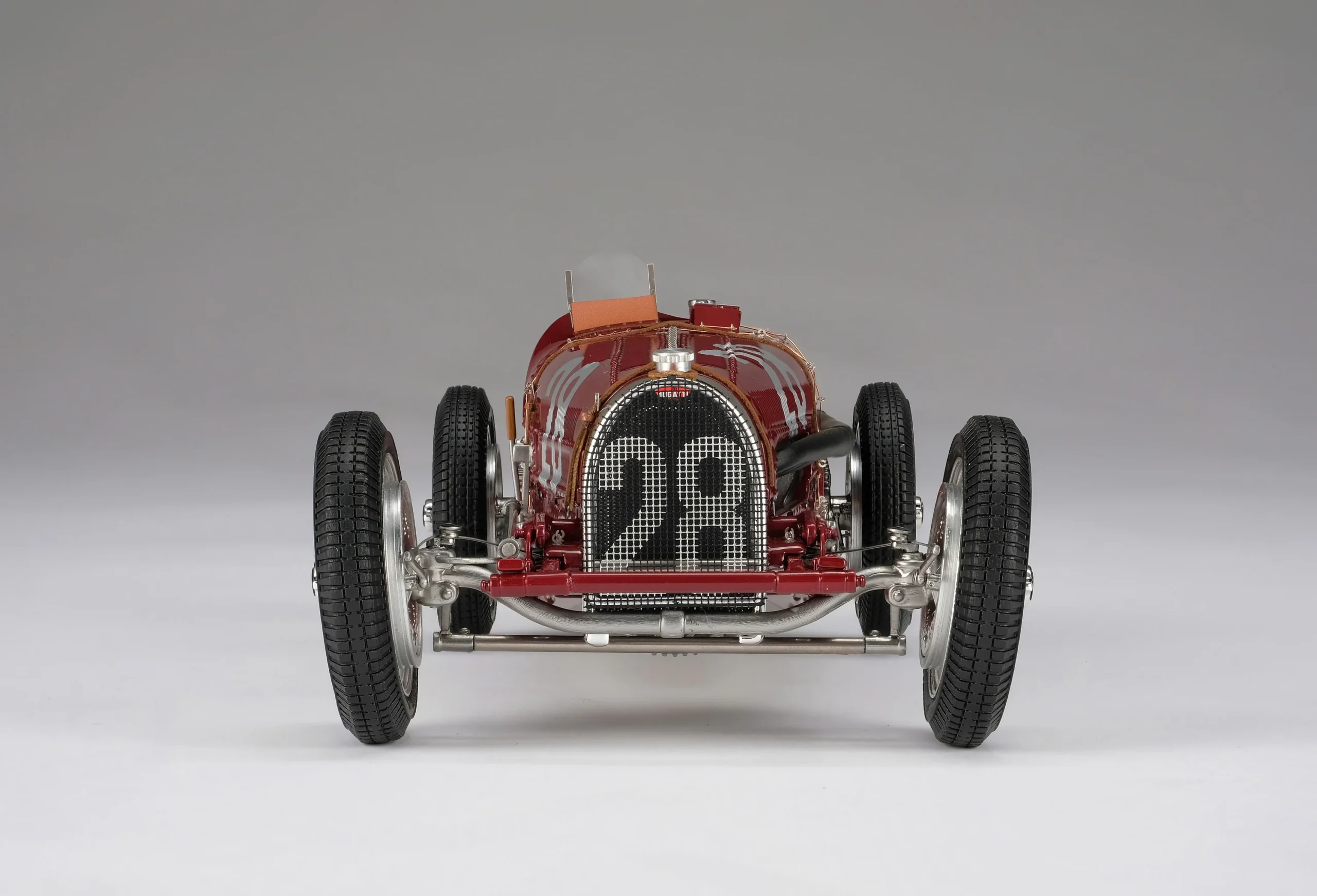
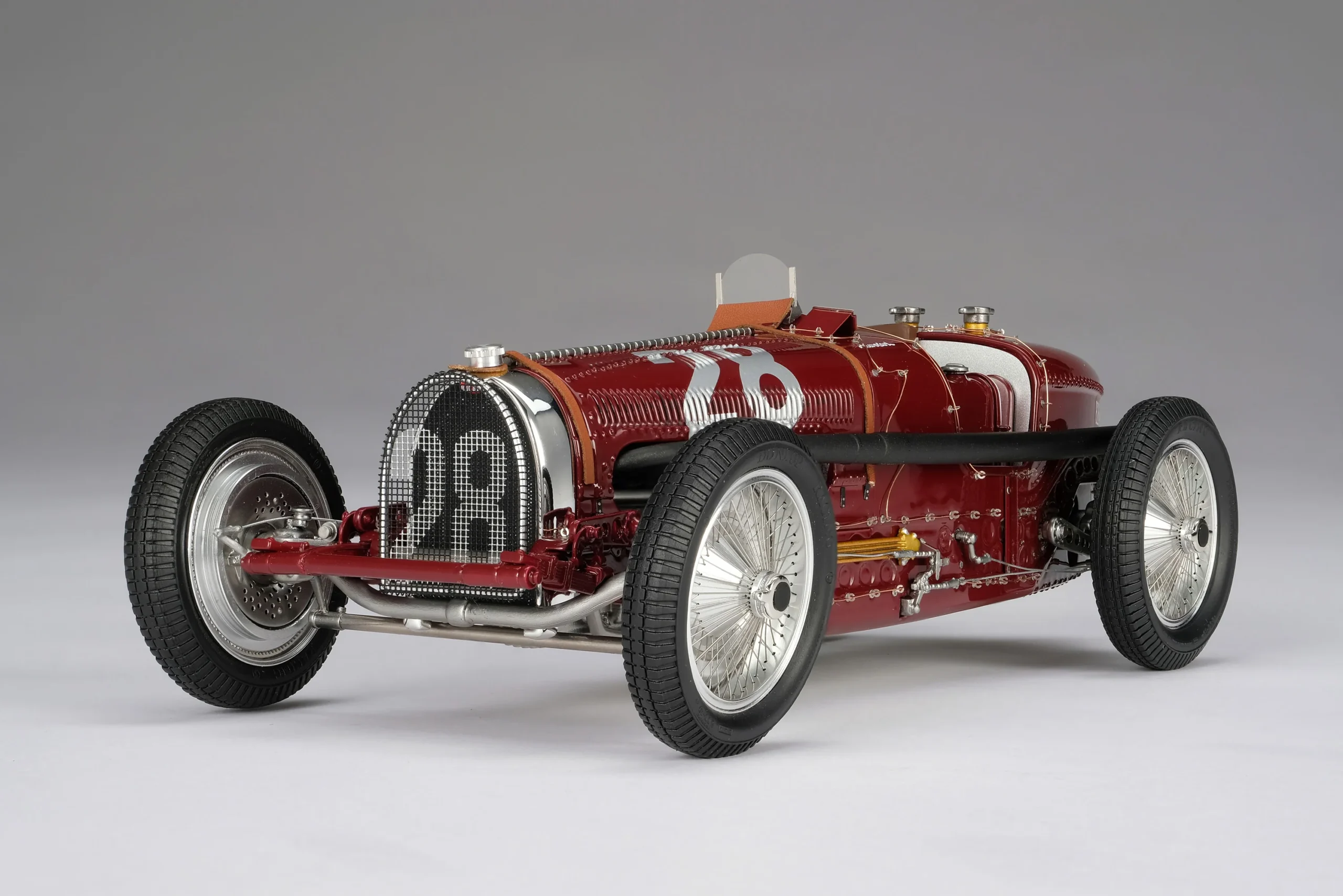
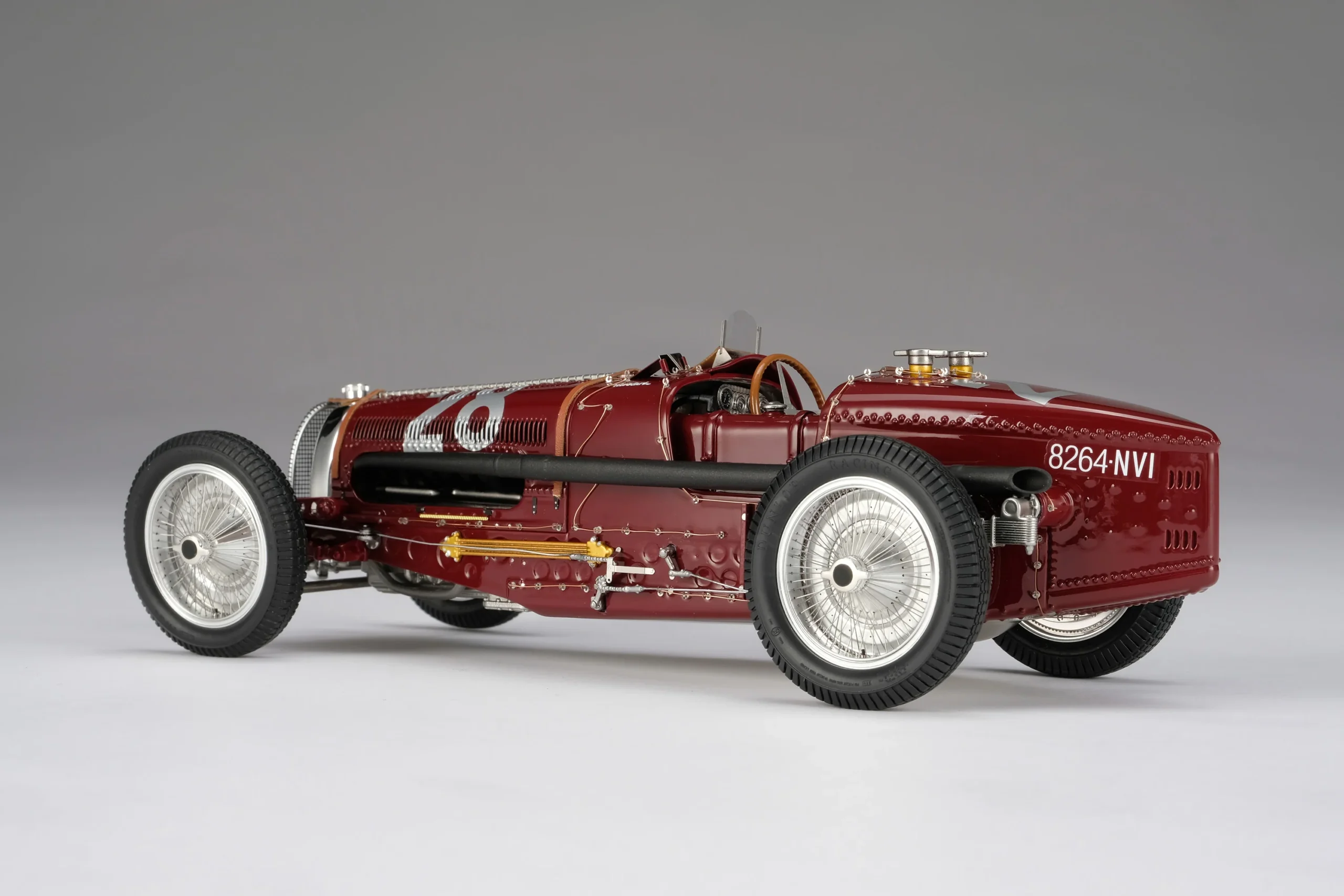
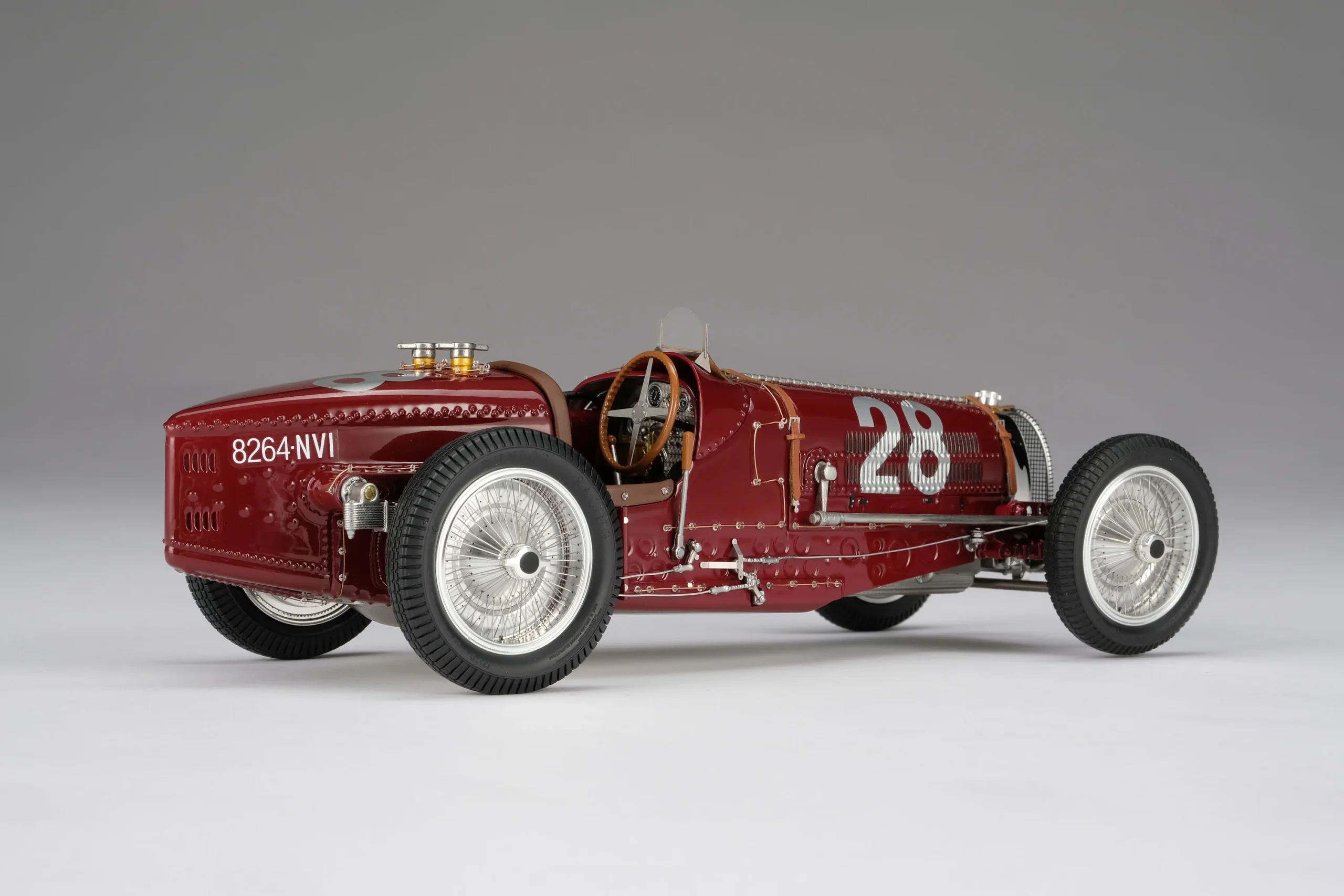
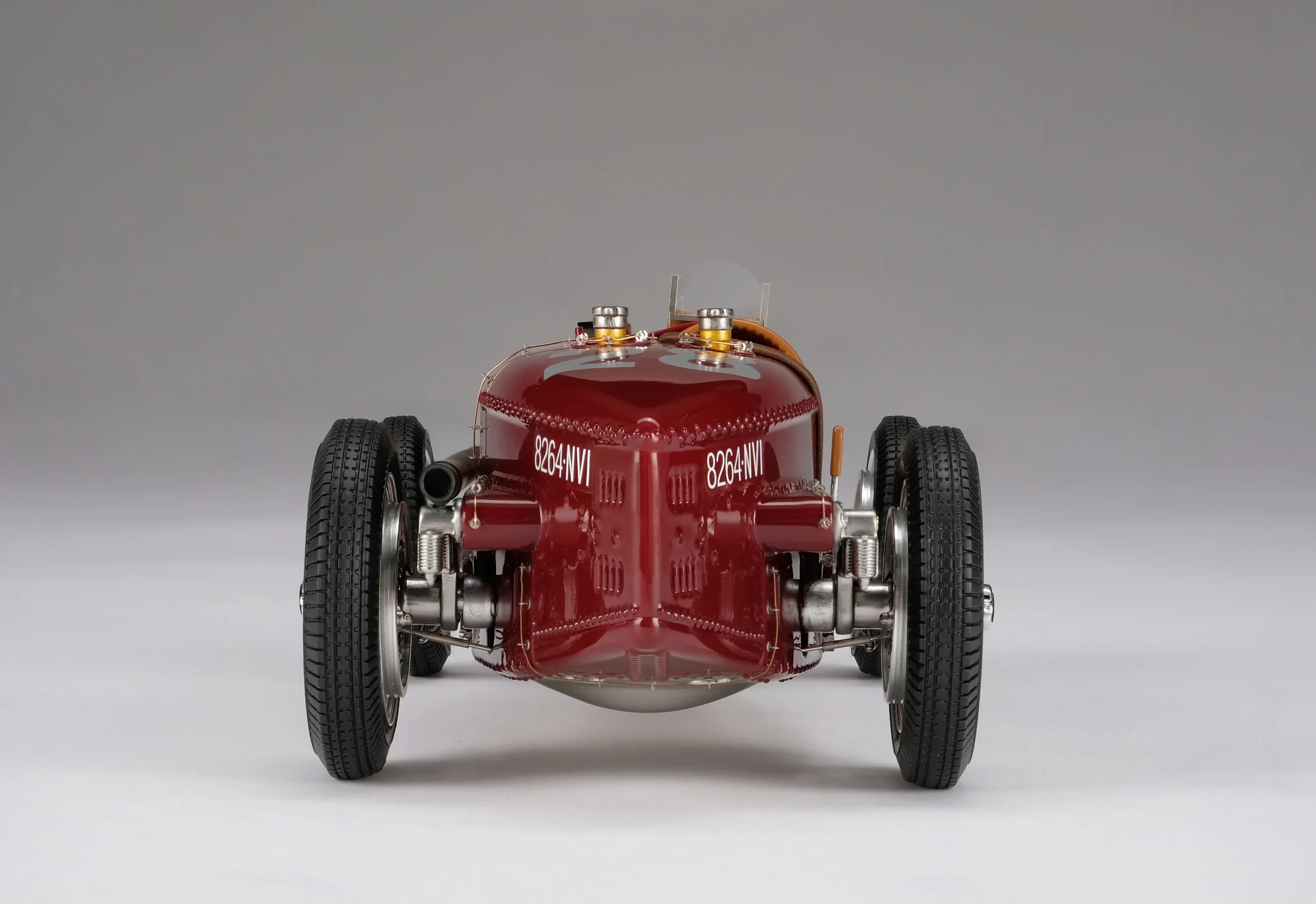
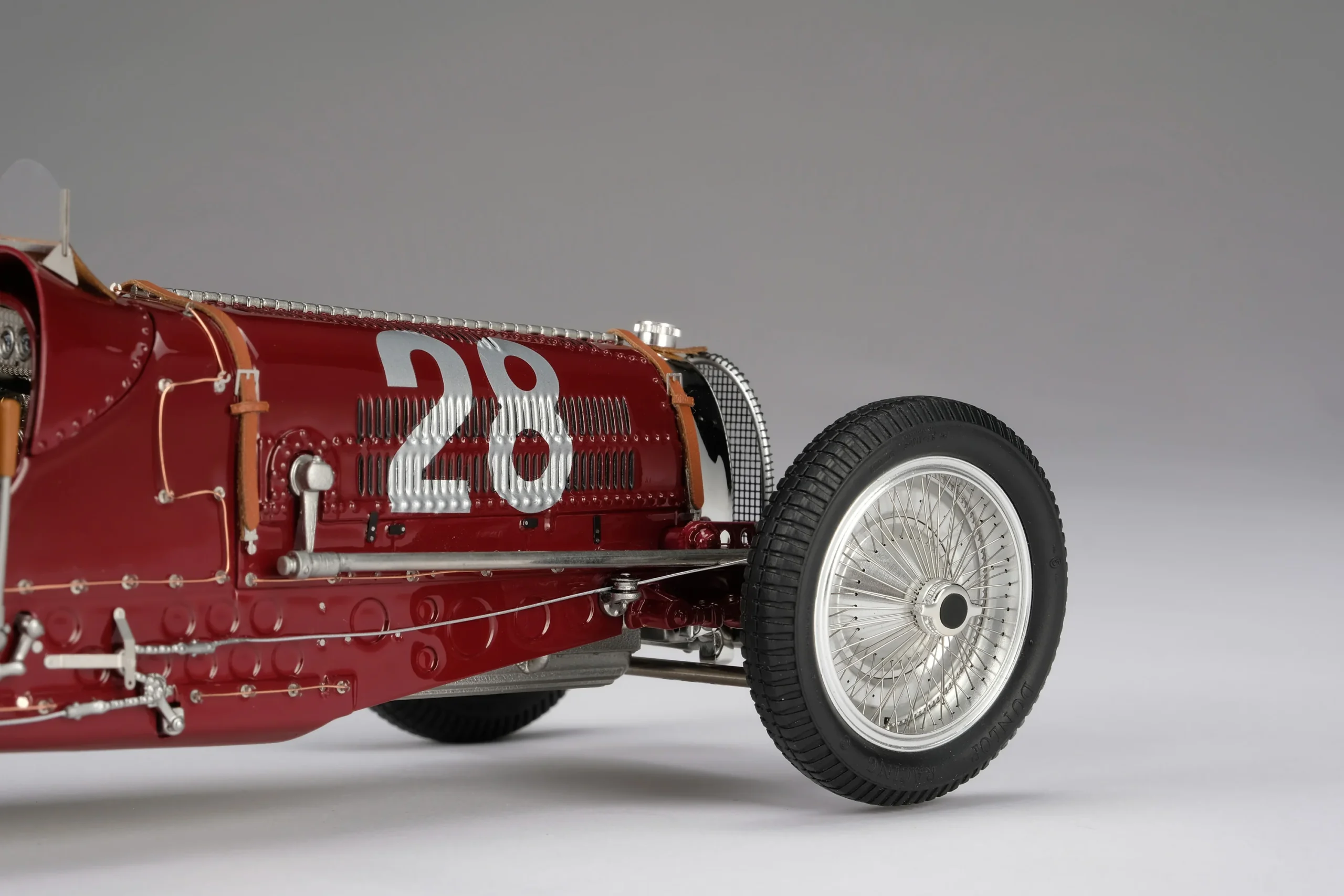
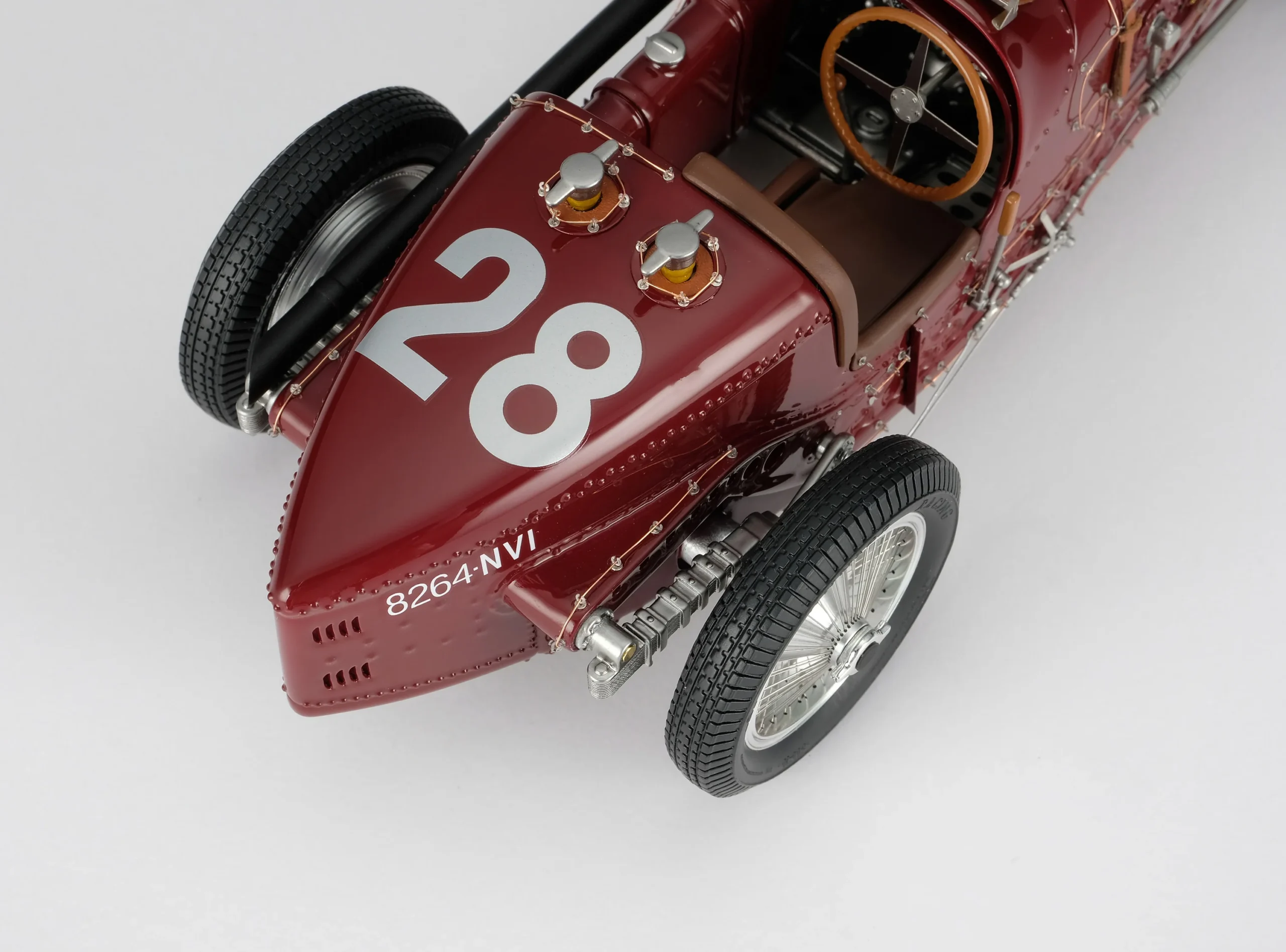
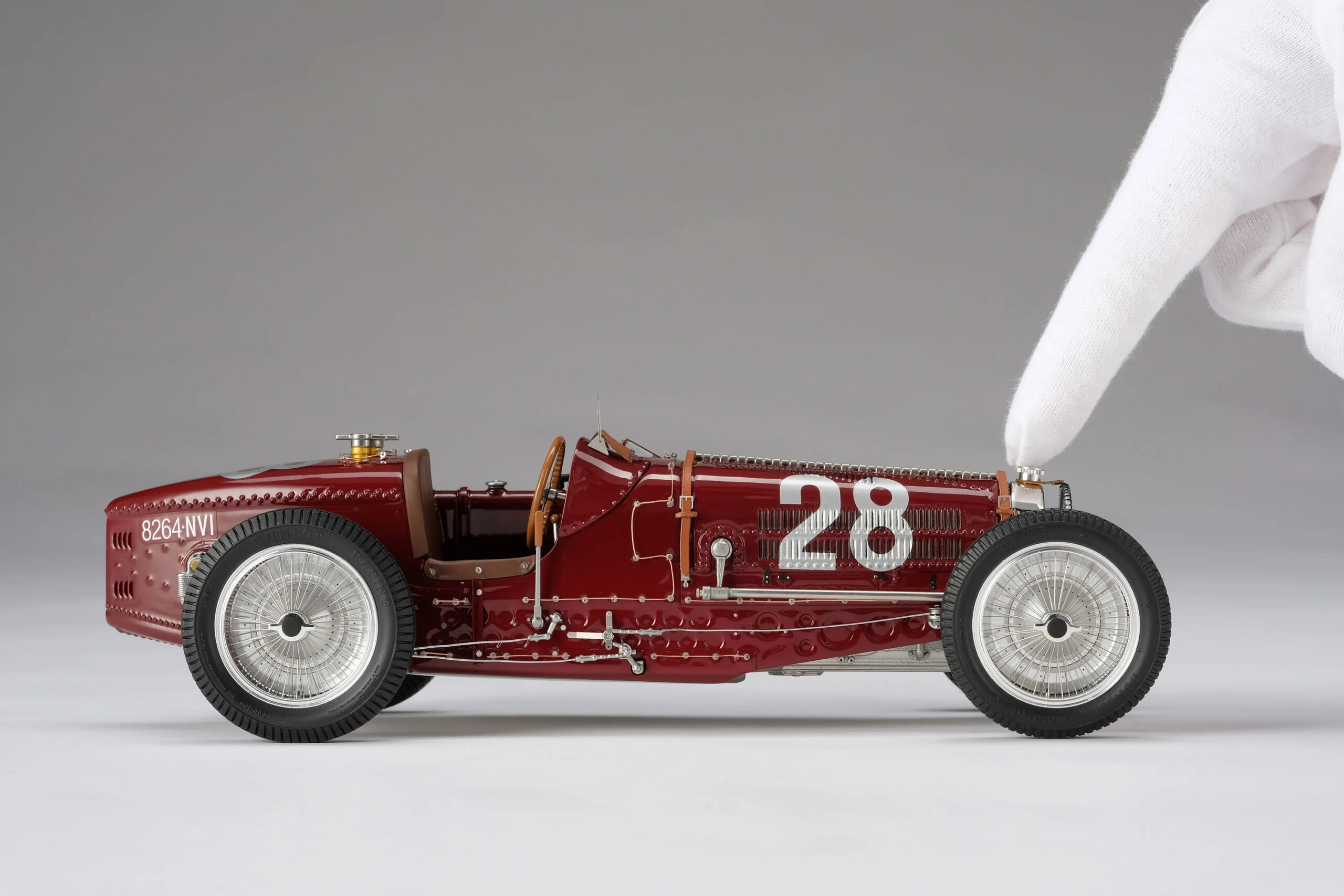
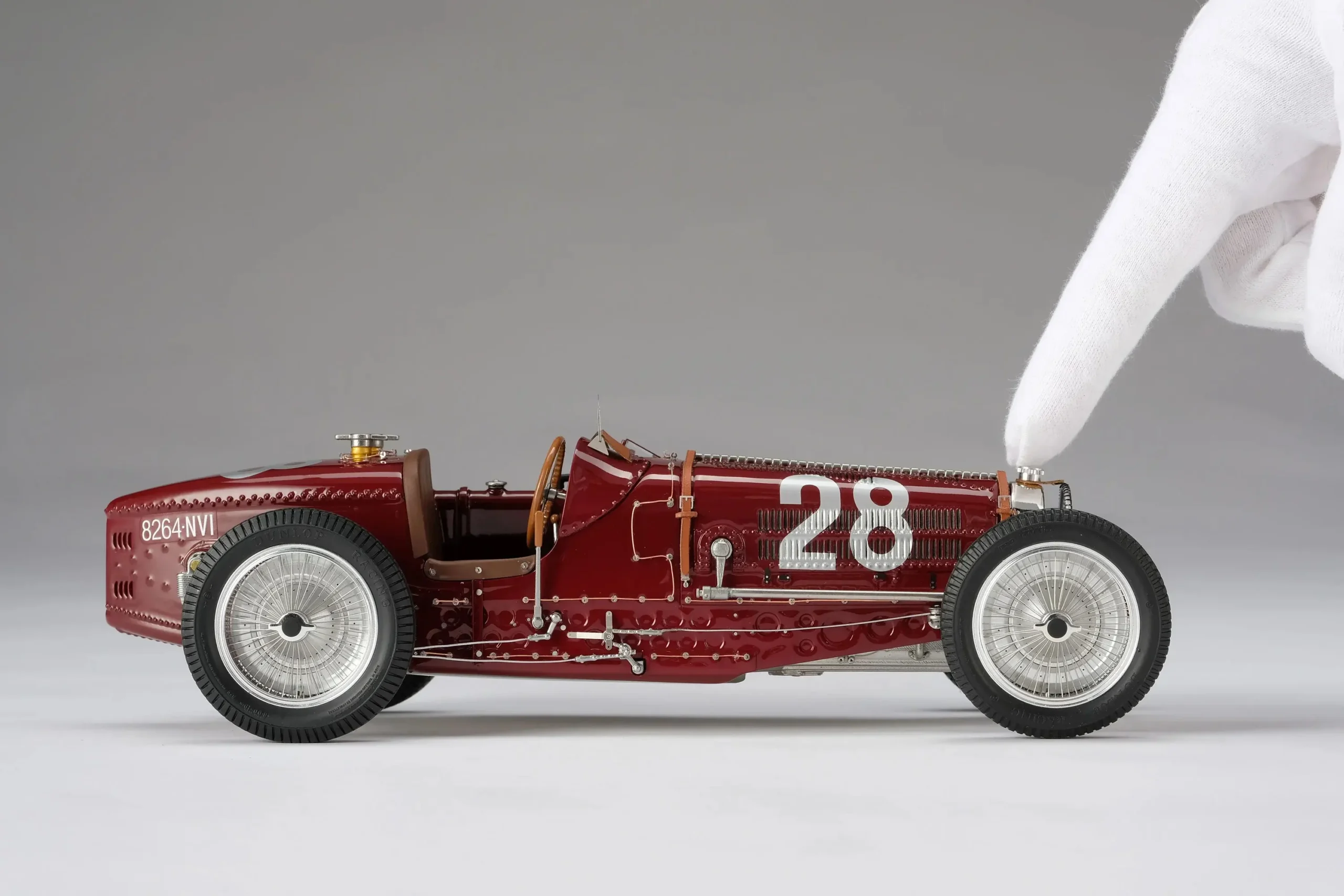
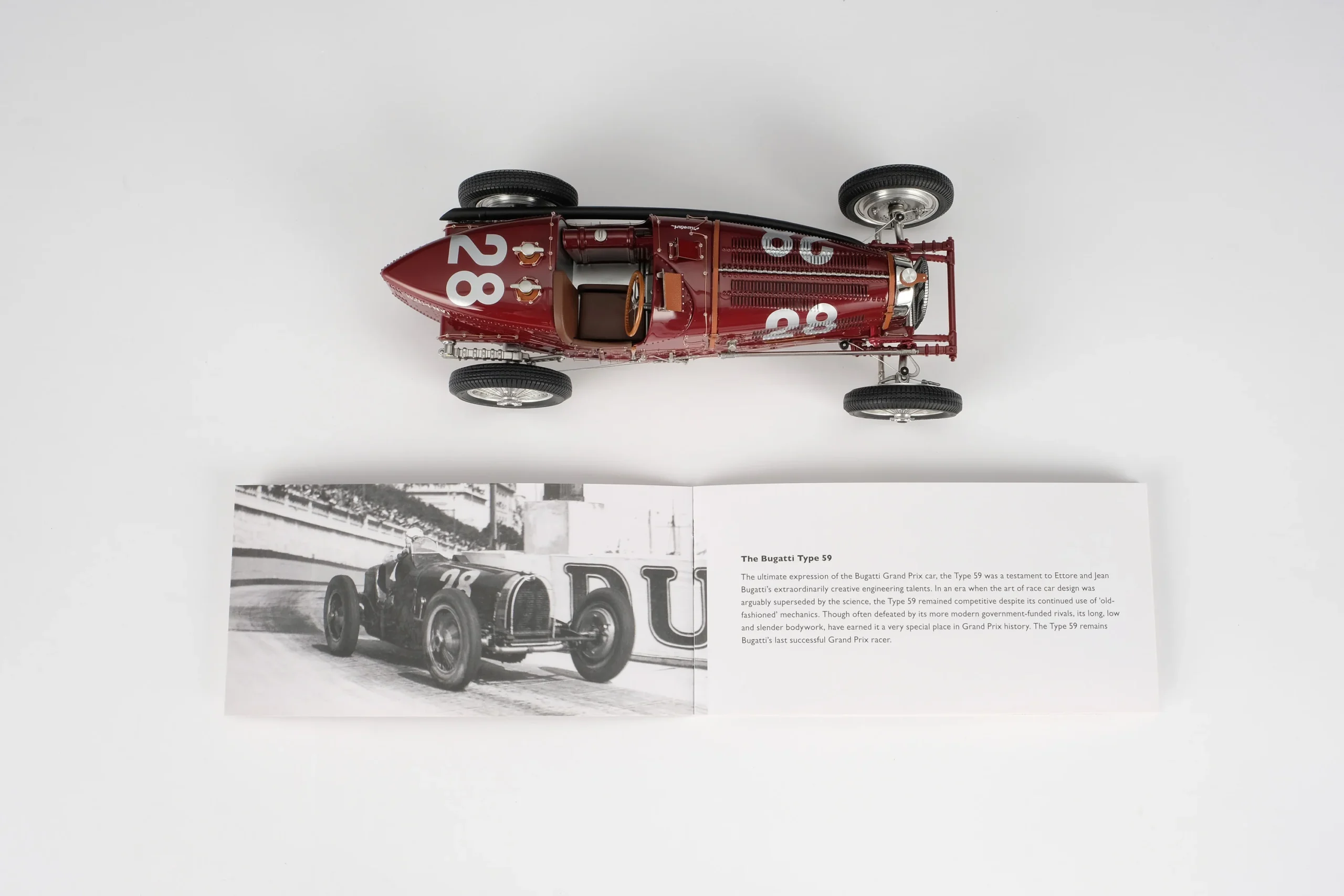
Amalgam Bugatti Type 59 - 1934 Monaco GP - Nuvolari
- 1:18 scale model, over 20 cm/8 inches long
- Based on the car that Tazio Nuvolari drove to fifth place at the Monaco Grand Prix on 2 April 1934 at the Circuit de Monaco
- Each model is handmade and assembled by a small team of craftsmen
- Made from the highest quality materials
- Over 800 hours spent developing the model
- Precisely constructed parts: Castings, photo etchings and CNC machined metal parts
- Original CAD designs created after scanning chassis 59122 owned by Ralph Lauren
- Archive images and colour codes by Bugatti historian Julius Kruta
We are delighted to announce that we are developing the 1/18th scale Bugatti Type 59 to sit alongside our existing 1/8th scale model of this extraordinary car. Based on Tazio Nuvolari's car at the Monaco Grand Prix on 2 April 1934, the model is being developed using digital scan data of a key example of the Type 59, with race specific details sourced from archive photographs and respected Bugatti experts.
The Type 59, the ultimate expression of the Bugatti Grand Prix car, was a testament to the extraordinarily creative engineering talent of Ettore and Jean Bugatti. At a time when the art of racing car design was arguably being superseded by science, the Type 59 remained competitive despite its continued use of „old-fashioned“ mechanicals. Although it was often defeated by its more modern, state-funded rivals, its long, low and sleek bodywork has earned it a very special place in Grand Prix history. The Type 59 remains Bugatti's last successful Grand Prix racer.
The Type 59 is widely regarded as an artistic masterpiece: It still retained the heritage of the iconic and all-conquering Type 35 that Ettore Bugatti had designed a decade earlier, but by lengthening the wheelbase of the new chassis frame, he created a beautiful Grand Prix car with perfect proportions. Under the all-aluminium body was the in-line eight-cylinder engine. The engine was a new development, spearheaded by Etore's eldest son Jean, to power not only the Type 59 racing car but also the forthcoming Type 57 Grand Tourer. The Grand Prix version was equipped with two camshafts, dry sump lubrication and a lighter crankshaft. On its debut, the engine displaced 2.8 litres, which was soon supercharged to just under 3.3 litres, and a separate four-speed gearbox was fitted roughly midway between the engine and rear differential for optimum weight distribution.
The steel ladder-frame chassis of the Type 59 was almost identical to that of its predecessor, the Type 54, but unusually the front and rear axles were built from two halves joined in the centre, adding a degree of flexibility to the traditional solid axles. Ettore Bugatti favoured the two-seater Grand Prix concept, and the Type 59 was no exception, with the driver offset to the right of the centre of the car and his famous eye for design leading to exquisite details such as the superbly engineered piano wire spoke wheels. This special addition was supported by strong mechanicals: An aluminium backplate took care of the drive and braking torque, while the spokes themselves only carried radial loads.
Long delays meant that the Type 59 debuted late in the 1933 season and the car had to be modified to compete under the new 750kg regulations that would come into force in 1934. The Bugatti was not particularly successful on the track, but although its rivals Auto Union, Mercedes-Benz and Alfa Romeo had made significant innovations with independent suspension and hydraulic brakes, the Type 59 remained competitive despite its continued use of solid axles and cable-operated drum brakes. It won a single major Grand Prix at Spa in 1934 and even then there were many mitigating factors. Bugatti's German rivals Mercedes-Benz and Auto Union withdrew from the race beforehand (rumoured to be due to problems with Belgian customs at the border) and problems plagued the other competitors, leaving only seven starters on the grid, three of which were Type 59s. Bugatti's remaining big rival, Alfa Romeo, flew into a commanding lead before both starters retired due to a crash and the other due to a broken oil pipe, allowing René Dreyfus and Antonio Brivio to score a fantastic 1-2 victory for the French marque. However, the Type 59 still celebrated several successes in the small Grand Prix: Jean-Pierre Wimille won in Algiers in 1934 and in Deauville in 1936, while Robert Benoist won in Picardy in 1935.
Today, Type 59s are prized collector's items and have an estimated value of over £10 million. Only seven cars were built in Grand Prix configuration, four of which raced for the Bugatti works team and all of which survive to this day. Current owners include Ralph Lauren and industrial designer Marc Newson. A former Grand Prix chassis, which was converted into a sports car configuration in the 1930s, was auctioned for £9.5 million in 2020.
This beautiful 1:18 scale model is based on the car that Tazio Nuvolari drove to fifth place at the Monaco Grand Prix on 2 April 1934 at the Circuit de Monaco. Monaco was the first major race to be held with the new weight limit of 750 kg, and while the Bugatti works team travelled with three cars, a fourth red Type 59 was loaned to Tazio Nuvolari. He entered as a private competitor, although he had the full support of the team. Fifth in qualifying, Nuvolari was overtaken by Louis Chiron's Alfa Romeo on the grid. After ten laps, Piero Taruffi managed to find a way past Nuvolari, only to be immediately overtaken again, and this fierce battle came to an abrupt end when the Maserati began to ignite. Halfway through the race, Nuovlari dropped back from the lead and was eventually lapped by Chiron. Pit stops from the cars ahead brought Nuvolari up to third place after around 70 laps, but brake problems required a longer stop of his own and dropped him back to sixth. Just a few laps from the end, Nuvolari regained his fifth position after Taruffi's still failing Maserati retired.
To develop the Type 59, we used our extremely accurate digital scanning on chassis 59122, kindly provided by its current owner Ralph Lauren, and in collaboration with Bugatti's automotive historian Julius Kruta, developed this amazingly detailed and accurate large scale replica. This scale model was handcrafted and finalised in our workshops with the collaboration and support of the manufacturer in terms of original finishes, materials, archive images and drawings. In addition, the prototype model has been thoroughly scrutinised by the manufacturer's engineering and design teams to ensure complete accuracy of representation.
Note: This is a ‚notcheside‘ model and has no moving parts.
Item number: M5542-1-1

 German
  English
  Italian
  French
  Spanish
  Arabic
  Japanese
Reviews
There are no reviews yet.