
Description
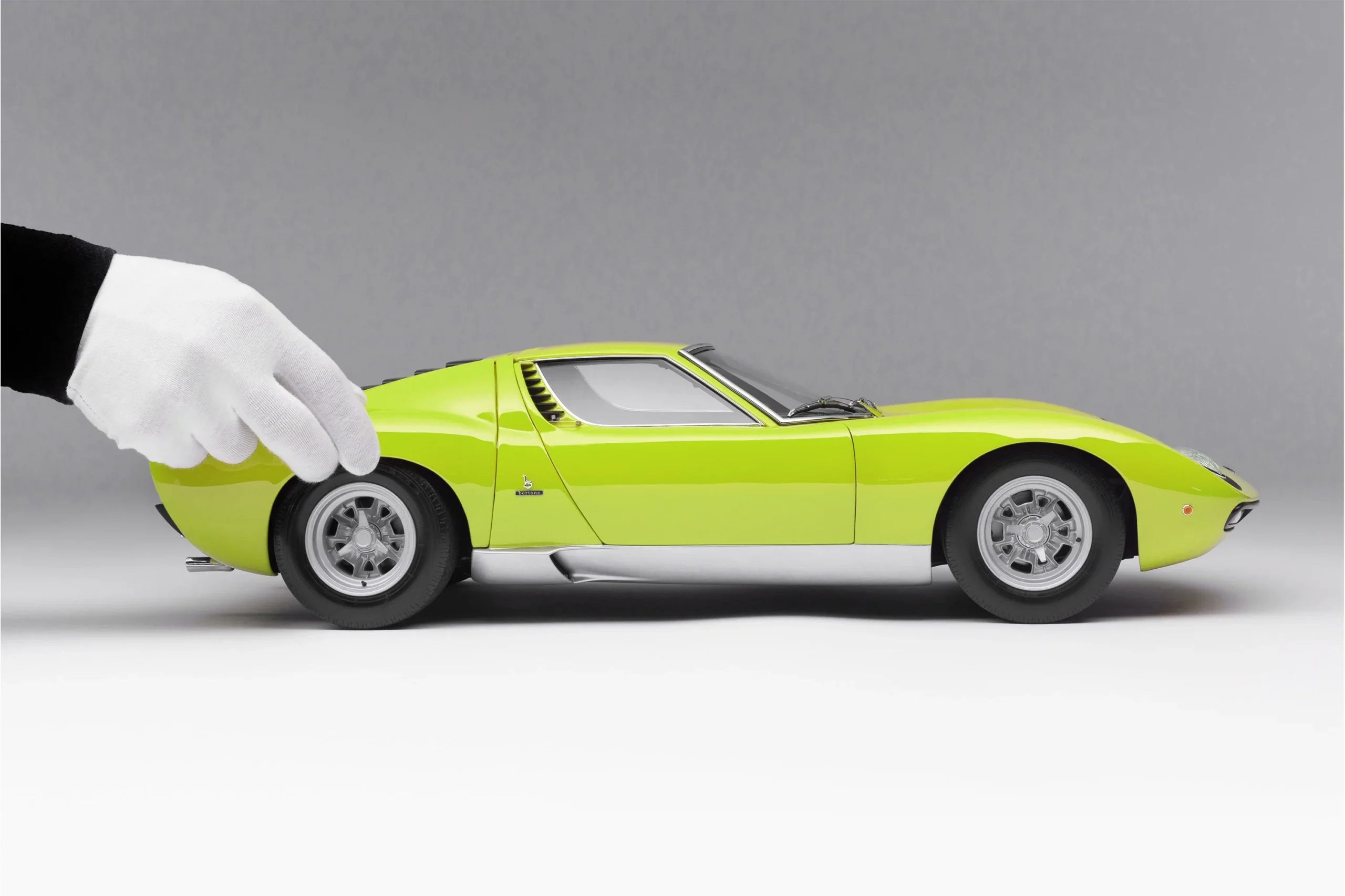
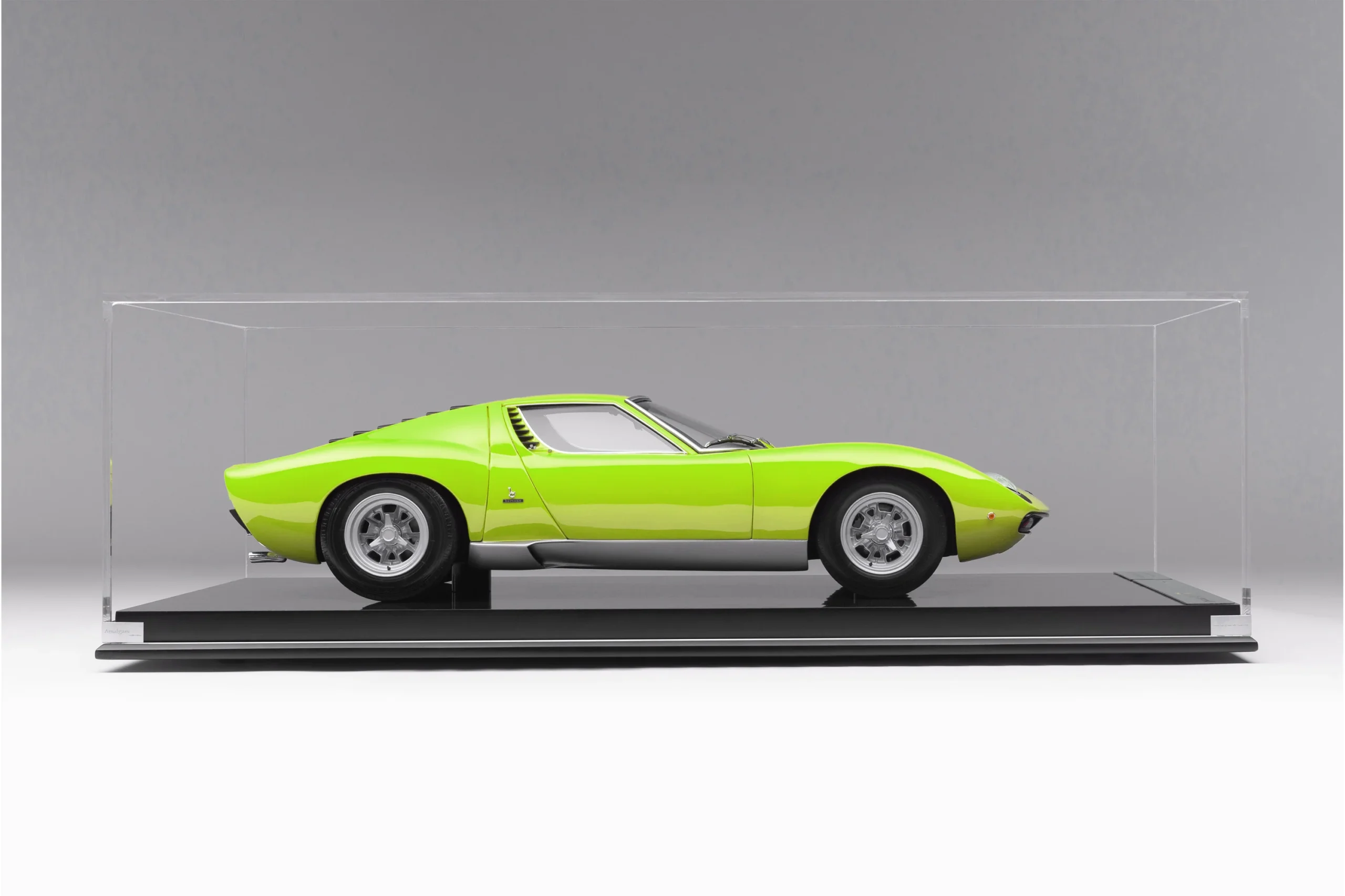
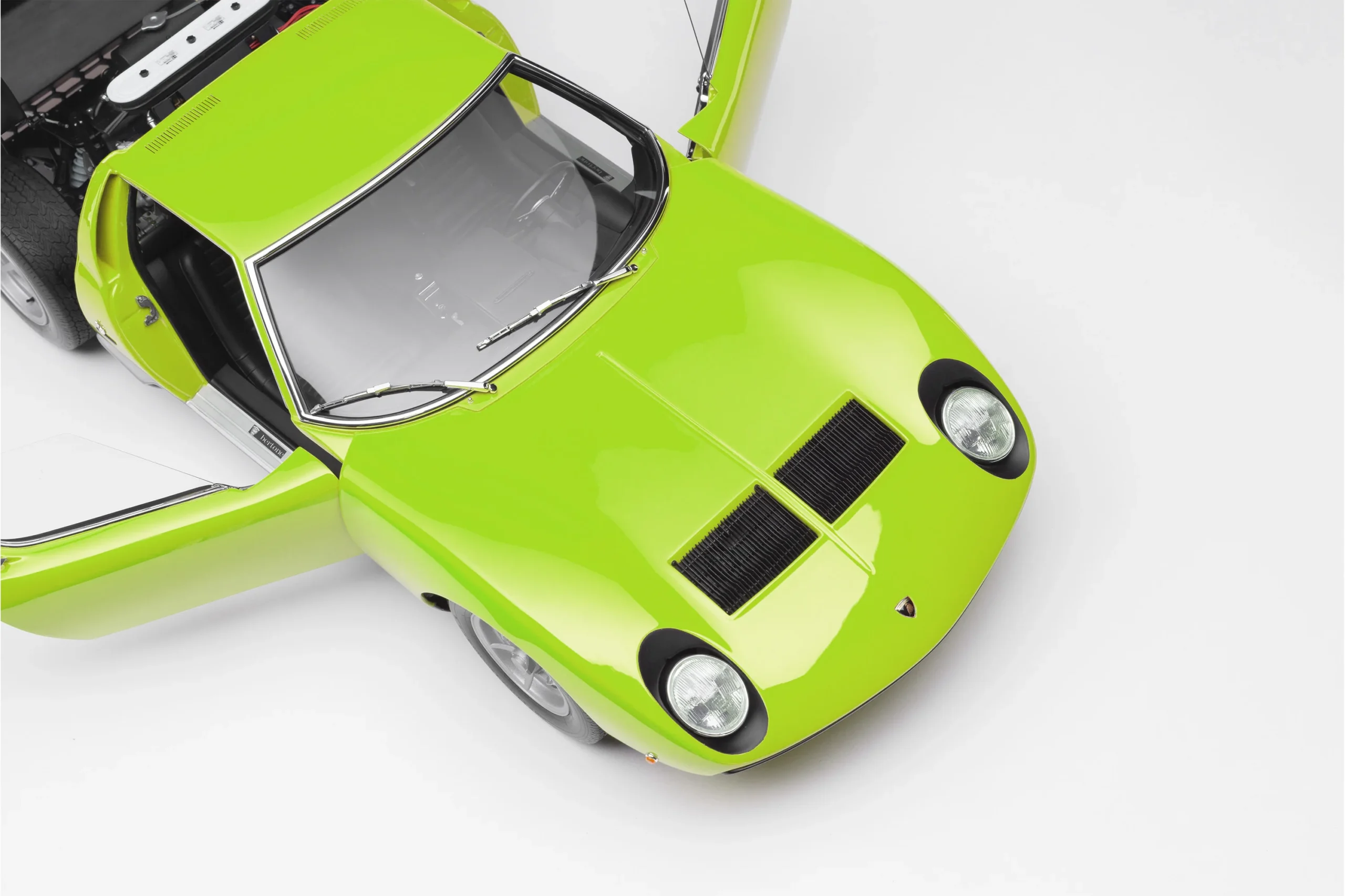
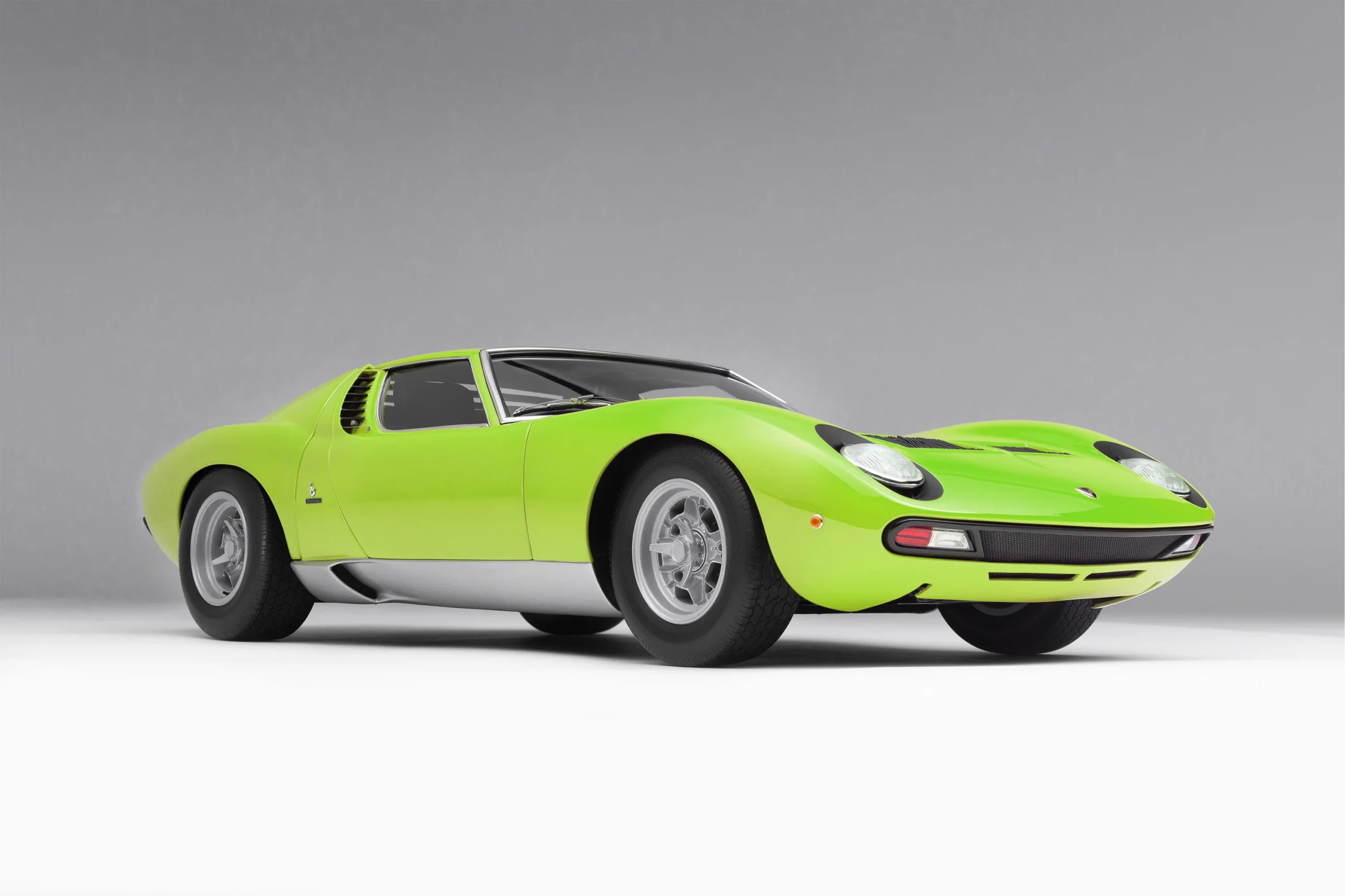
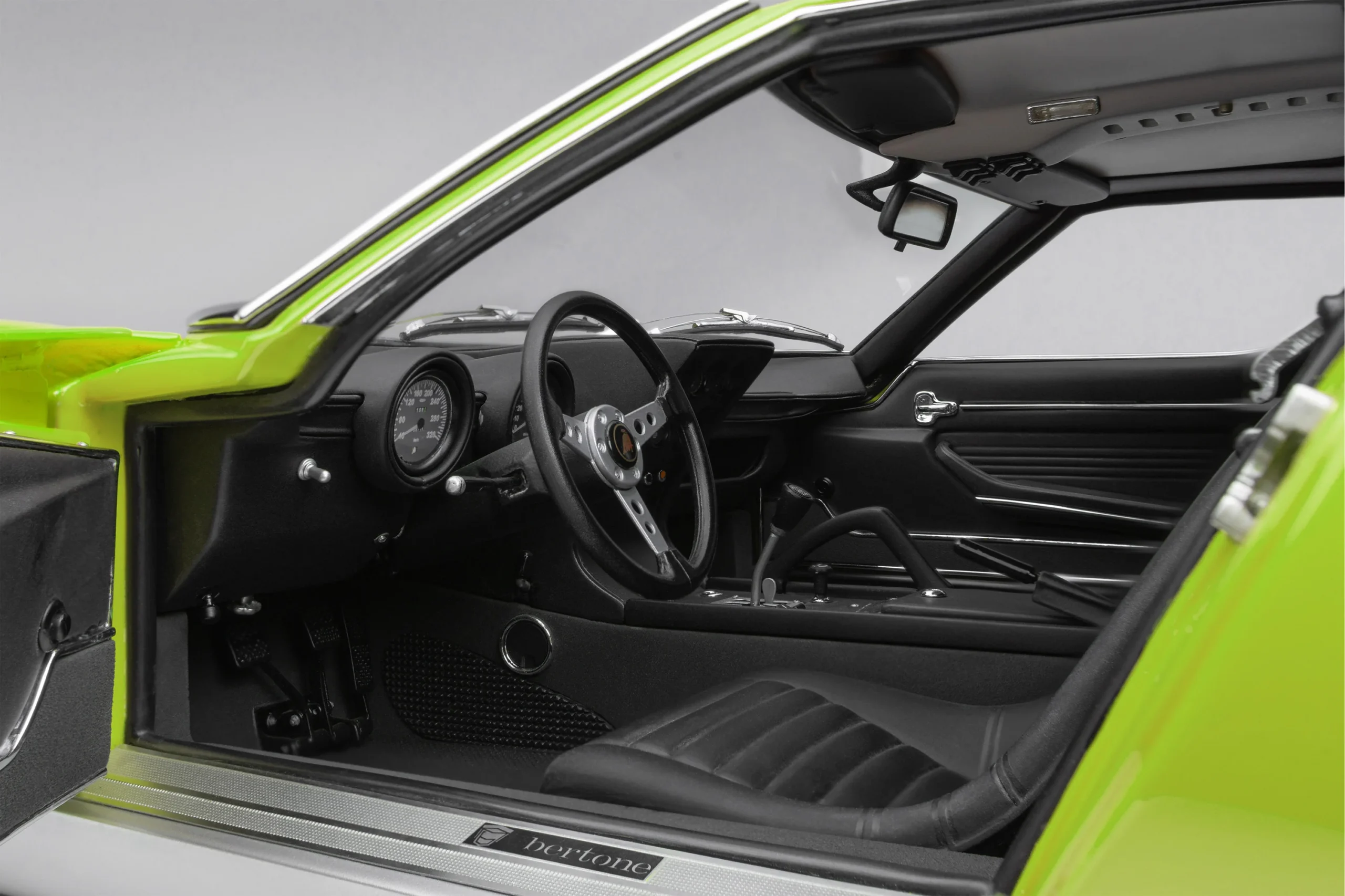
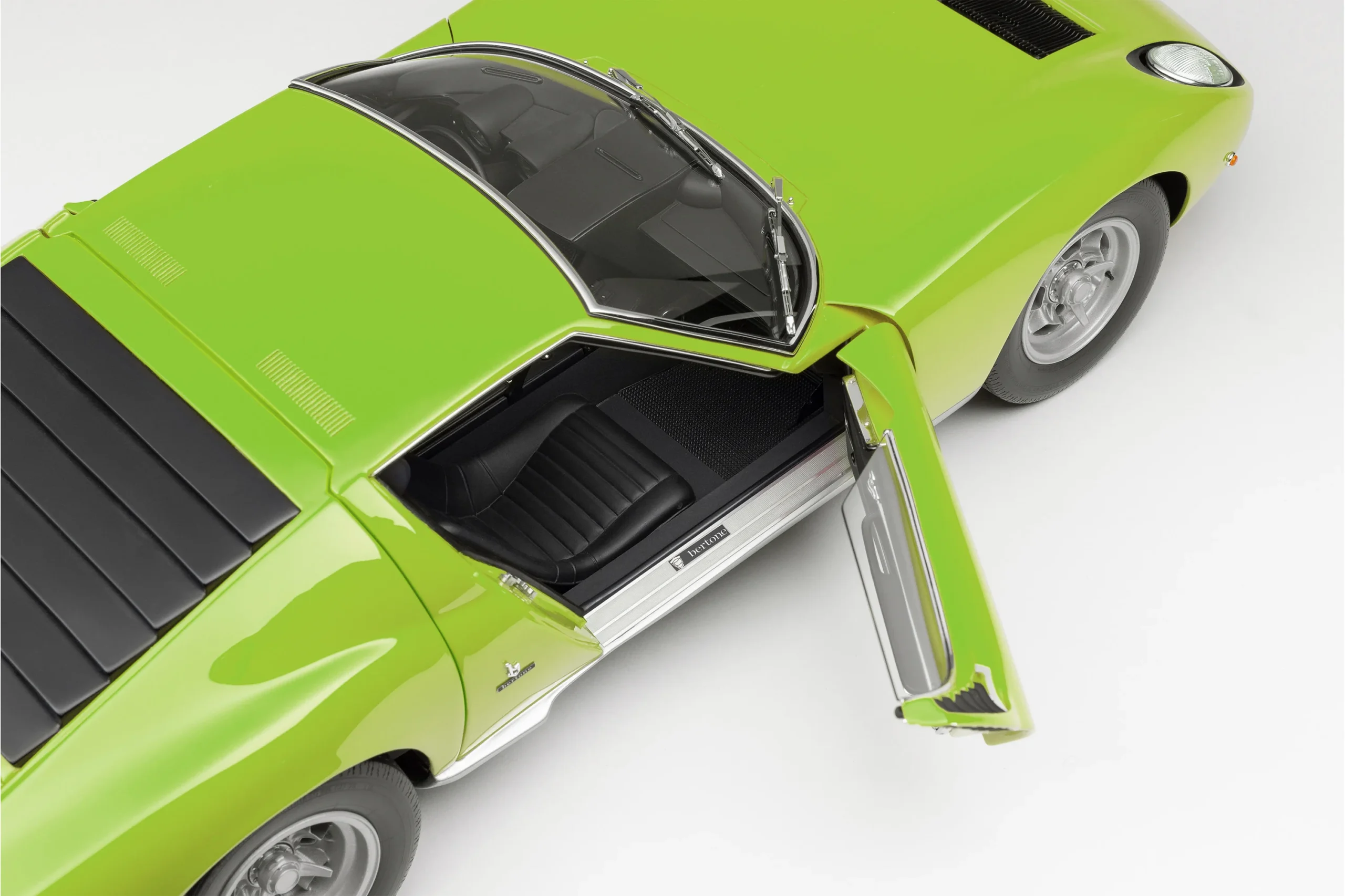
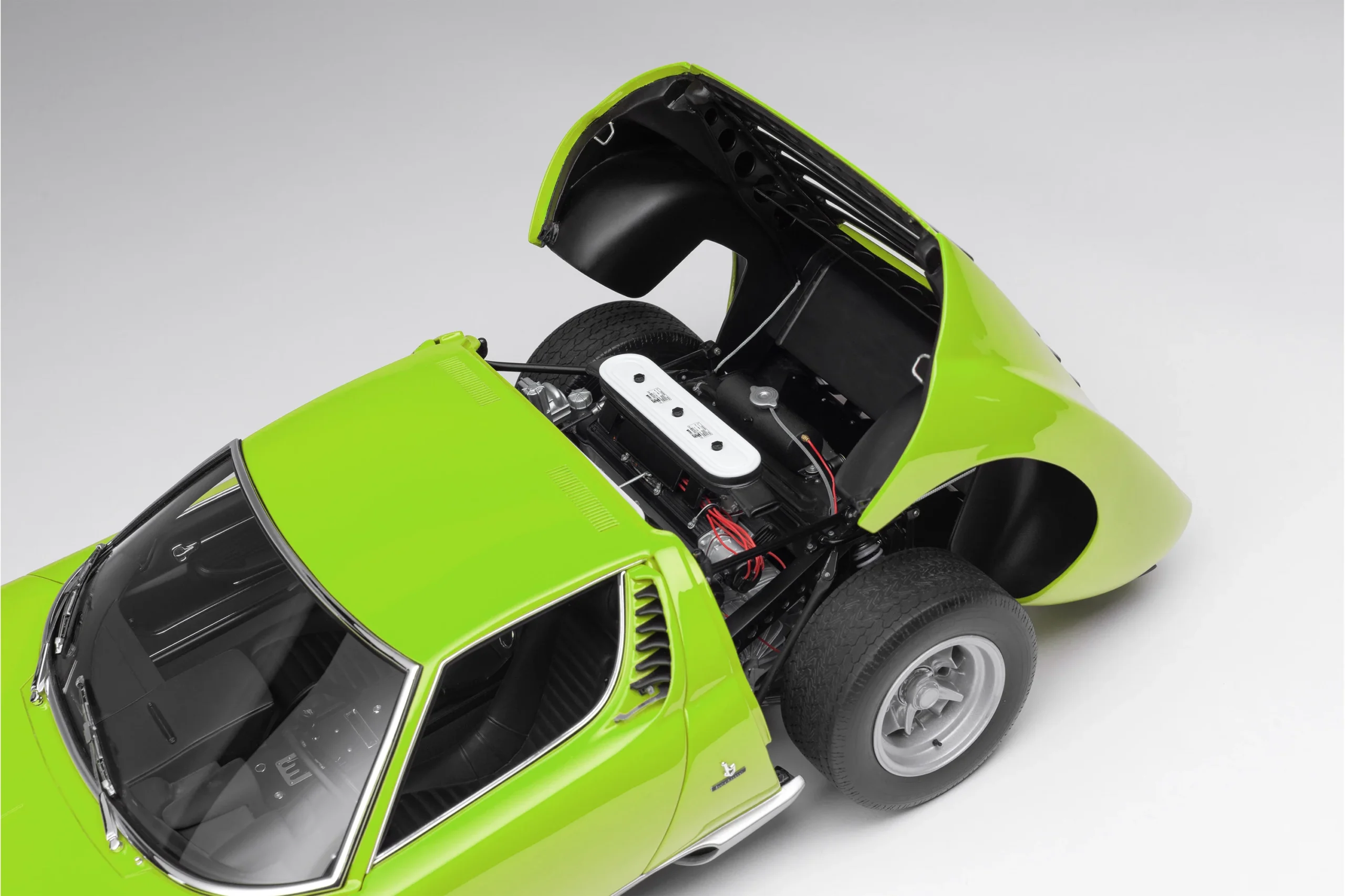
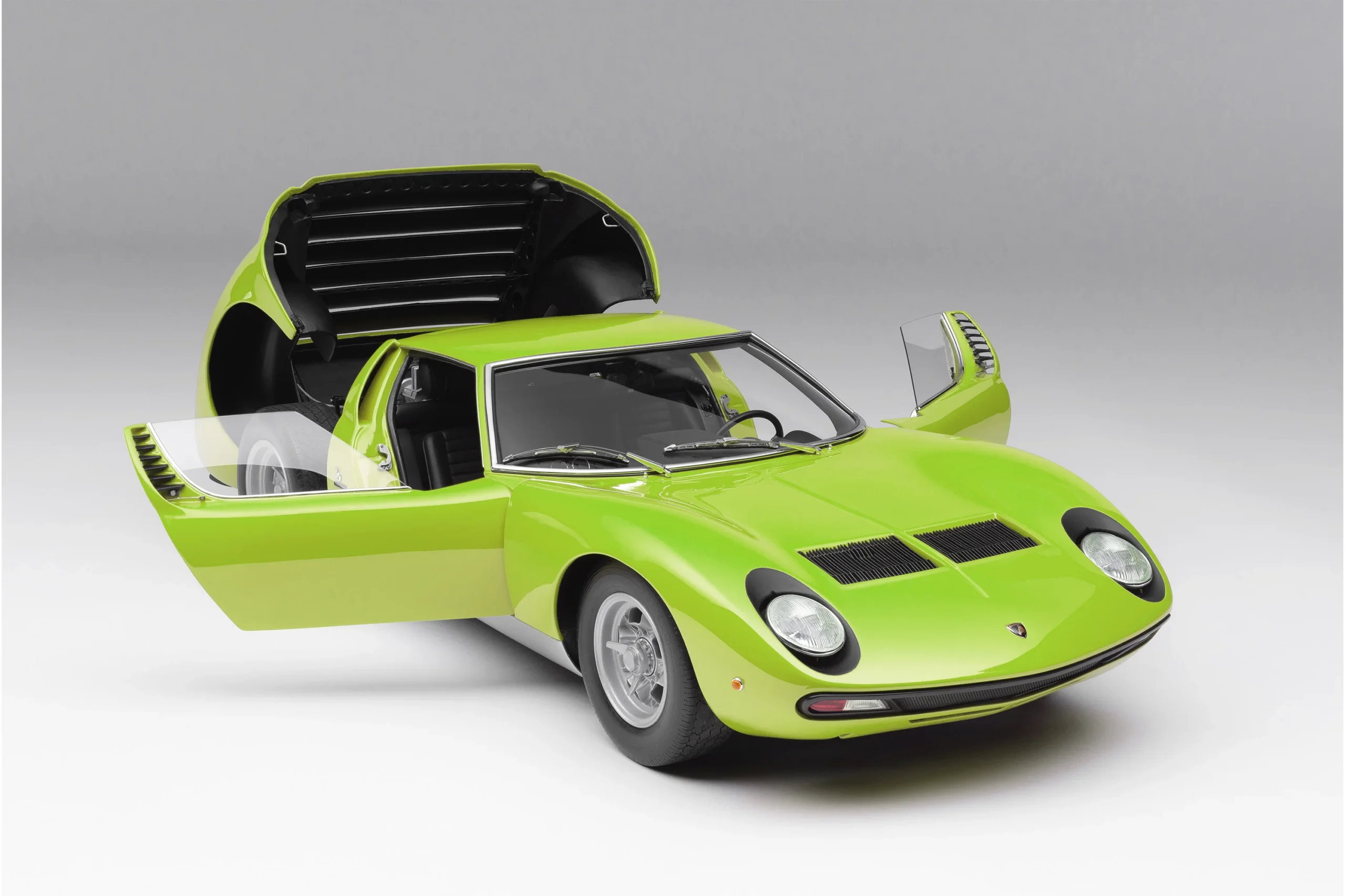
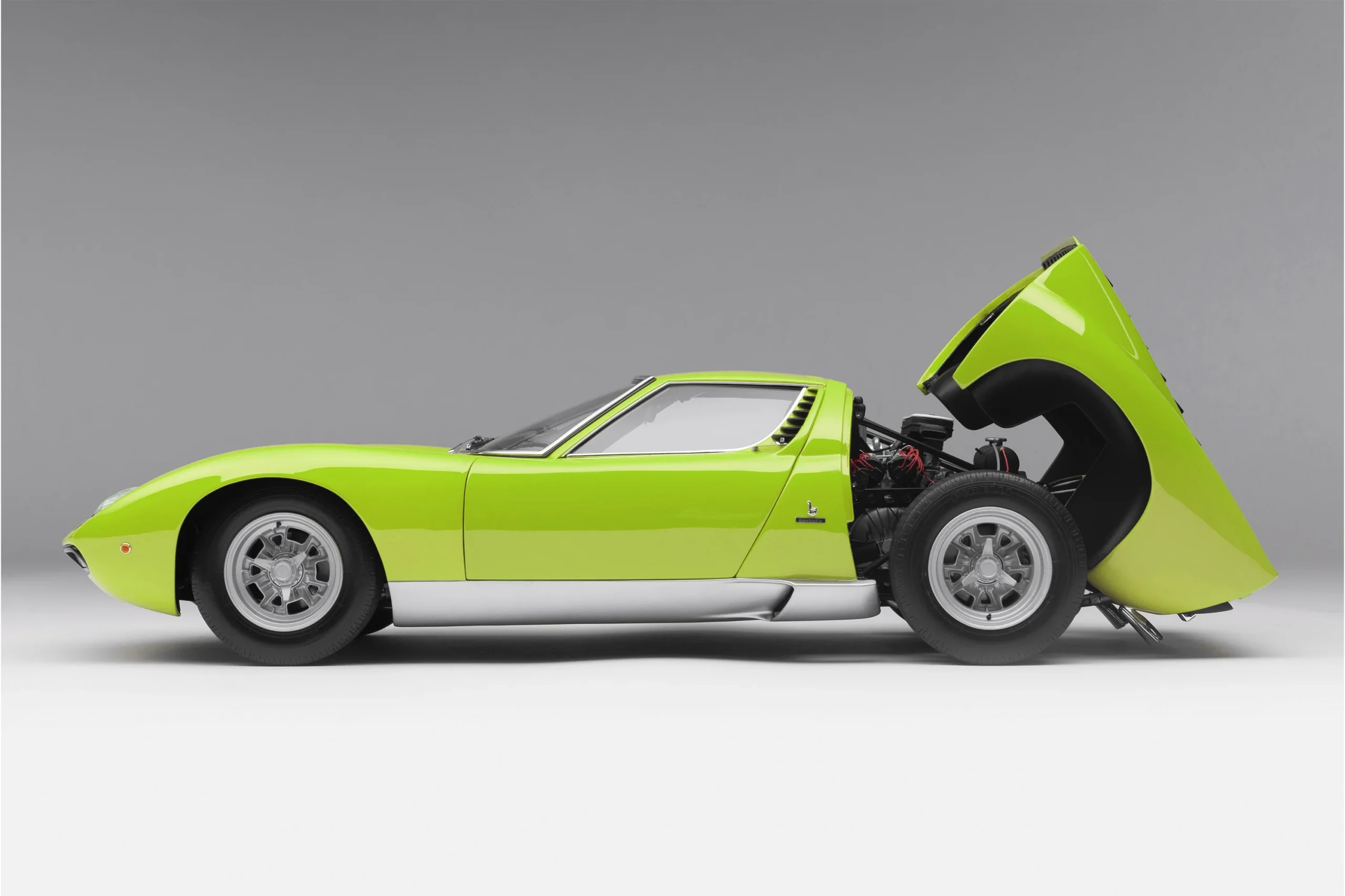
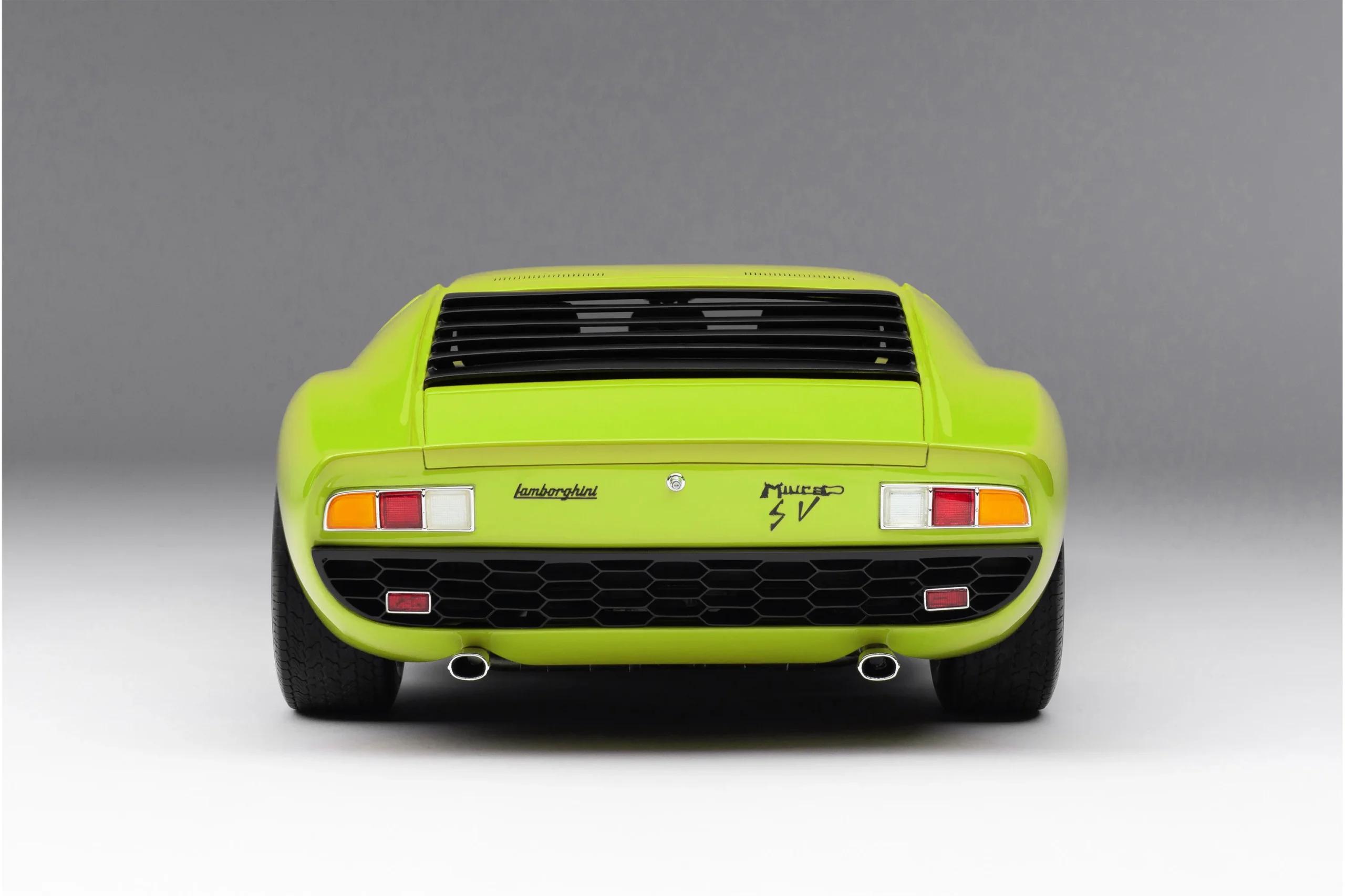
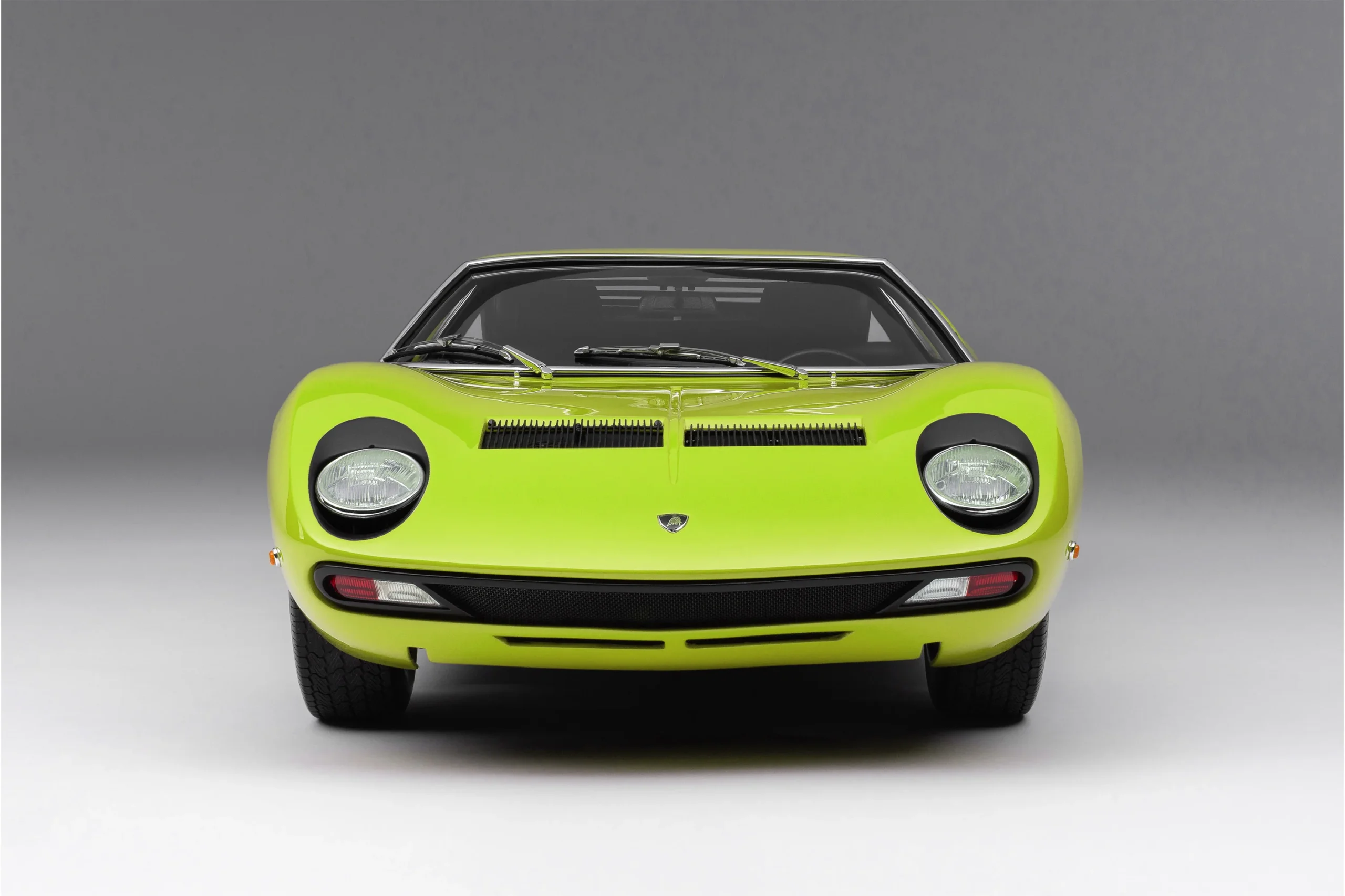
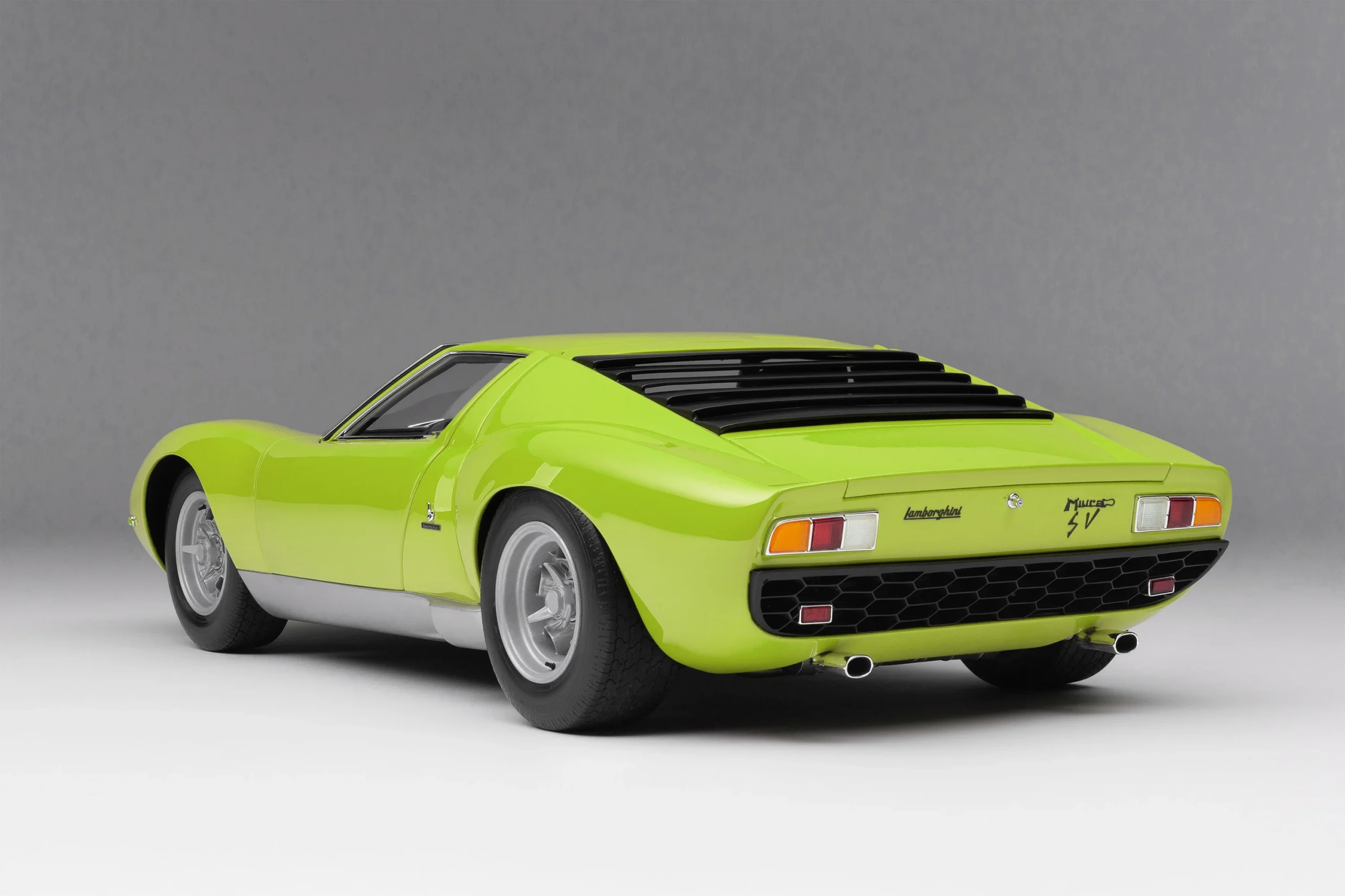
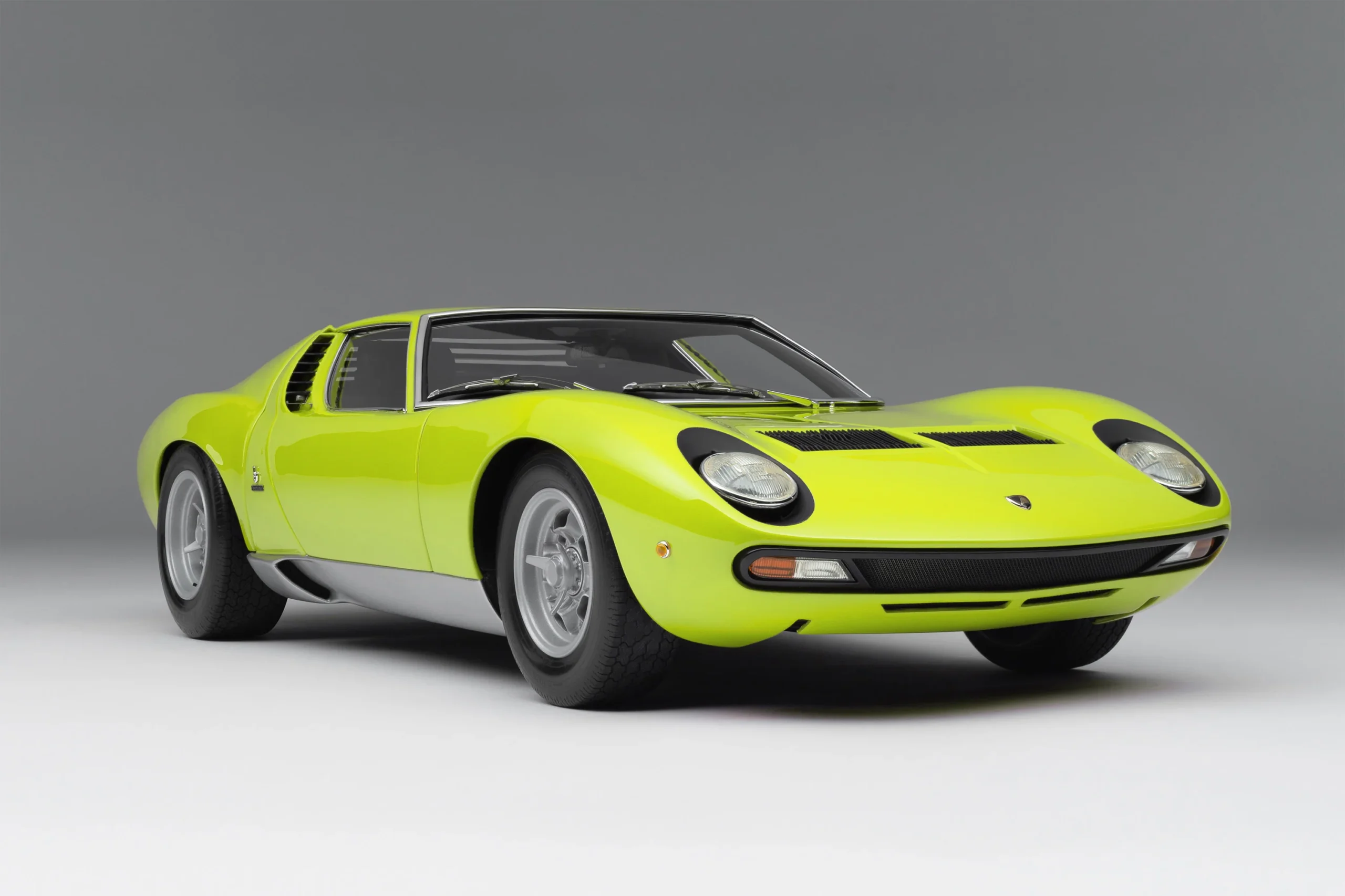
Amalgam Lamborghini Miura P400 SV (1971) | Edition in green 1:8. high-quality collector's model in 1:18 scale.
- Limited edition of 199 pieces
- Customised models can be built according to the owner's specifications
- Available in the exterior paint finishes Giallo, Arancia Miura or Verde Miura
- Each model is handmade and assembled by a small team of craftsmen
- 1:8 scale model, over 54 cm/21 inches long
- Made from the highest quality materials
- Over 4000 hours spent developing the model
- Over 400 hours to build each model
- Thousands of precisely manufactured parts: Castings, photo etchings and CNC machined metal components
The Miura was the first sports car produced by Automobili Lamborghini and arguably the first sports car the world had ever seen. When it was launched, it caused great surprise and amazement among onlookers and resembled no other car in the history of the automobile. Its iconic lines were due in part to the placement of the 3,929cc V12 engine with Weber twin-choke carburettors, which was mounted transversely behind the passenger cabin. The car ultimately had a braking power of 385 hp, was driven by a five-speed manual gearbox and had independent front and rear suspensions. The most incredible thing about the Lamborghini Miura - and there are many incredible things about the Miura - is that it was never meant to happen. The car, named after Spain's fiercest and most feared fighting breed of bull, began as an after-hours project by Ferruccio Lamborghini's young technical director and his deputies Giampaolo Dallara and Giampaolo Stanzani.
Lamborghini had already evolved from a successful tractor manufacturer to a sports car maker known for its brilliant mechanical mind and passion for excellence. This was a man who once told Enzo Ferrari that his cars had problems with the clutch and that he had a solution. Enzo told him to keep producing tractors and not to worry about Ferrari. Instead, Lamborghini built the 350 GTV, a two-seater with a front engine and rear-wheel drive, which quickly became famous in Italy. The success of the GTV got Dallara and Stanzani dreaming and inspired by racing icons such as the Ford GT and the Ferrari 250 Le Mans to imagine their own mid-engined machine. The problem was that Lamborghini was interested in perfecting GT cars and not in racing misadventures. They did not dare to go beyond drawings and plans. One evening in early 1965, they finally plucked up the courage to show their boss their idea. To their surprise, Ferruccio was impressed and gave the green light for their dream. The resulting prototype chassis was called the P400 and featured a transversely mounted four-litre V12 engine. The engine, gearbox and differential were all built as one unit, with the same lubrication used for all three main parts. This design was incredibly complex, but it was the only way to make the package work and remain unobtrusive.
The P400 was presented at the Turin Motor Show in 1965 as a pure chassis. The next step was the bodywork. Ferruccio commissioned the legendary coachbuilder Nuccio Bertone and his young mastermind, 25-year-old Marcello Gandini, to make the P400 look beautiful. Gandini worked feverishly throughout the winter of 1965/1966 to get the lines just right. Timing was tight; just one day before the show, the first Miura was completed and loaded onto a transporter for Geneva. Almost overnight, the car became an essential item in every wealthy person's garage. Originally planned as a limited edition car, the sheer volume of orders received in Sant‘ Agata forced Lamborghini to build over a hundred Miuras in the first year alone. The Miura S, launched in 1968, had more power (370 hp compared to 350), improved brakes and a slightly higher top speed of 280 km/h (174 miles per hour).
The last production Miura, known as the Miura SV, was introduced in 1971. The most notable change to the SV was that the engine and gearbox were now separate. In addition, there were some aesthetic changes, including the introduction of larger tyres, particularly at the rear, and engine power increased to 385 hp at 7850 rpm. It debuted alongside the Countach concept, which would become the Miura's successor just a year later. Although the Miura was not Lamborghini's first car, it was the first in what would later become Lamborghini's mould: big, loud engines behind the driver, powering stunningly designed coupes. Ferruccio perhaps put it best: „The Miura was like a great lover to me. Uncomfortable, very expensive, but unforgettable.“
These perfect 1/8th scale models of the Lamborghini Miura P400 SV, available in Giallo Miura, Arancia Miura or Verde Miura exterior paint finishes, have been handcrafted and finished in our workshops in collaboration with and with the support of Lamborghini original finishes, materials, archive images and drawings. The use of extremely accurate digital scans of the original car has enabled us to perfectly replicate every detail in scale. In addition, it has undergone detailed scrutiny by both engineering and design teams to ensure complete accuracy of representation. Each 1:8 scale Amalgam model comes in a luxurious black presentation box and is mounted on a carbon fibre or leather base, protected by a clear acrylic dust cover. The model title, original branding and edition number are displayed on polished stainless steel plaques attached to the front end of the base.
Item number: M6010-SC1
 German
  English
  Italian
  French
  Spanish
  Arabic
  Japanese
Reviews
There are no reviews yet.