Description
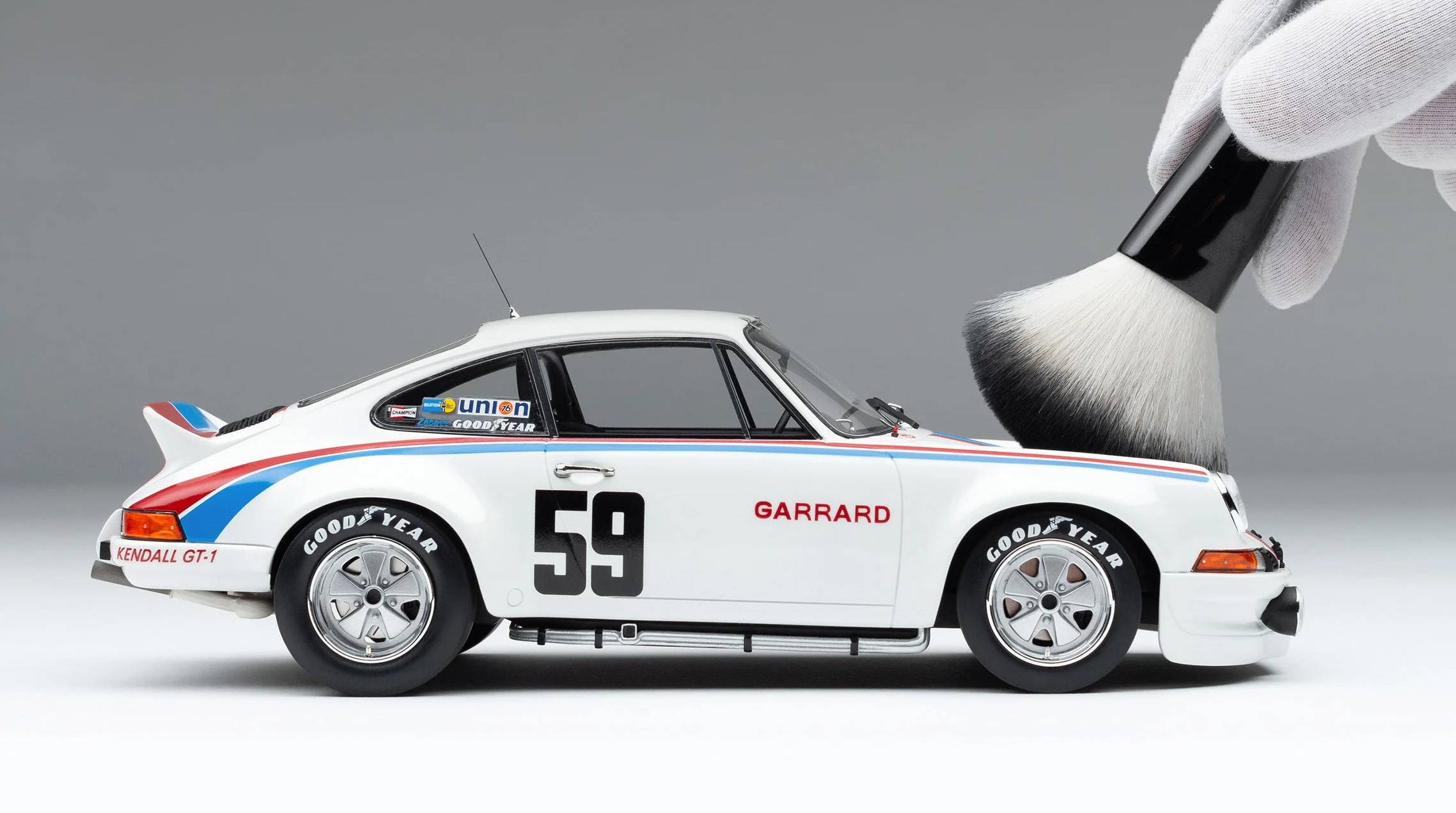
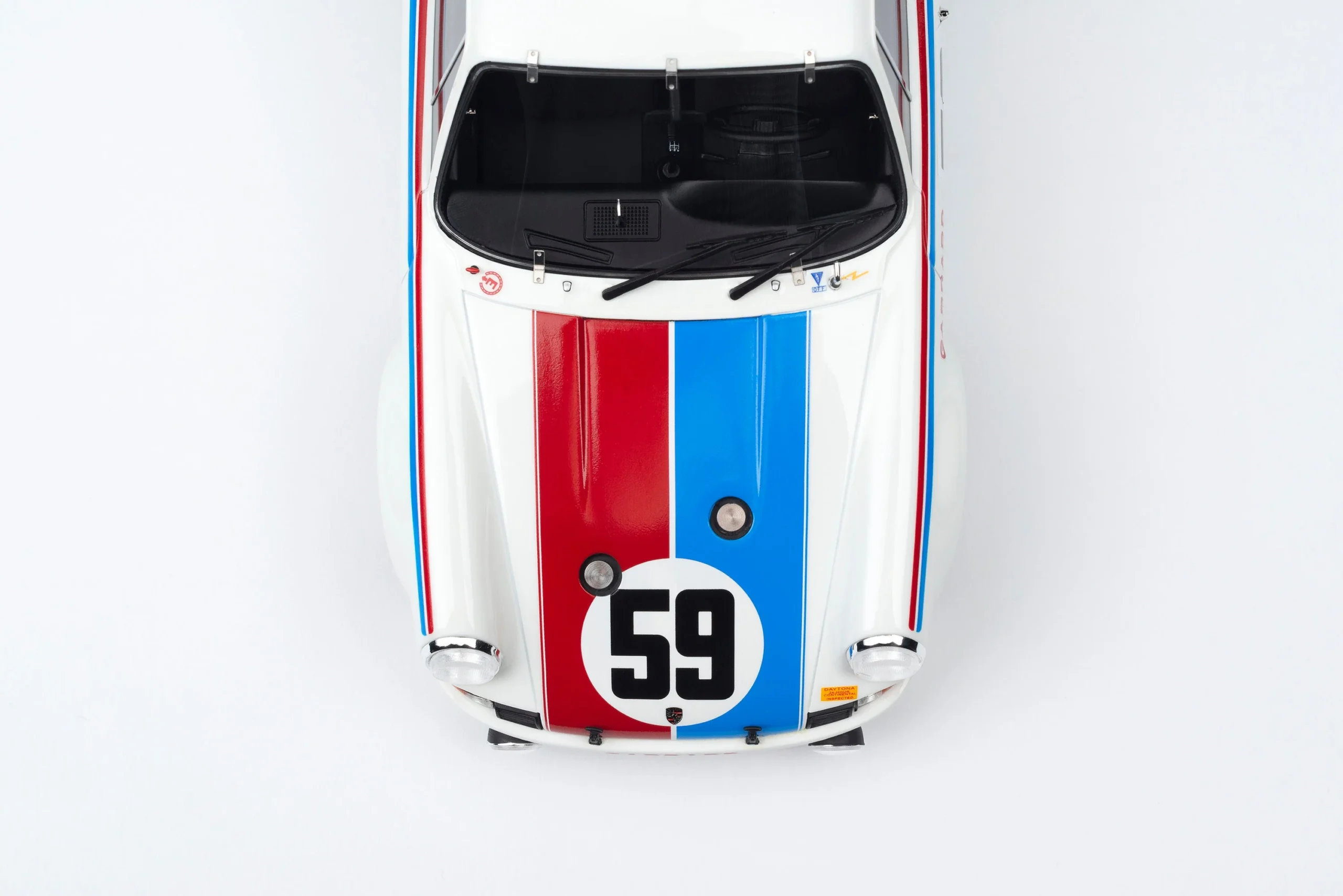
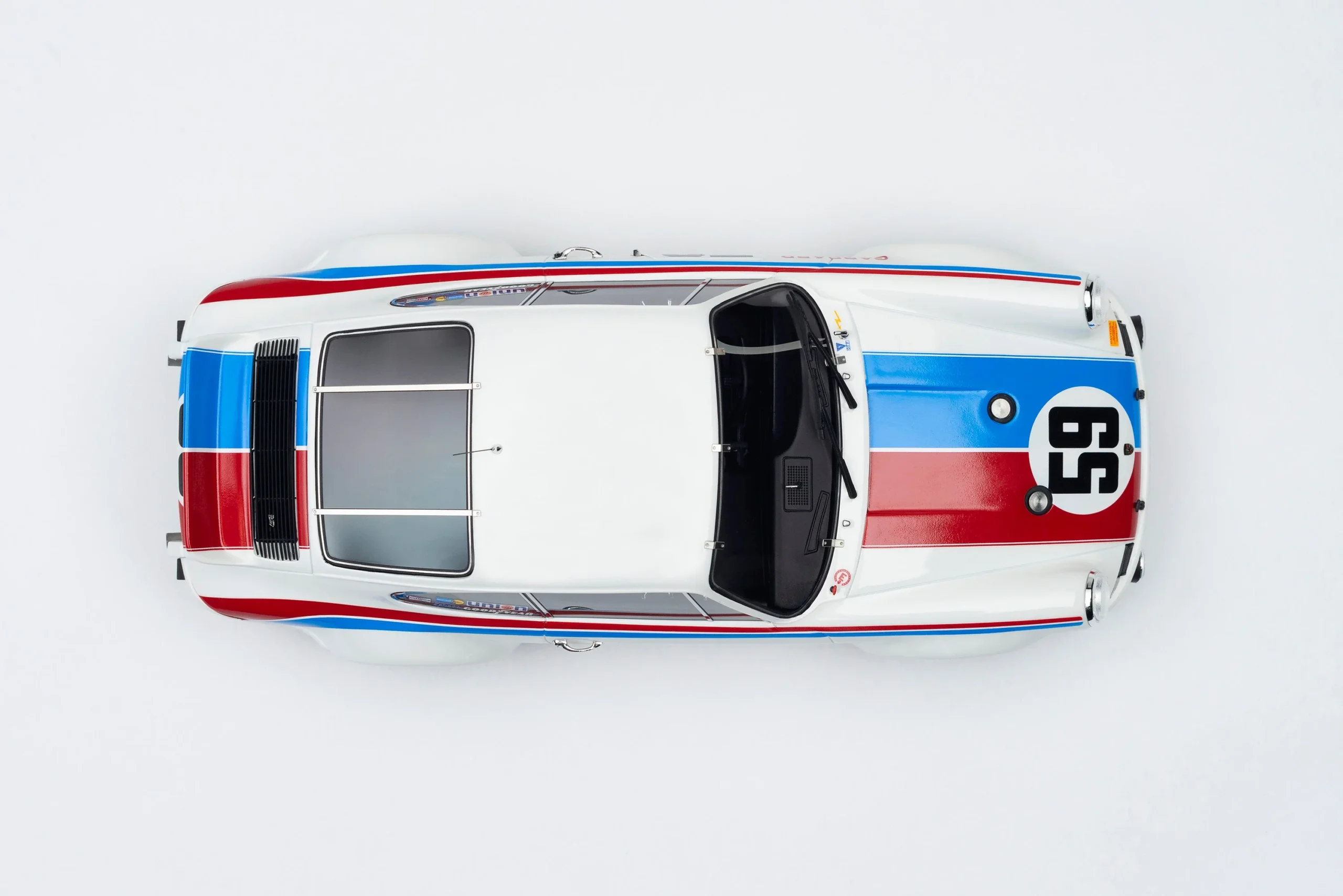
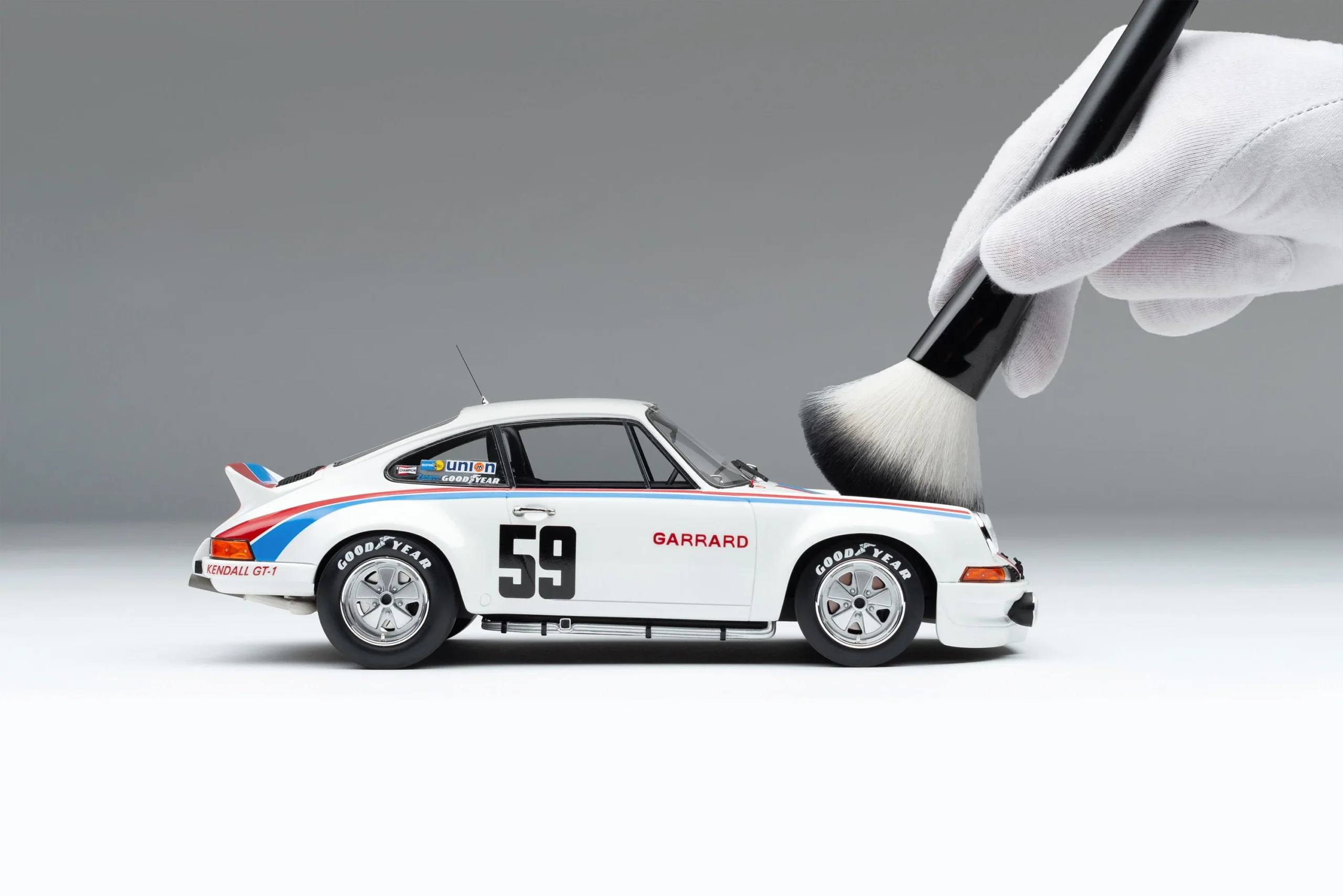
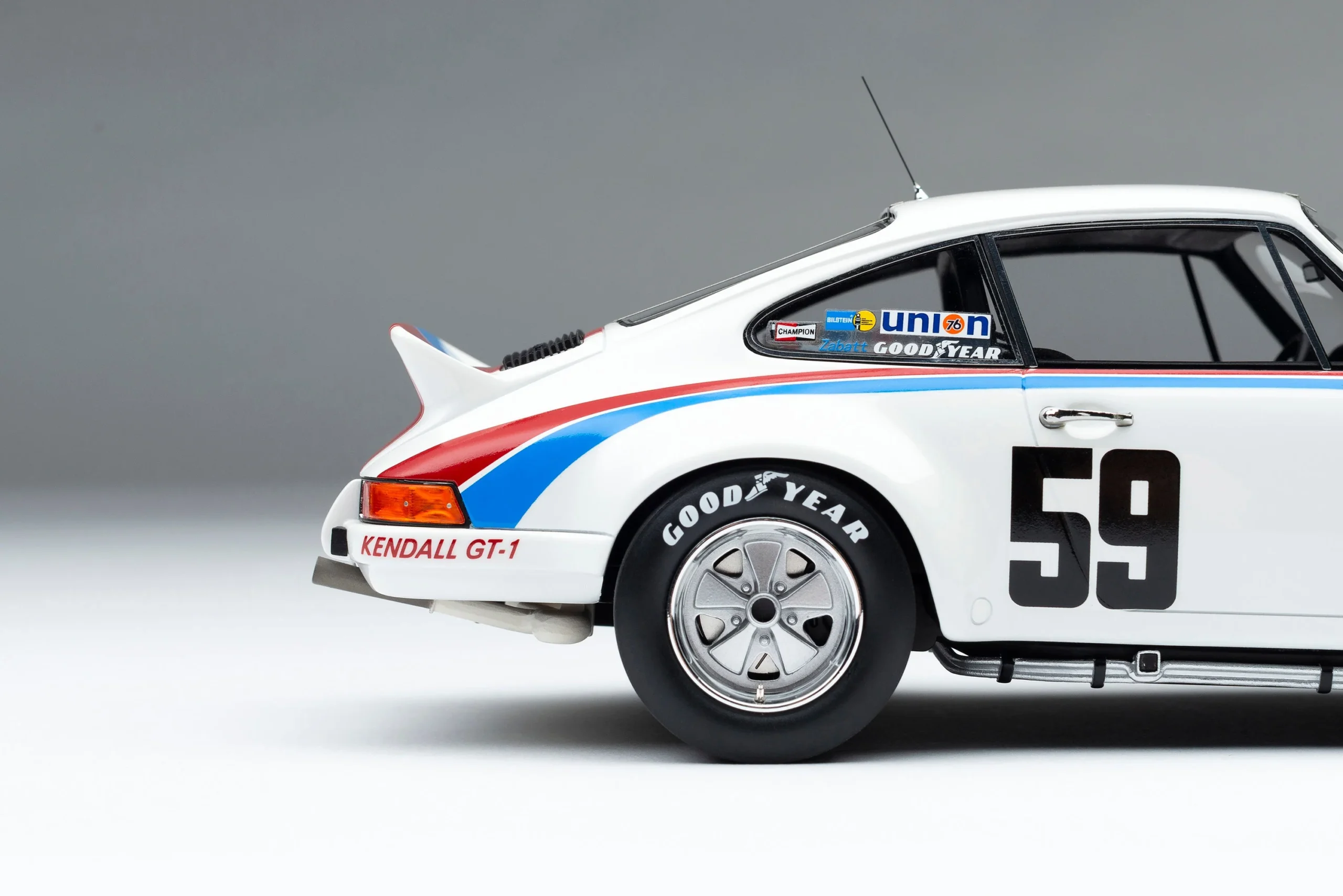
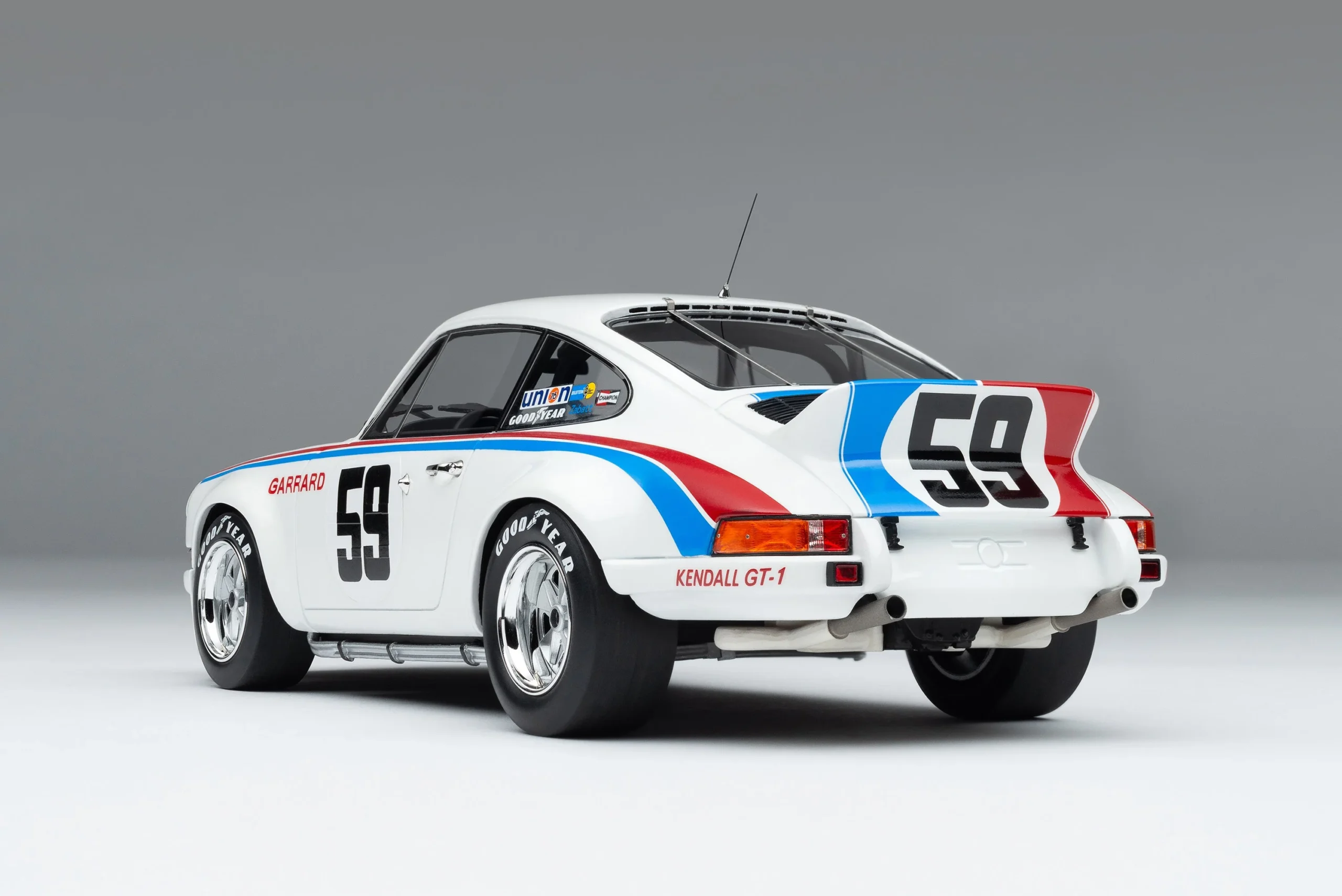
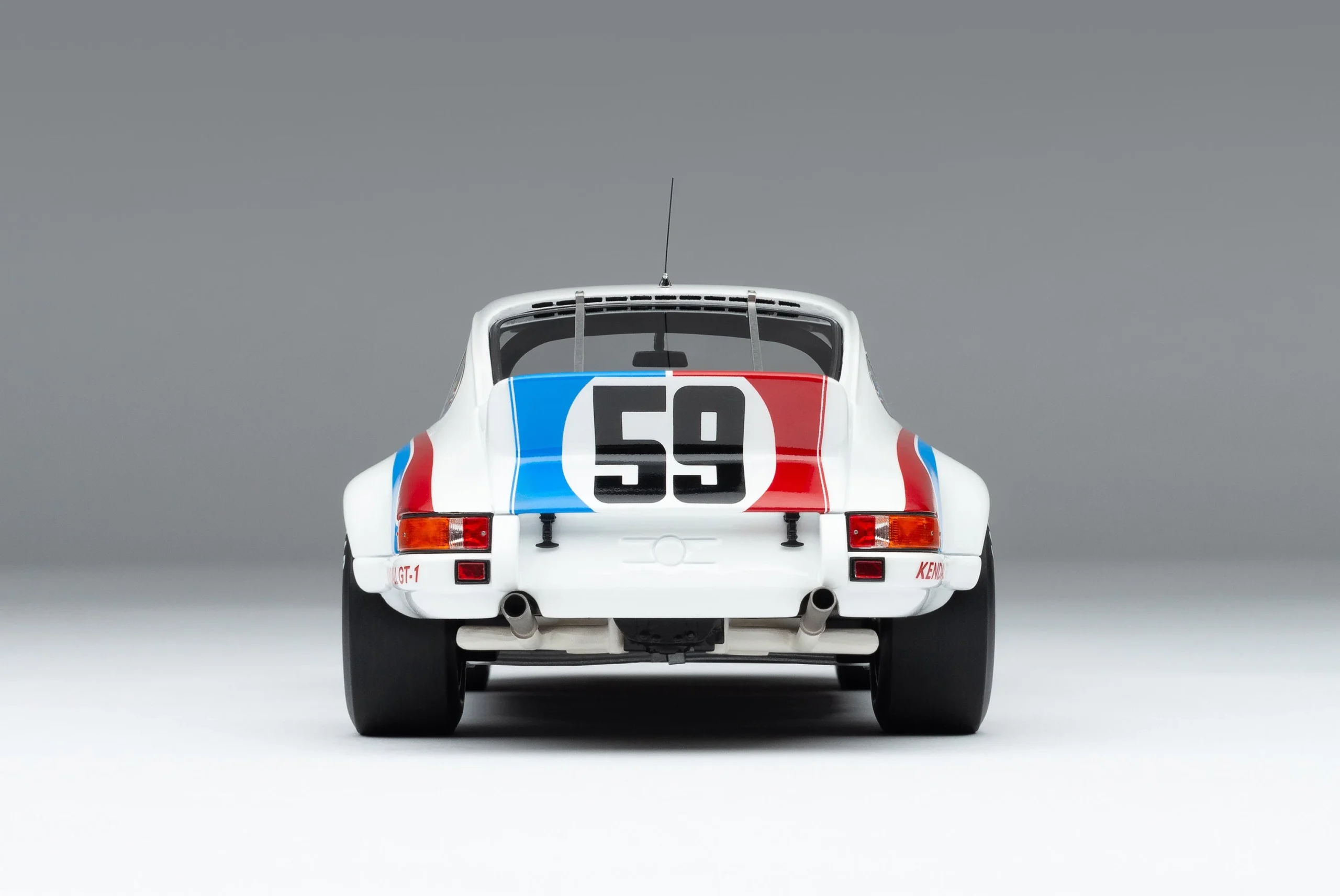
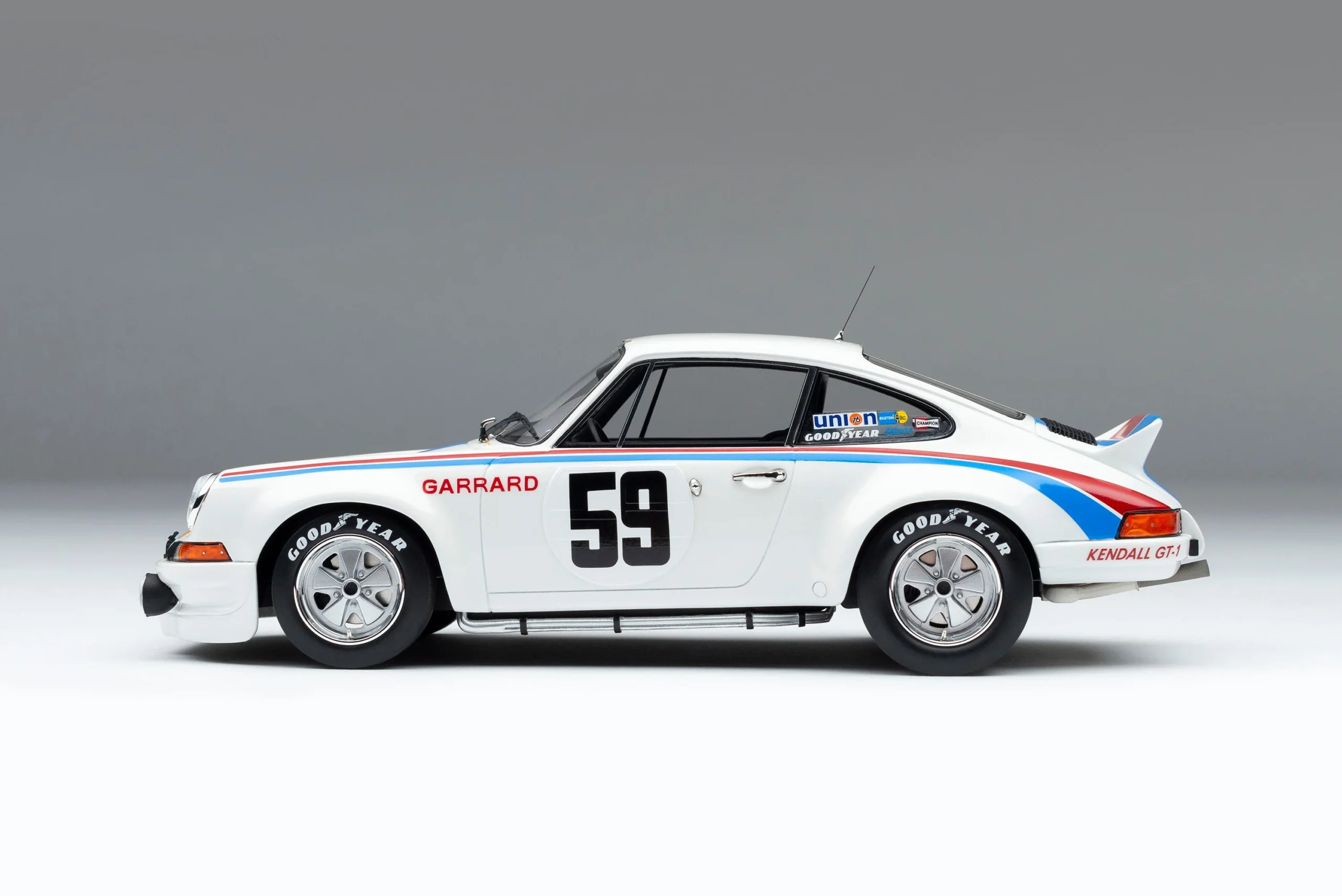
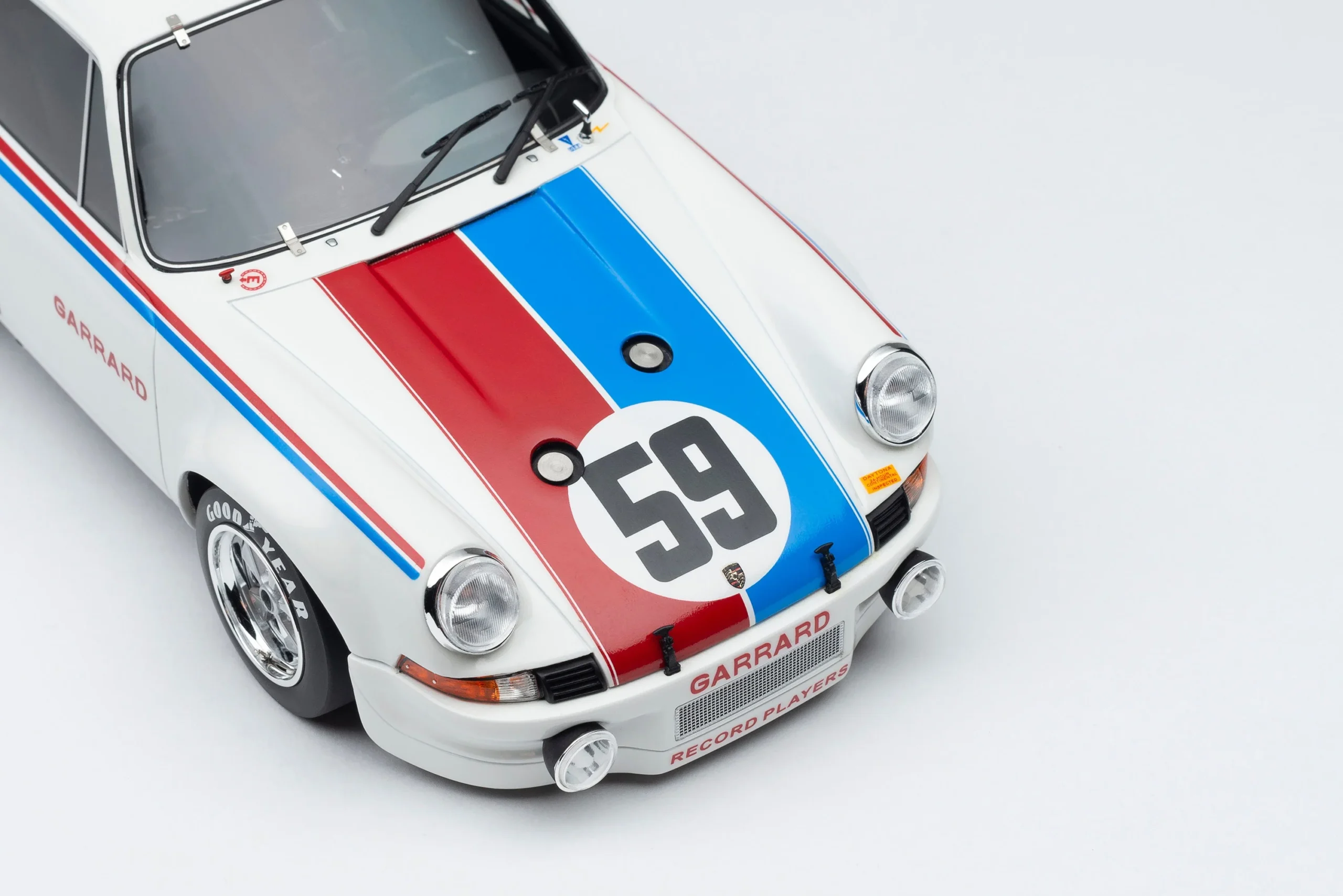
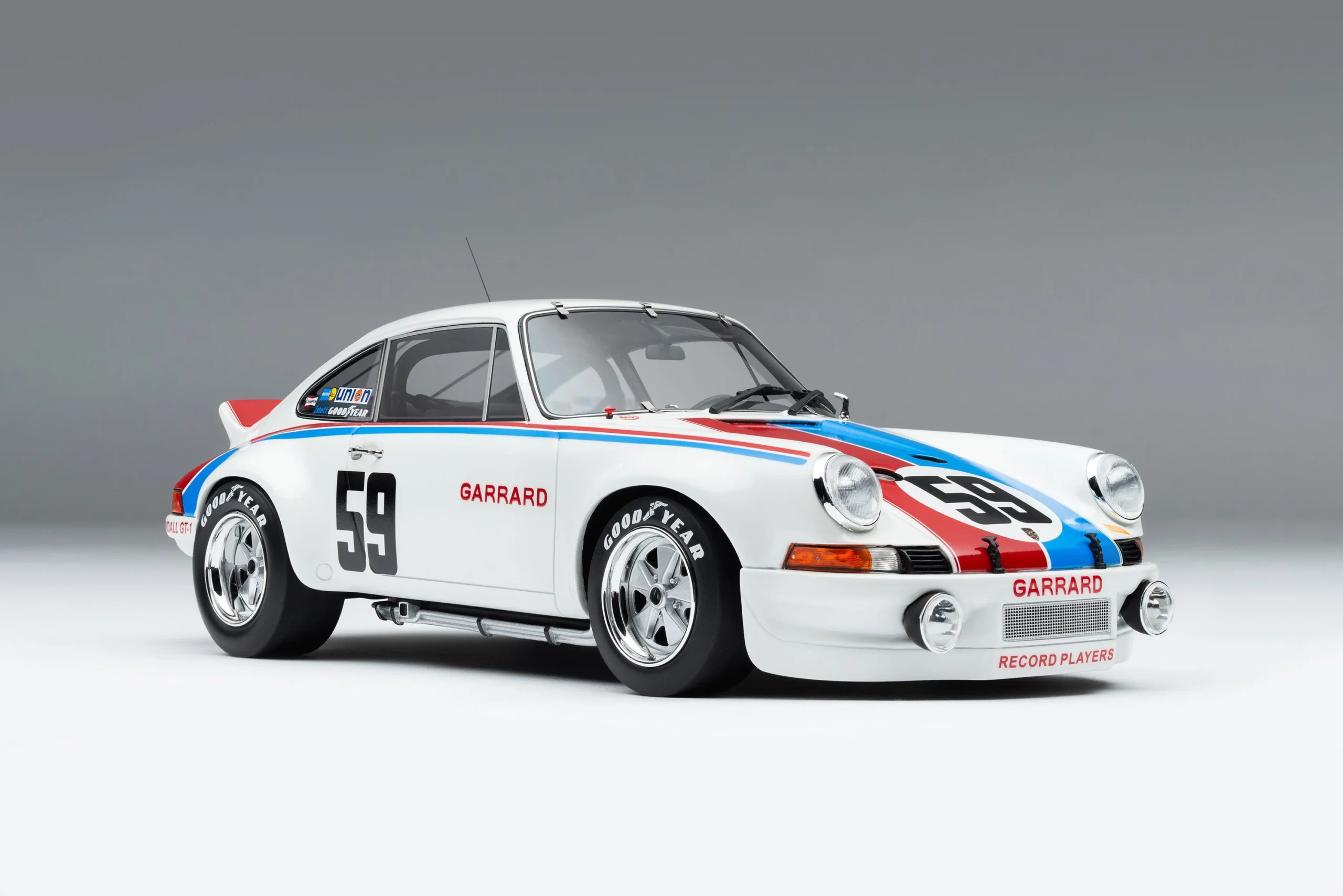
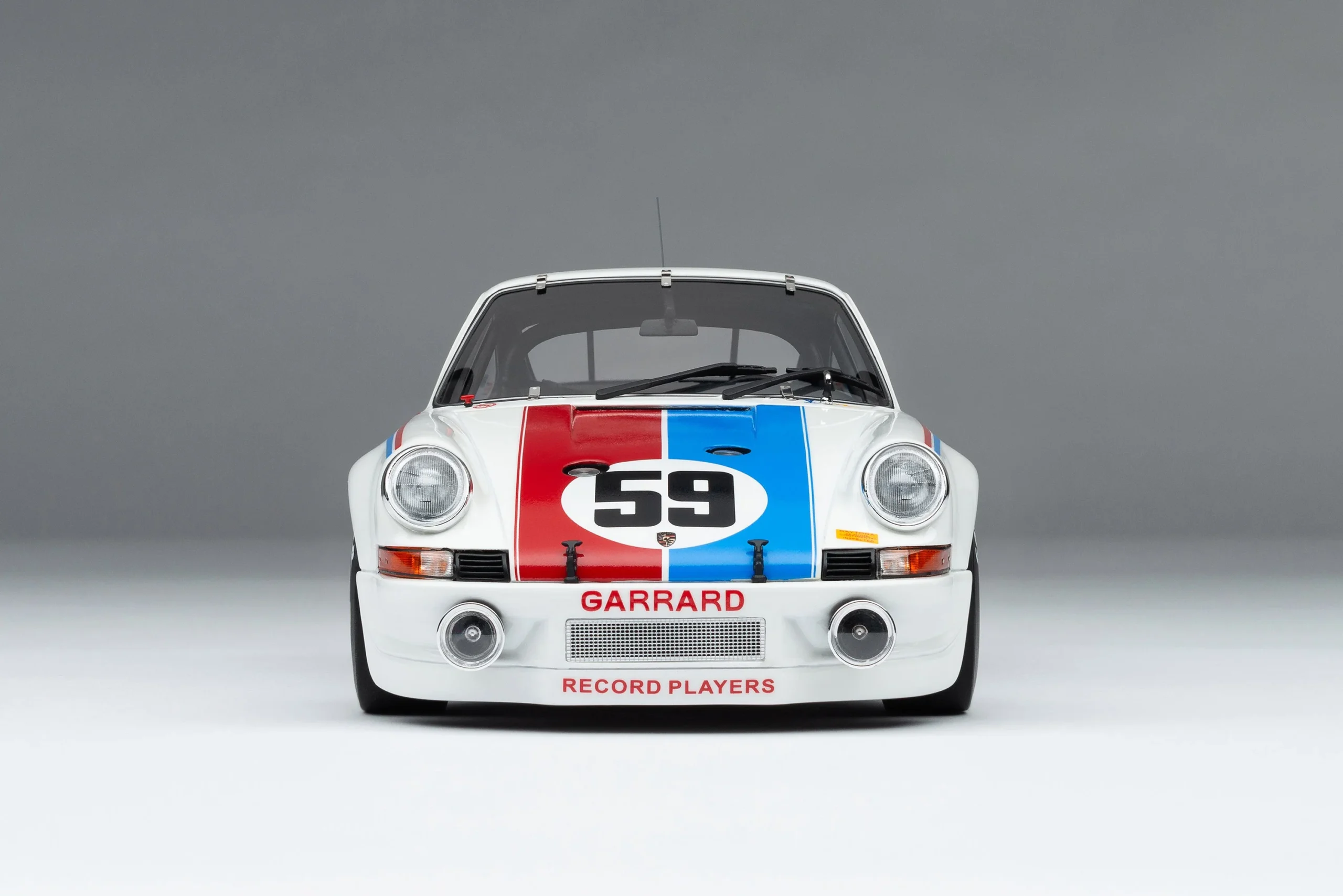
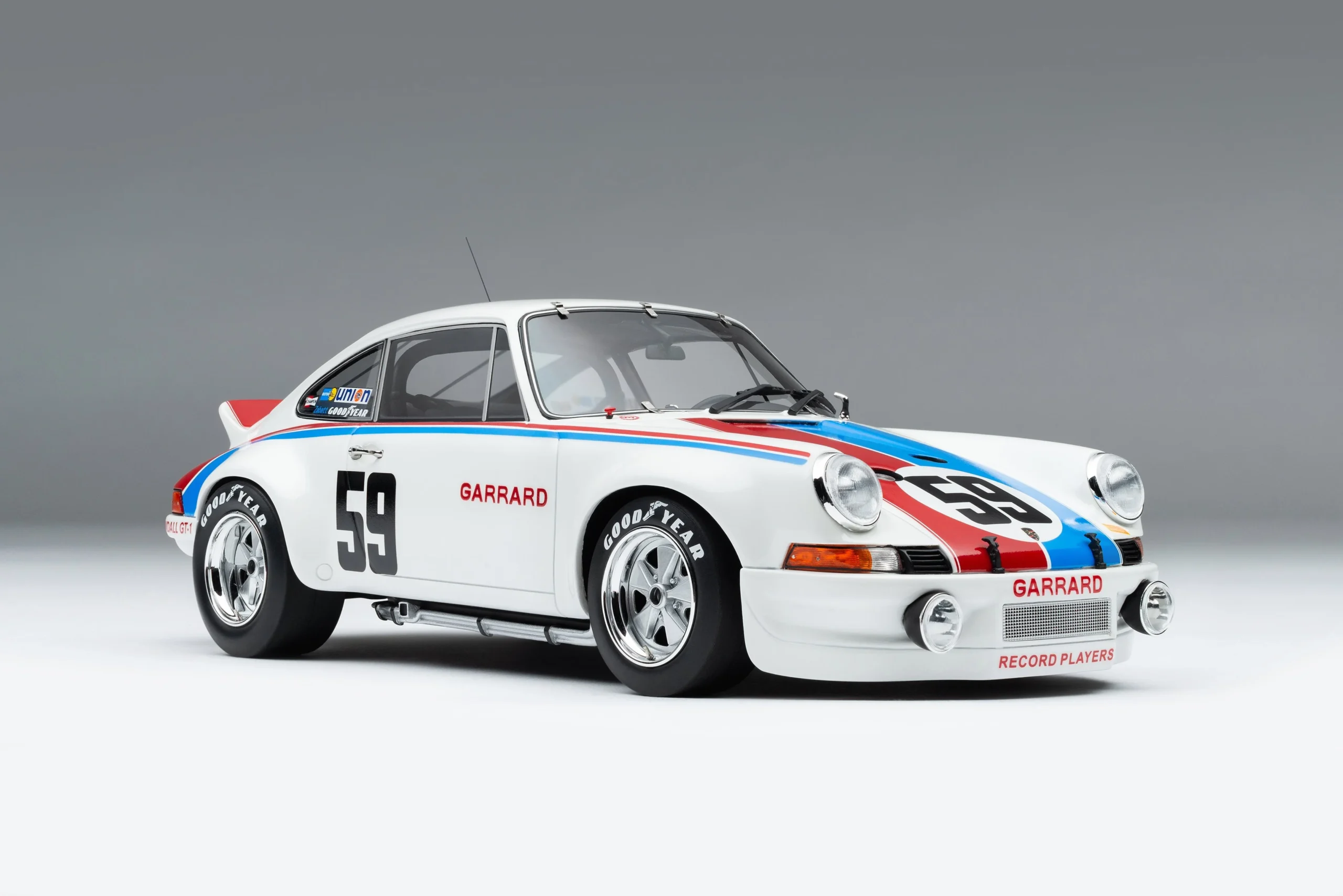
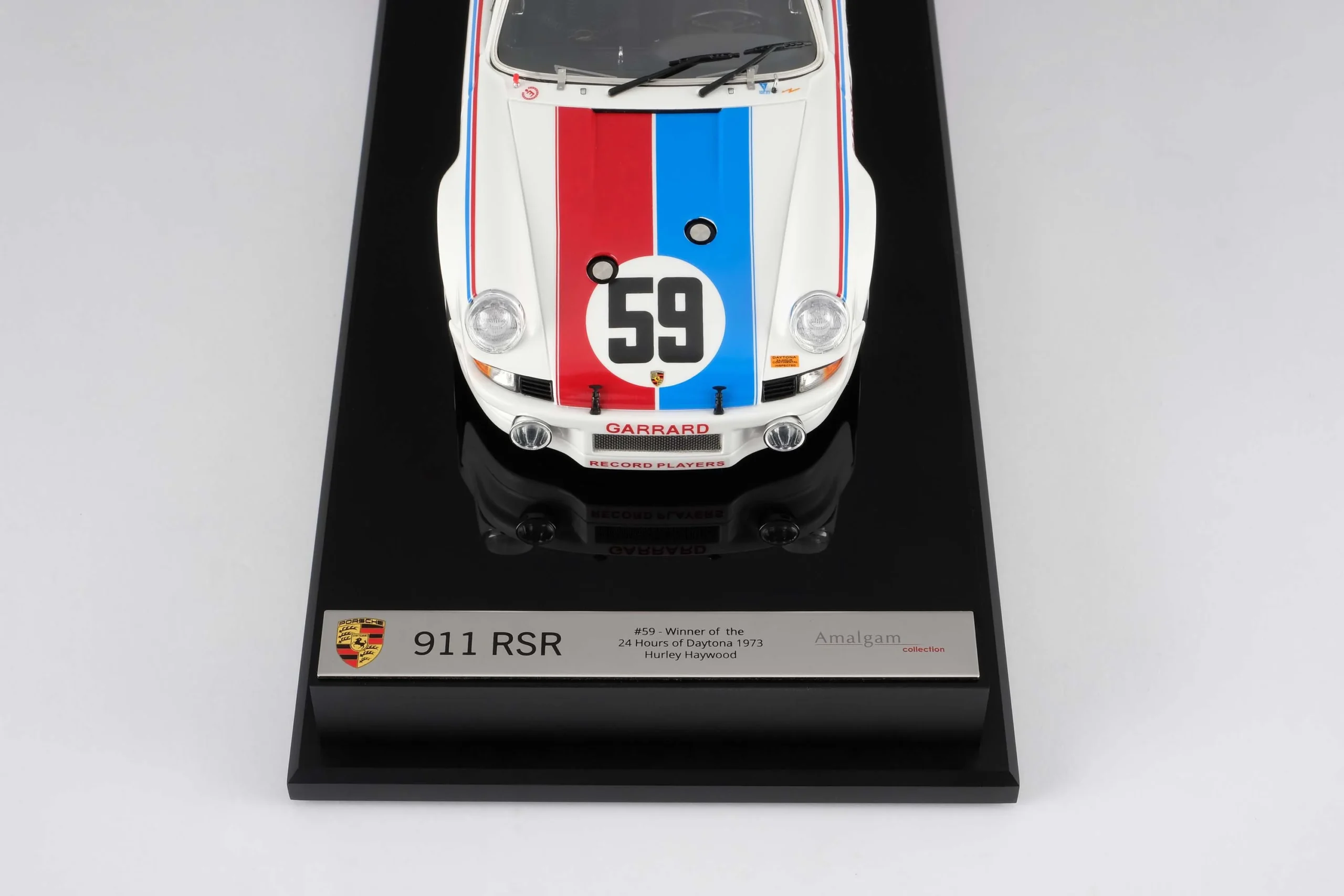
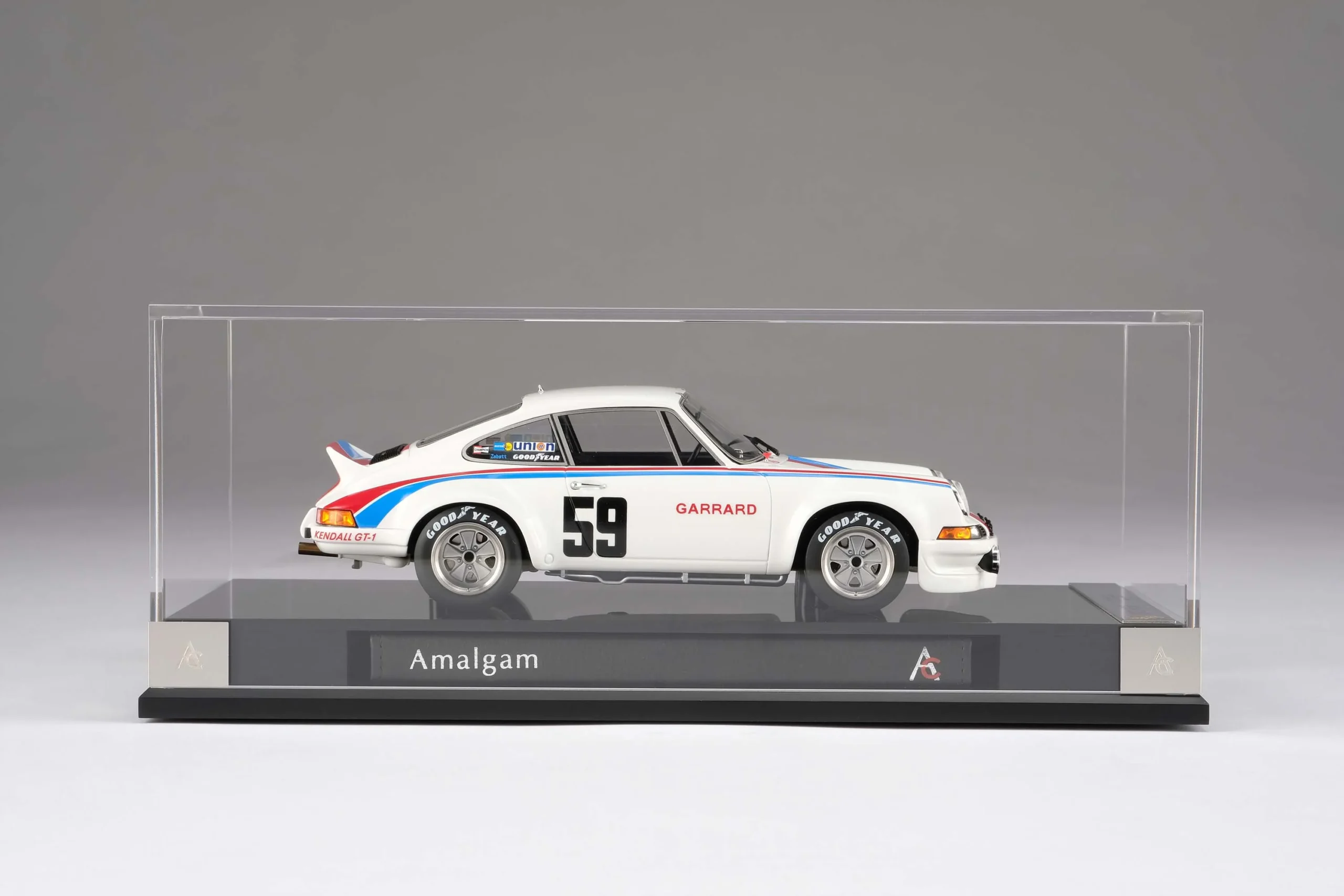
Amalgam Porsche 911 RSR 2.8 - 1973 Daytona - Brumos paintwork
- Based on chassis 911.360.0328, as Hurley Haywood and Peter Gregg drove to victory in the 24 Hours of Daytona at the Daytona International Speedway on 3 and 4 February 1973
- 1:18 scale model, over 22 cm/9 inches long
- Each model is built and assembled by hand by a small team of craftsmen
- Made from the highest quality materials
- Thousands of precisely manufactured parts: Castings, photo-etched parts and CNC-machined metal components
- Created using original CAD designs developed from a scan of an original car
- Original archive drawings and material specifications from the Porsche Museum
While the 911 2.4S was enjoying great success in the newly introduced 1972 European GT Championship, Porsche decided to develop a new car for the following year to assert its dominance in endurance GT racing in the face of ever-increasing competition from Ferrari and DeTomaso. The aim was to compete in the Group 4 GT class with 2,500 to 3,000 cc, which forced the German brand to develop a new engine with more power in order to be competitive. Group 4 homologation required 500 identical 911 specials. To meet these requirements, Porsche produced the 2.7-litre Carrera RS.
With wide wheel arches, a unique ducktail spoiler and a highly developed six-cylinder boxer engine, the Carrera 2.7 RS was absolutely brilliant to drive. The 2.7-litre engine was the largest engine available in a Porsche at the time and produced 210 hp at 6300 rpm. But while the 2.7 RS was a great road car, Porsche wanted to race and so used it as a platform to develop a complete racing model, the 2.8-litre RSR (Renn Sport Rennen). These were not simply converted road cars, they were developed solely for competition use and designed and built from the ground up for serious racing, incorporating every conceivable improvement allowed by the FIA regulations.
Of the 1,580 RS cars built, 55 became RSR 2.8 race cars, their bodies taken off the production line before the engines and gearboxes were installed and taken to Porsche's „Werk 1“ racing workshop for a complete overhaul - an engineering exercise. Massive wing extensions, a lower suspension, a central oil cooler air intake and ultra-wide Fuchs wheels were added, giving the car a much more aggressive look, while the brakes were based on components from the successful 917. Weight saving was the result a great centre of gravity, to the point that all the rubber was removed from the suspension joints and the cockpit was empty, allowing Porsche to save almost 80 kg (176 lbs) from the already lightweight standard RS Lightweight, despite strengthening the chassis. The centrepiece of the RSR was its enlarged racing engine. Porsche's aim was to get as close as possible to the maximum engine size of the three-litre class, and the engineers' efforts resulted in a power increase from the RS's 210 hp to over 300 hp, allowing the RSR to sprint from 0 to 100 km/h (0-100 km/h) in just four seconds. However, these custom-built racing cars were not cheap. Porsche listed them at 59,000 Deutschmarks, which was basically another Porsche that was more expensive than the standard road-going 2.7 RS. Most of the 55 examples were sold to private racing teams.
The RSR was considered the lightest, fastest, most powerful and most manoeuvrable 911 ever entered in GT racing, and the model immediately proved its worth by winning the first round of the one-make working championship in 1973. Victories at the 24 Hours of Daytona, the 12 Hours of Sebring and the Targa Florio followed. In 1973 alone, the RSR won three international and seven national championships, including six out of nine rounds in the European GT Championship. The phenomenal record of the Porsche 911 RSR 2.8 established a true and lasting legend in GT endurance racing.
This fine 1:18 scale model is a perfect replica of the 1973 Porsche 911 RSR 2.8 chassis 911.360.0328, as Hurley Haywood and Peter Gregg drove to victory in the 24 Hours of Daytona at Daytona International Speedway on 3 February 4 1973. The Brumos Racing #59 and its sister car, the Penske Racing #6, were effectively prototypes, the first 911 RS bodies with an experimental RSR engine, gearbox and chassis to be tested by Singer and Porsche before being launched by the rest of the teams. The car had not yet been homologated by the FIA and was therefore running in the prototype class with no expectation of emerging victorious against its dedicated single-seater rivals. In fact, the management's priority was not to damage the cars and to ensure proper post-race analysis and testing.
Despite this, the car was fast and, more importantly, incredibly reliable. In fact, the #59 spent only 24 minutes in the pits during the entire 24-hour competition, a clear testament to its robustness and the resilience of its driver pairing. As one by one its competitors fell, including the No. 6 Penske sister car, which retired after 405 laps because a flywheel came loose, the No. 59 carried on. There was a scare when the car collided with a seagull on the main straight, but through clever use of the team's new radio communications, Haywood was instructed to stay out while engineers sourced a replacement windscreen, which was eventually found on a 911 in the car park. From then on, things went smoother and Haywood and Gregg took their first win at Daytona, 32 laps ahead of the nearest competition. Gregg later became the second man to win four times at Daytona, while Haywood became the first taste winner there five times, a record that still stands today.
This model was handcrafted and finished in our workshops using archive images, detailed colour and material specifications with the support of Porsche AG and the Porsche Museum. It has also undergone detailed scrutiny by the engineering and design teams at Porsche to ensure complete accuracy of representation.
Note: This is a „kerb“ model and has no moving parts.
Item number: M5913
 German
  English
  Italian
  French
  Spanish
  Arabic
  Japanese
Reviews
There are no reviews yet.