
Description
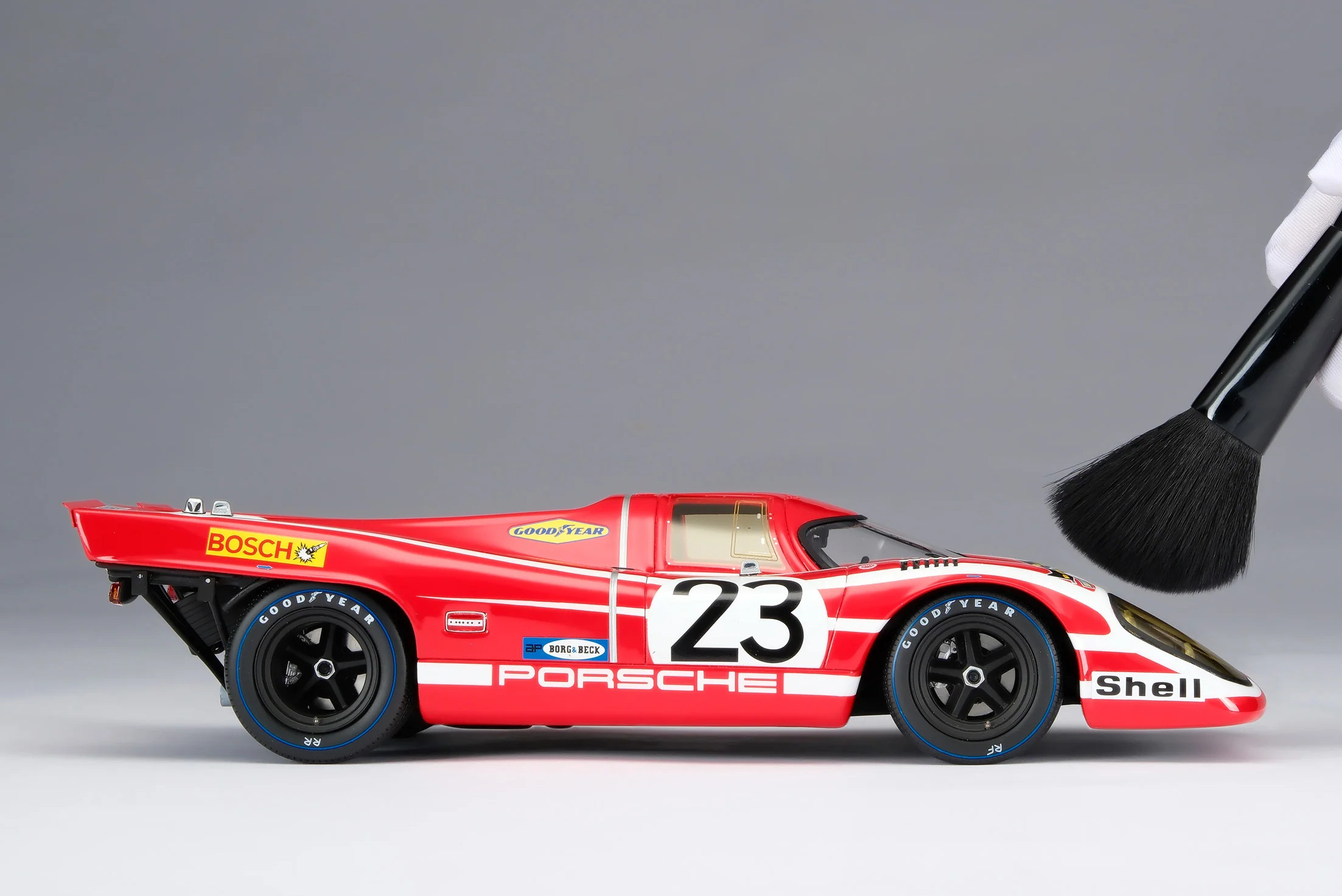
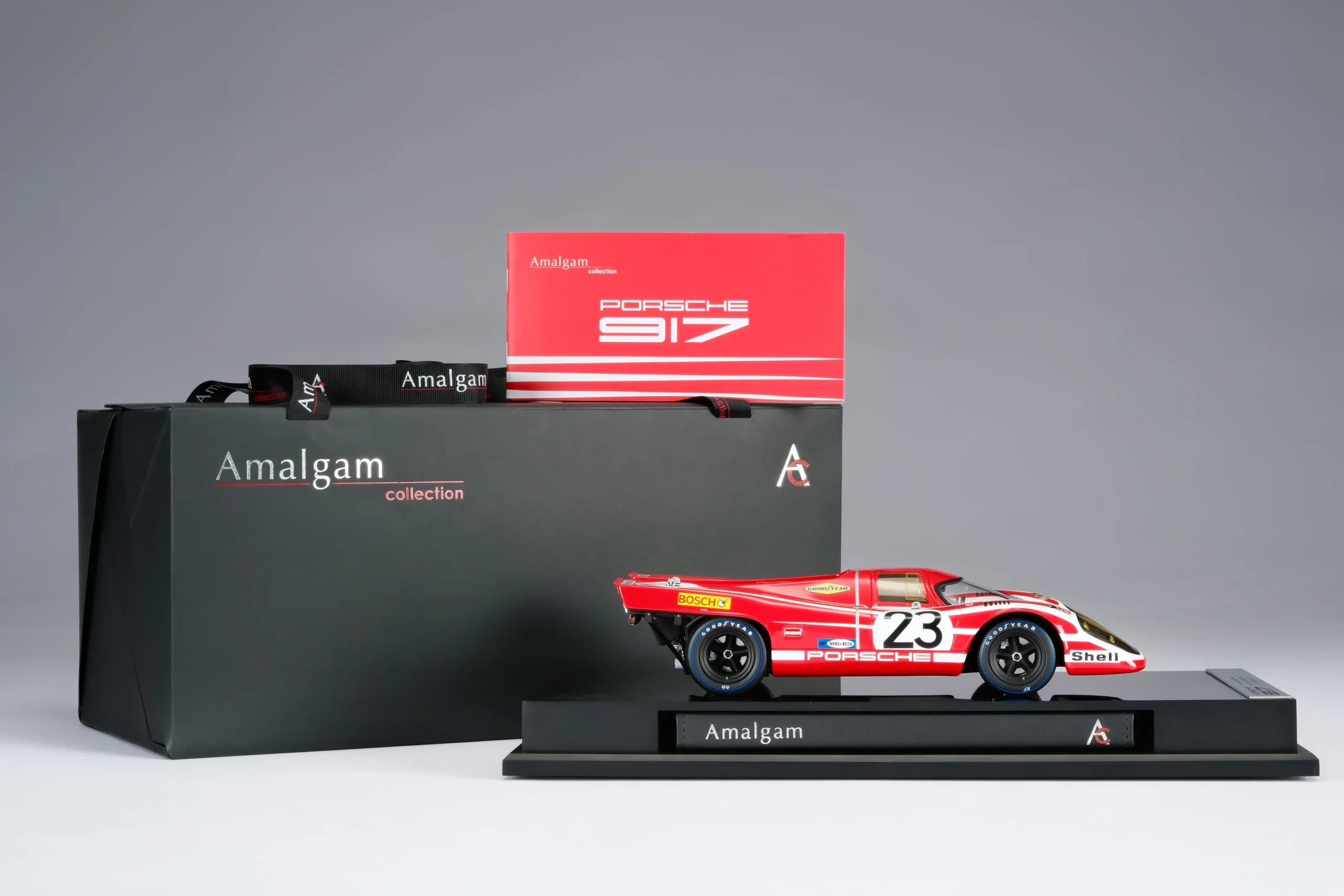
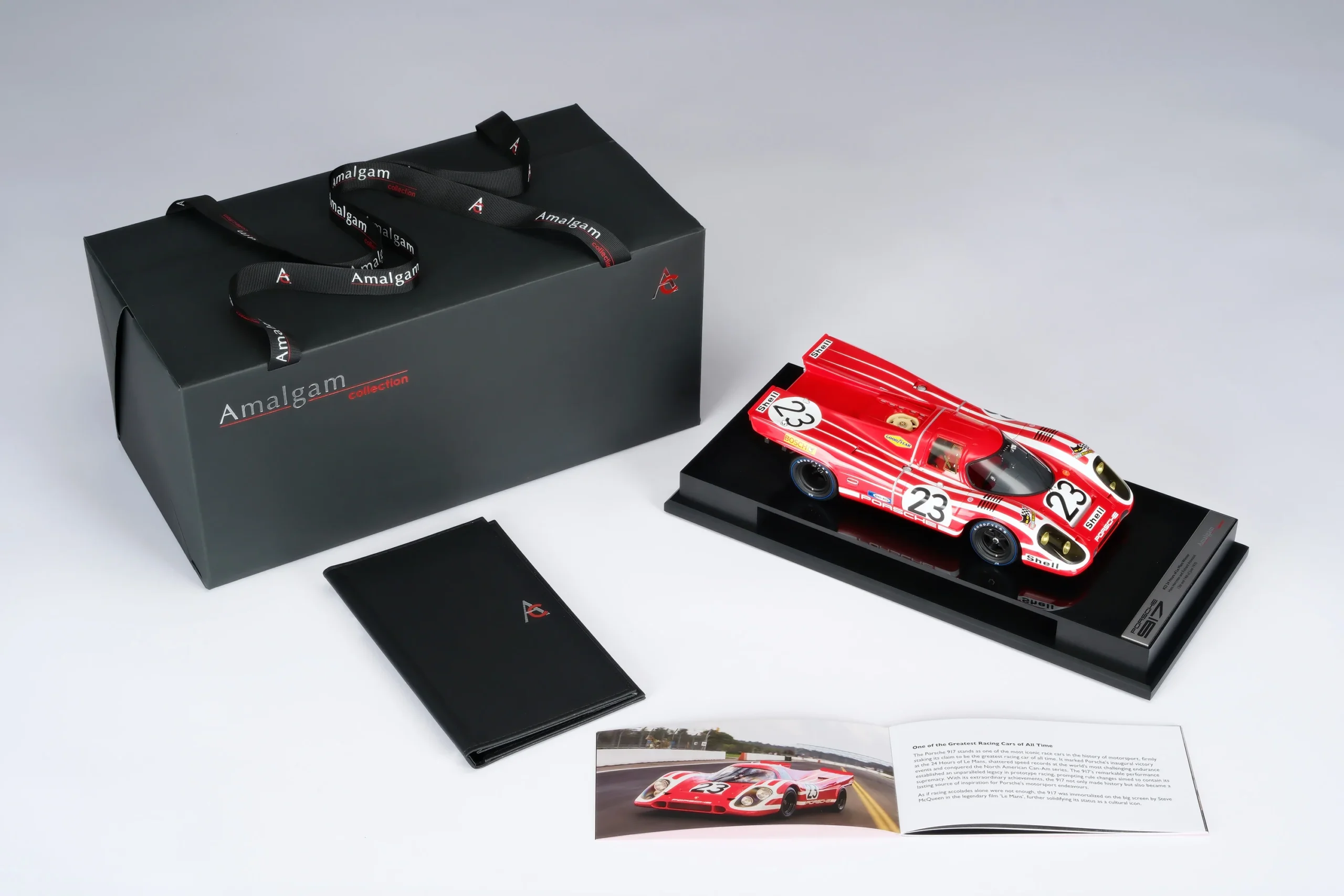
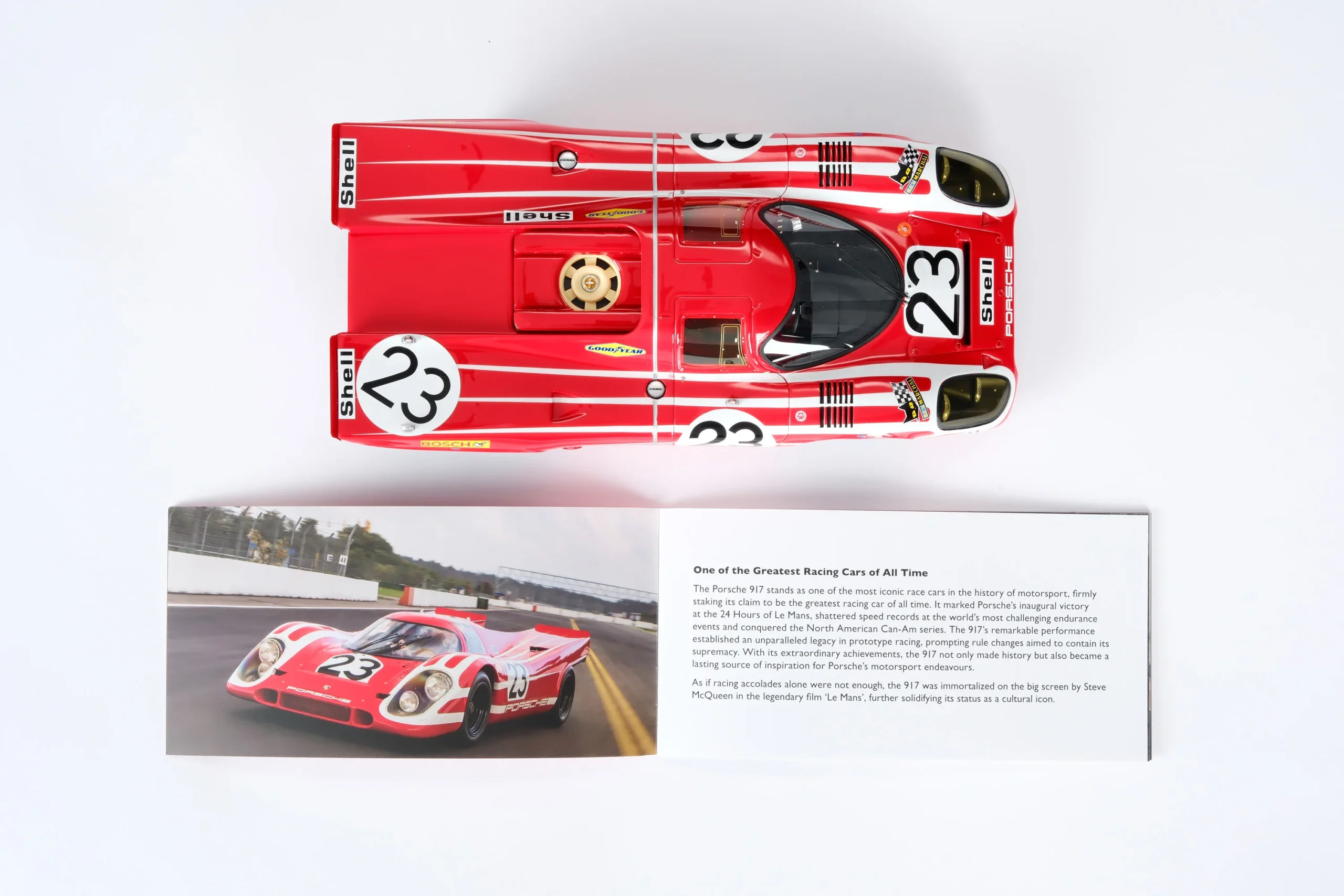
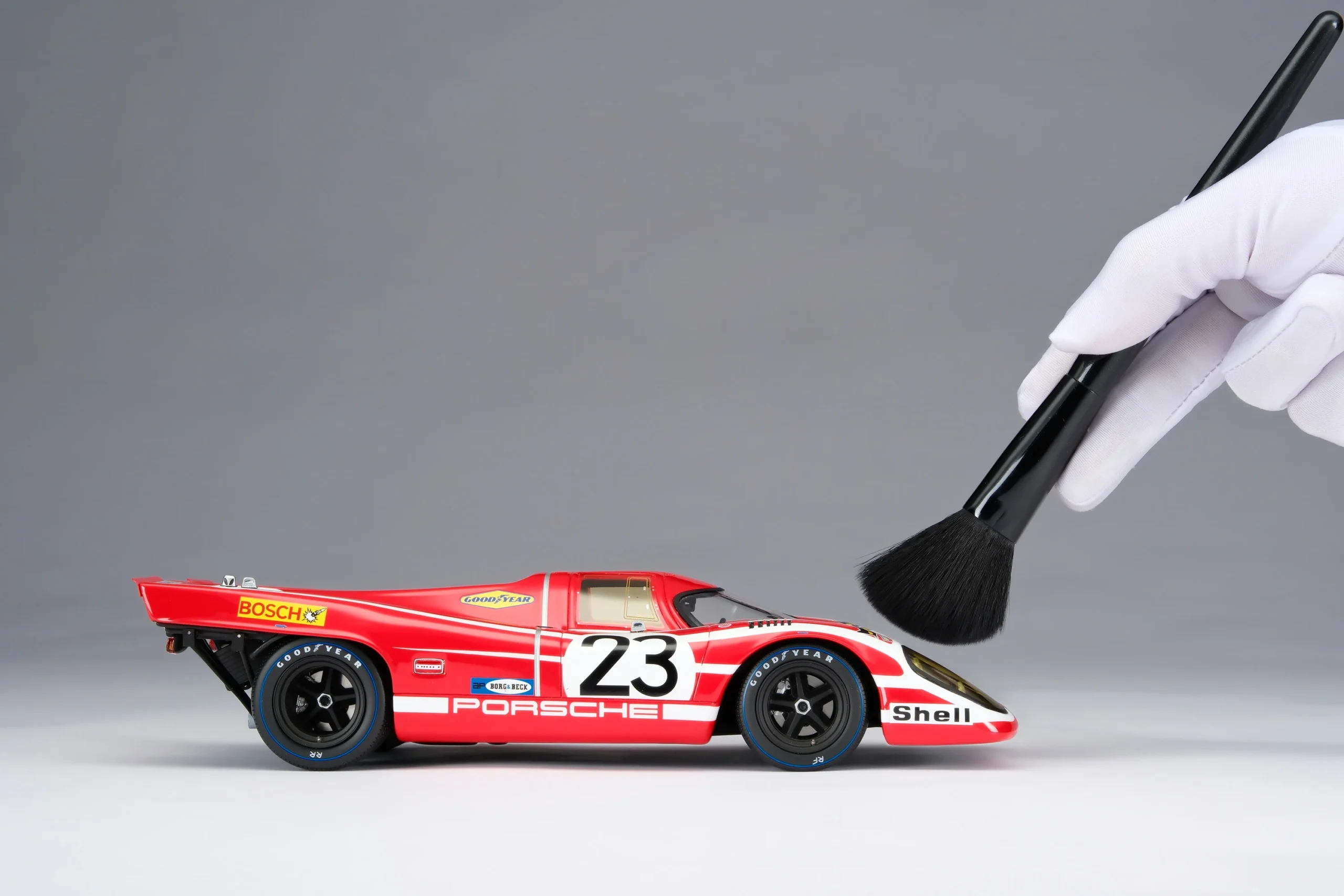
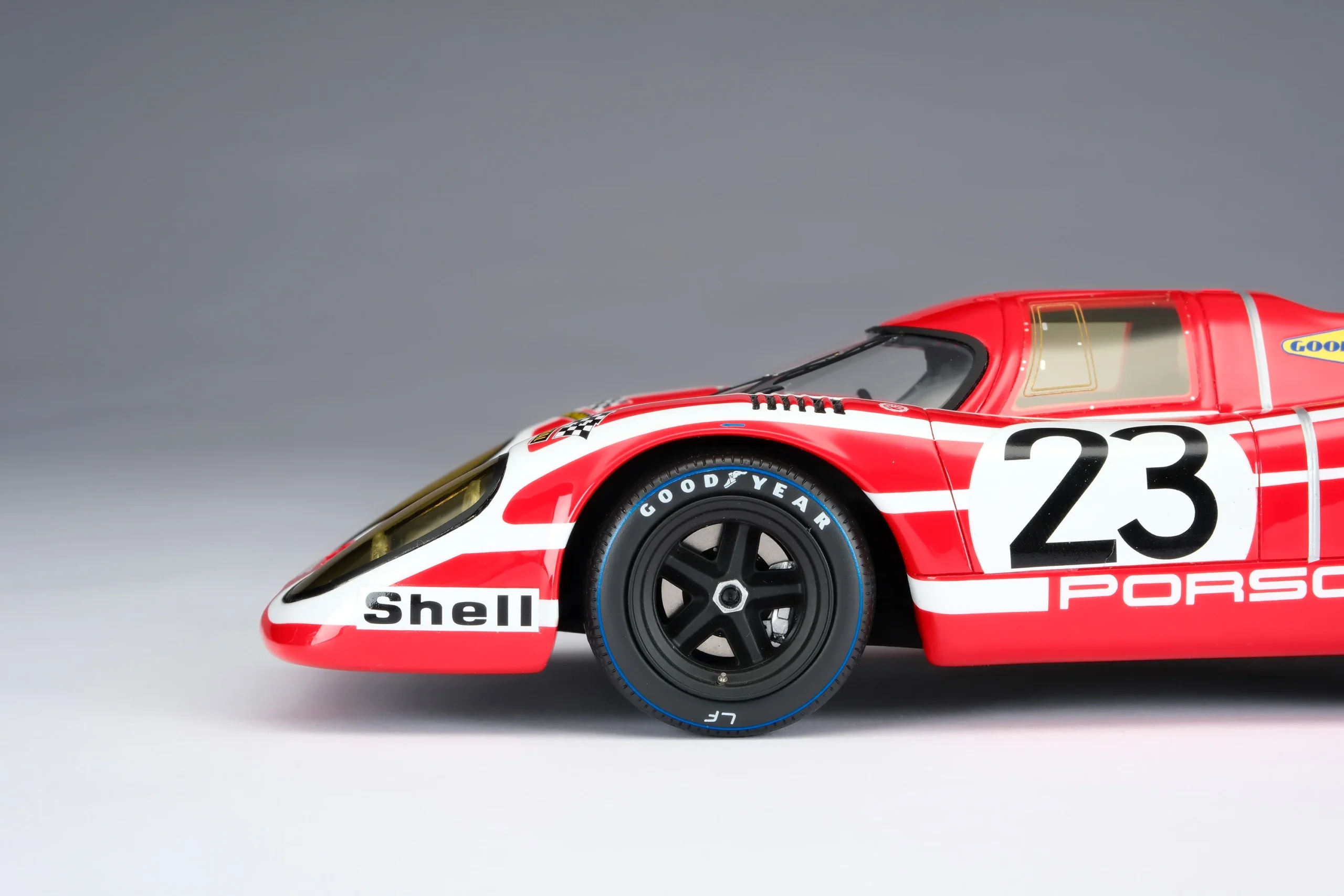
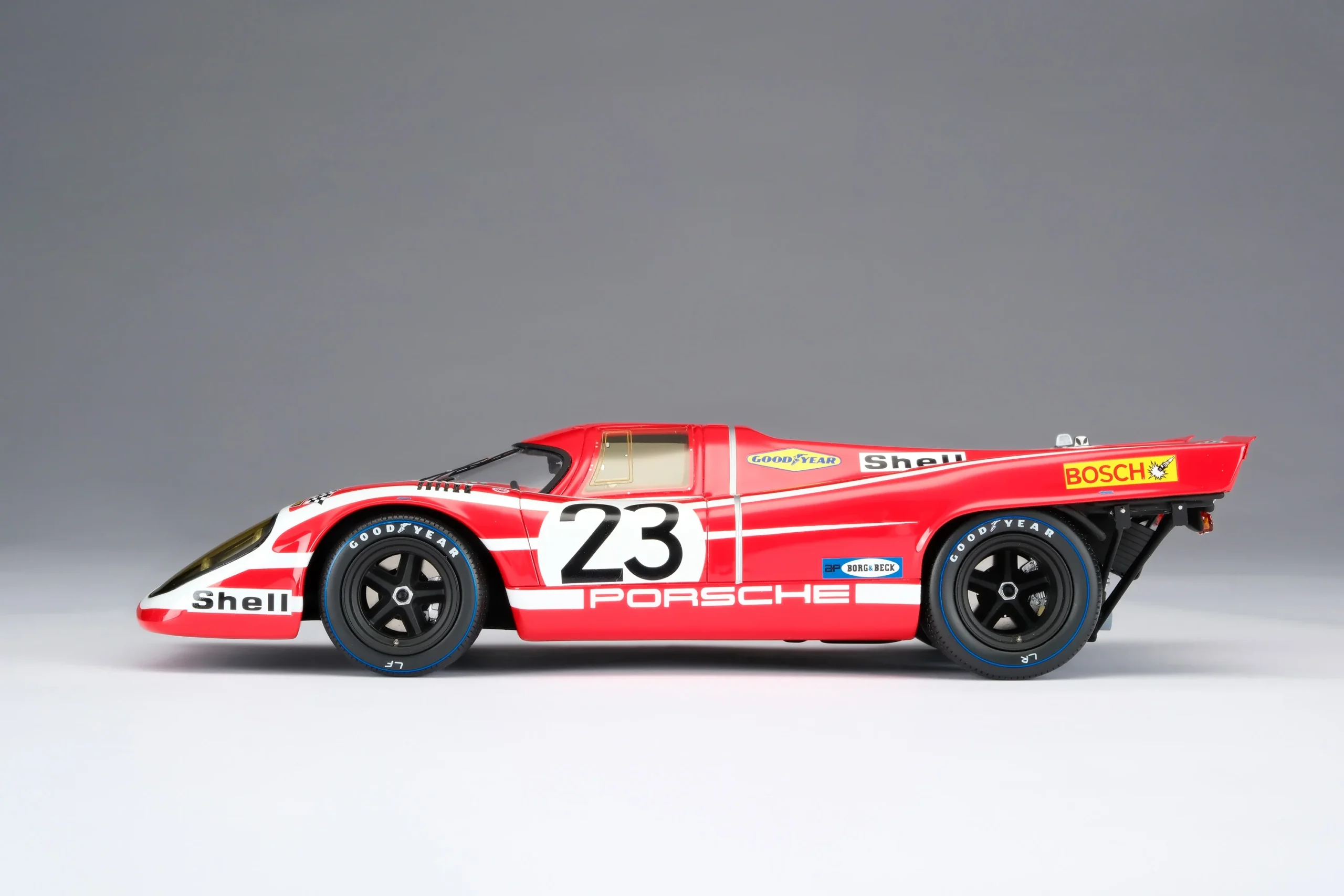
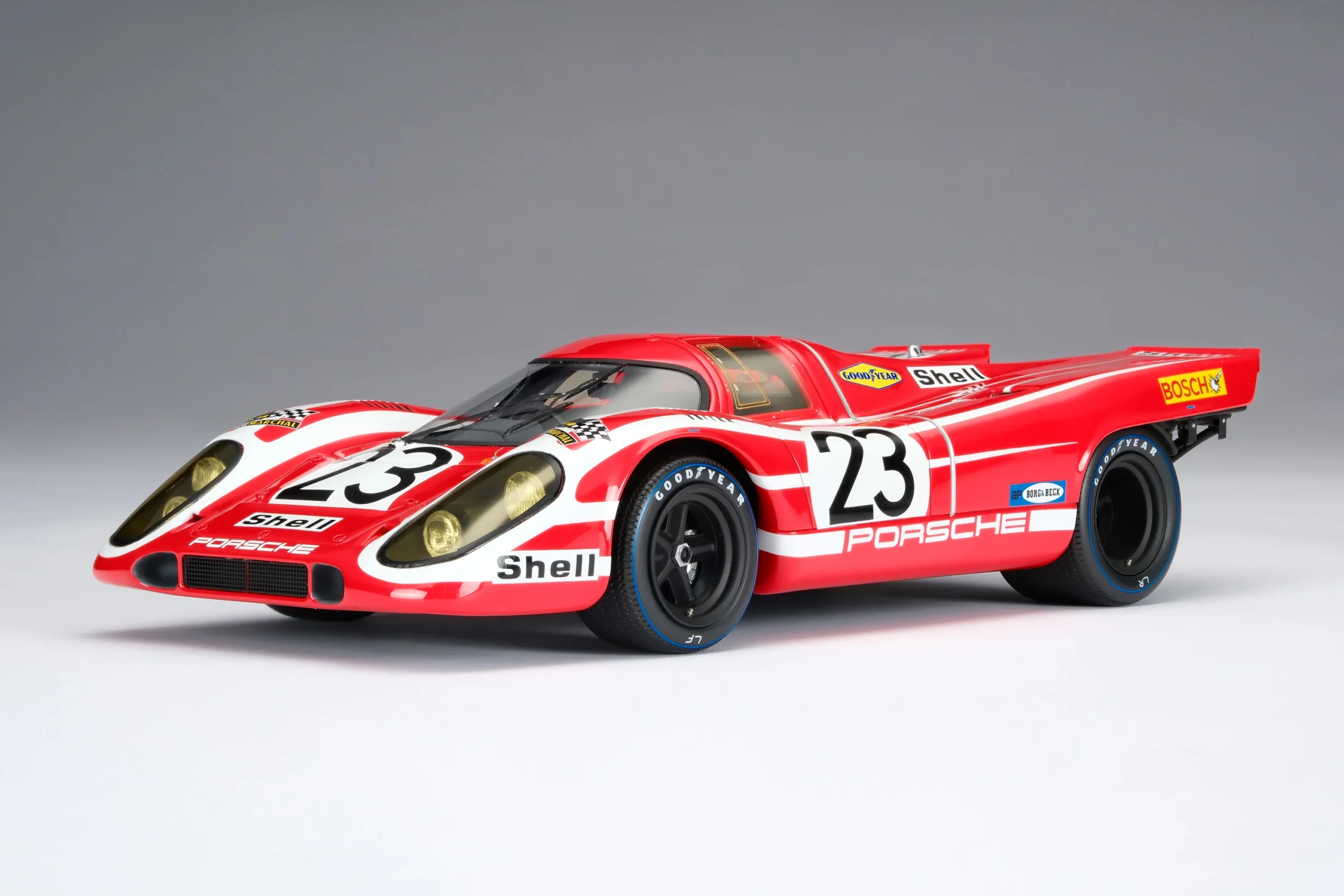
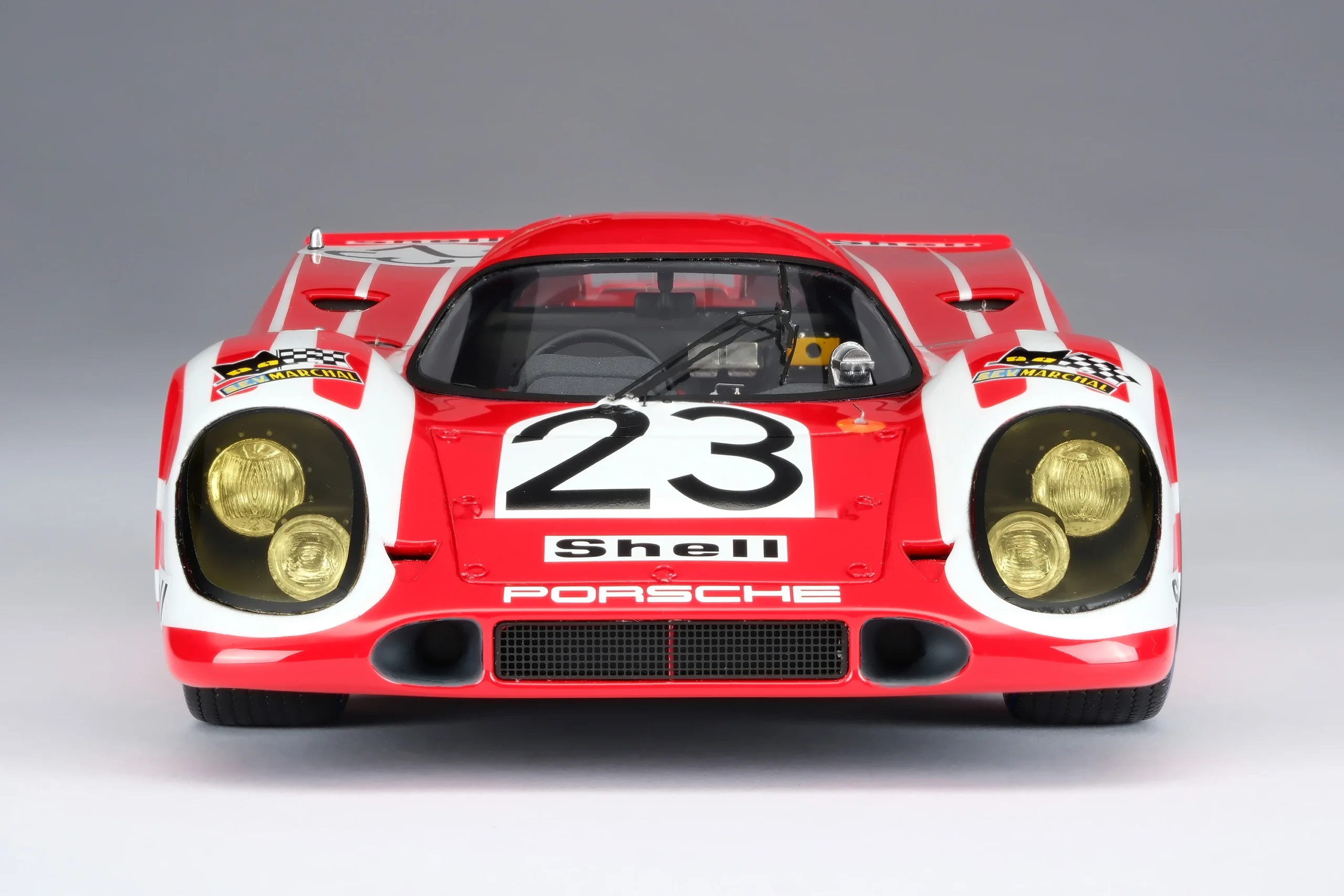
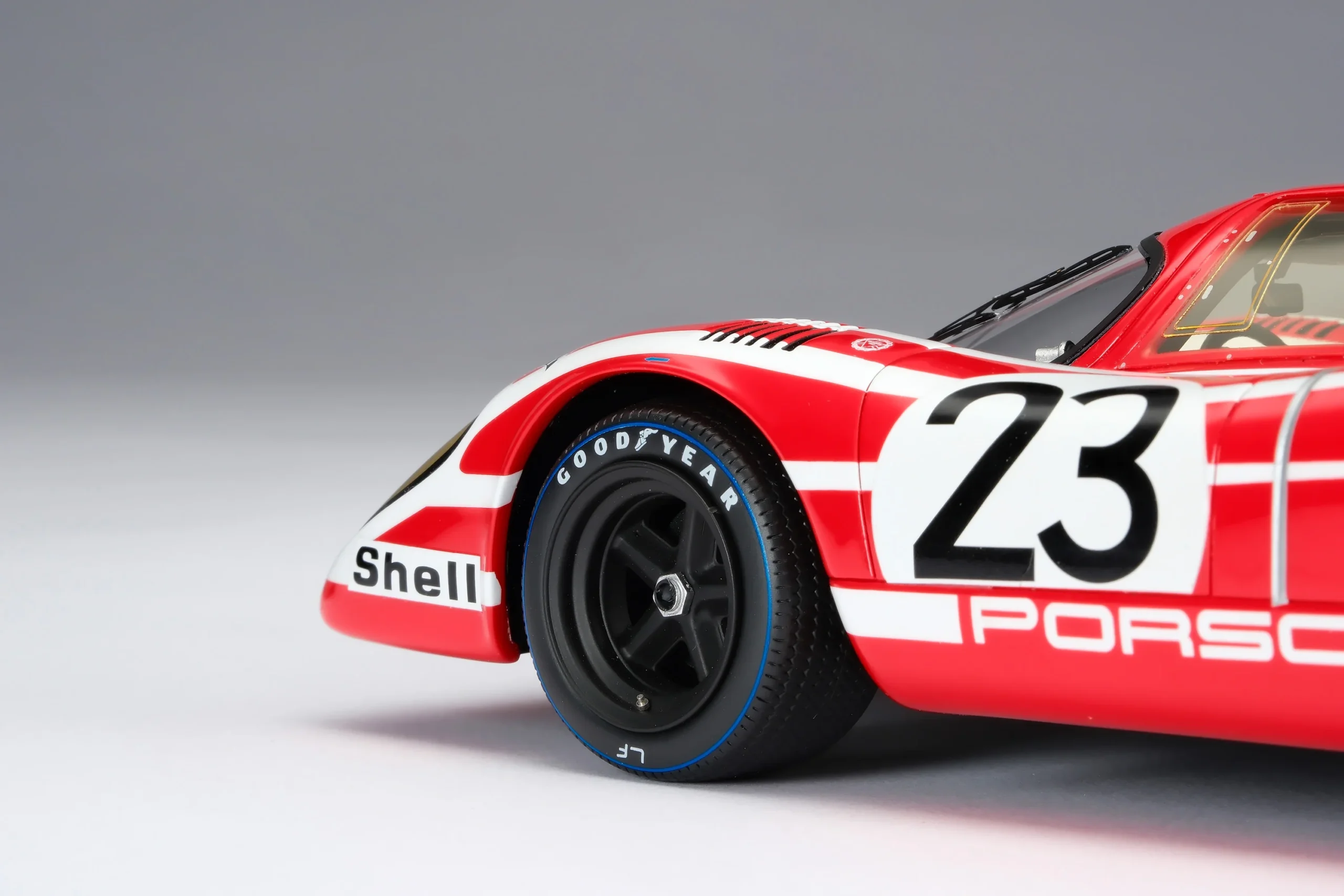
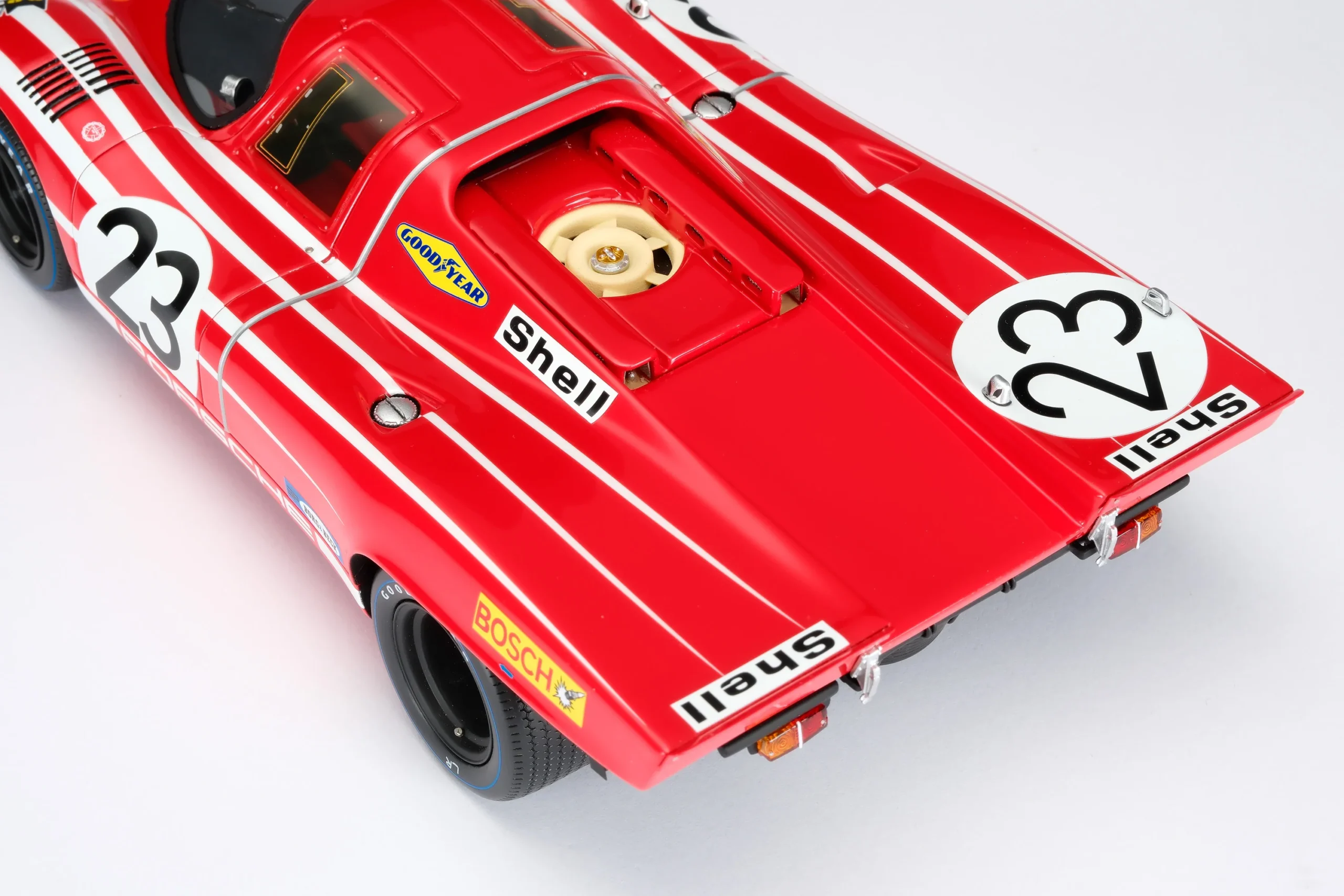
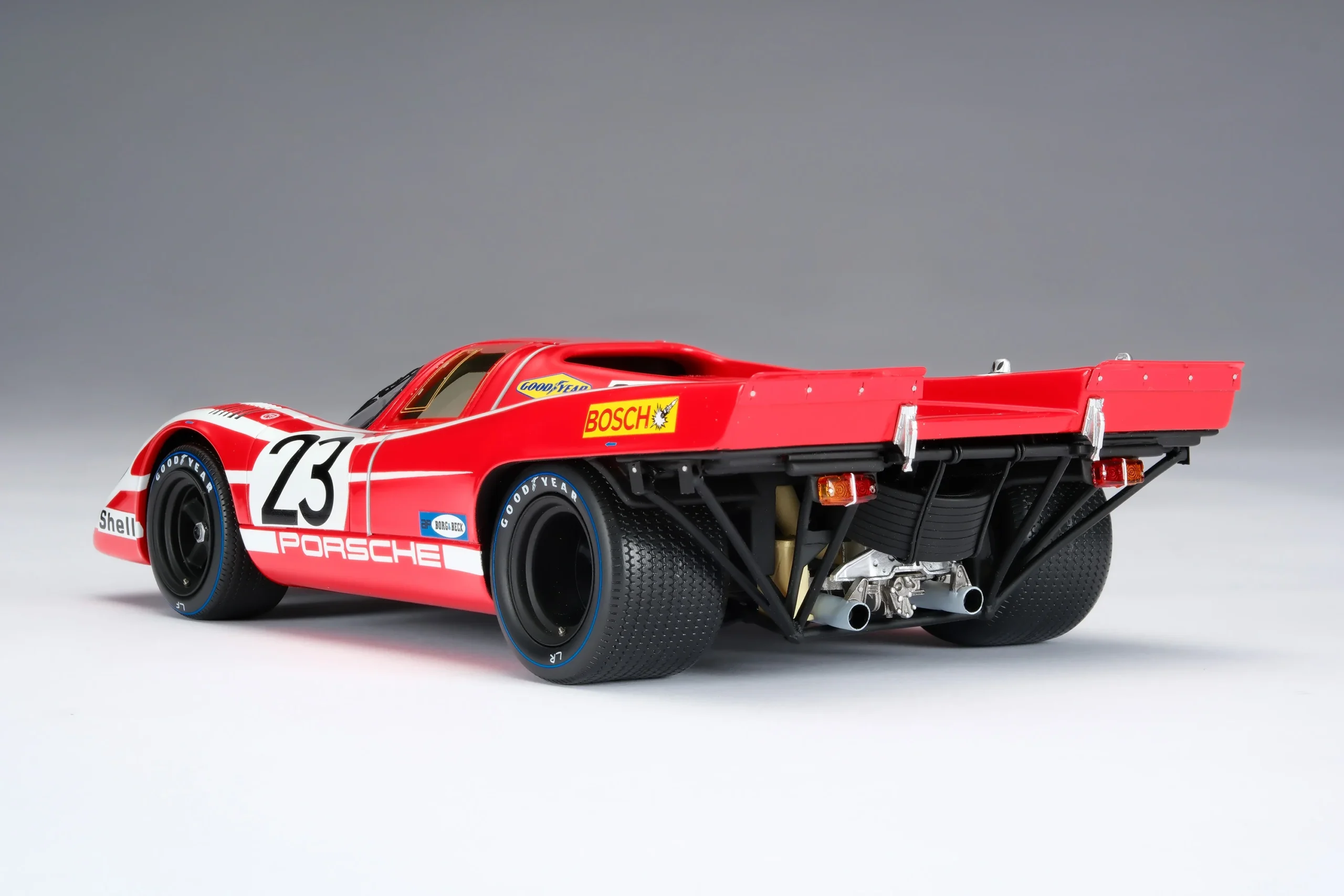
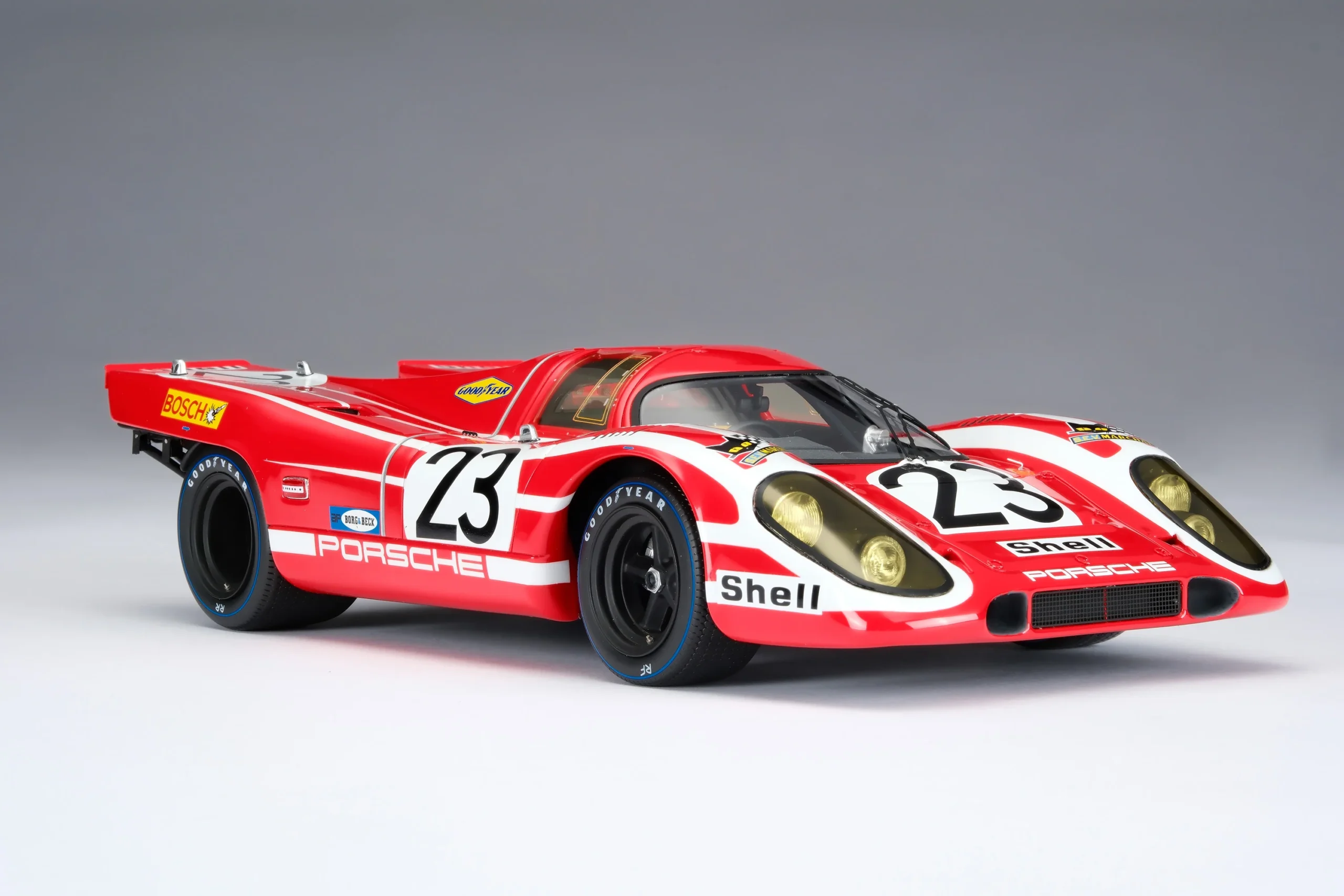
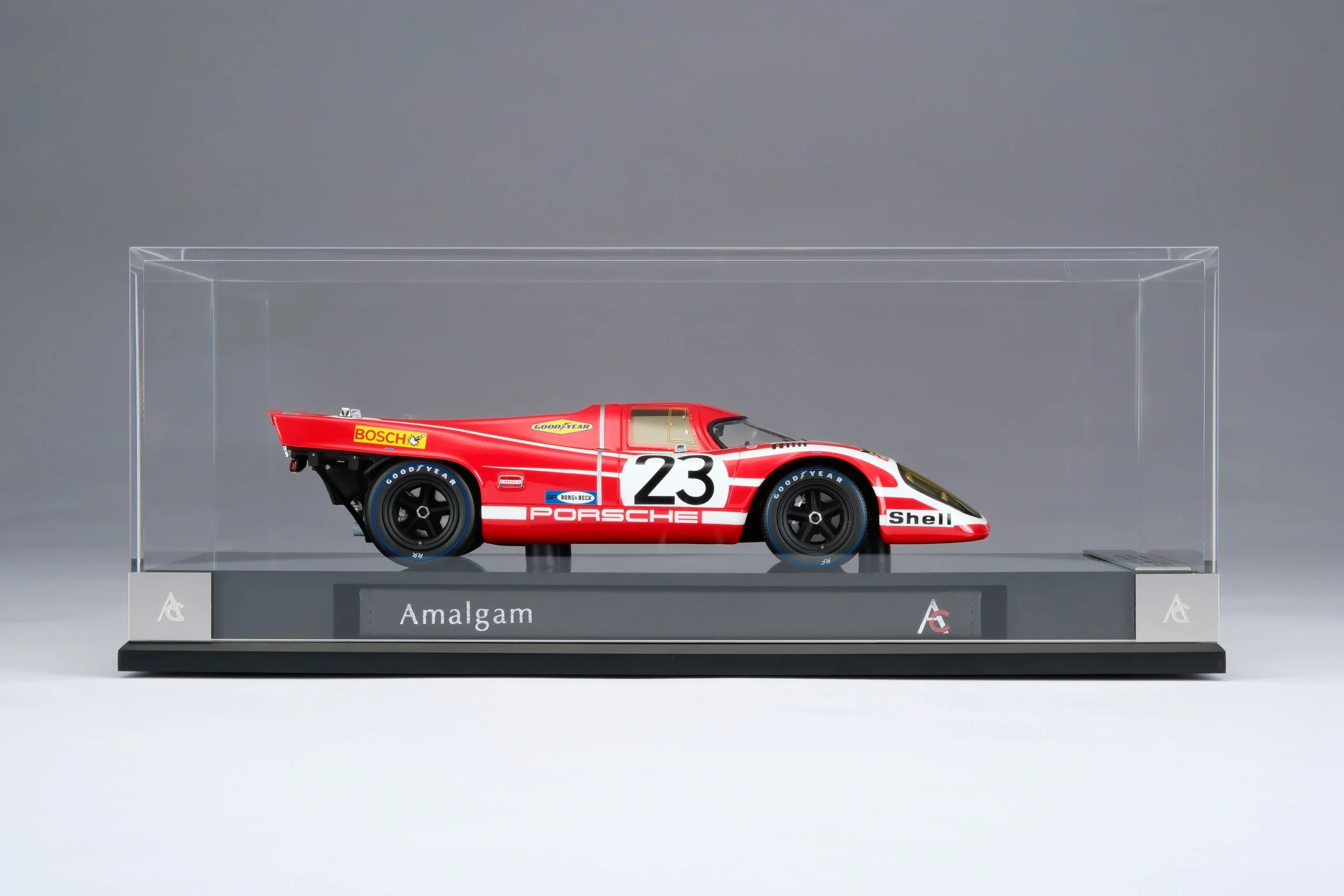
Amalgam Porsche 917K - Winner of Le Mans 1970 - Salzburg livery. High-quality collector's model in 1:18 scale.
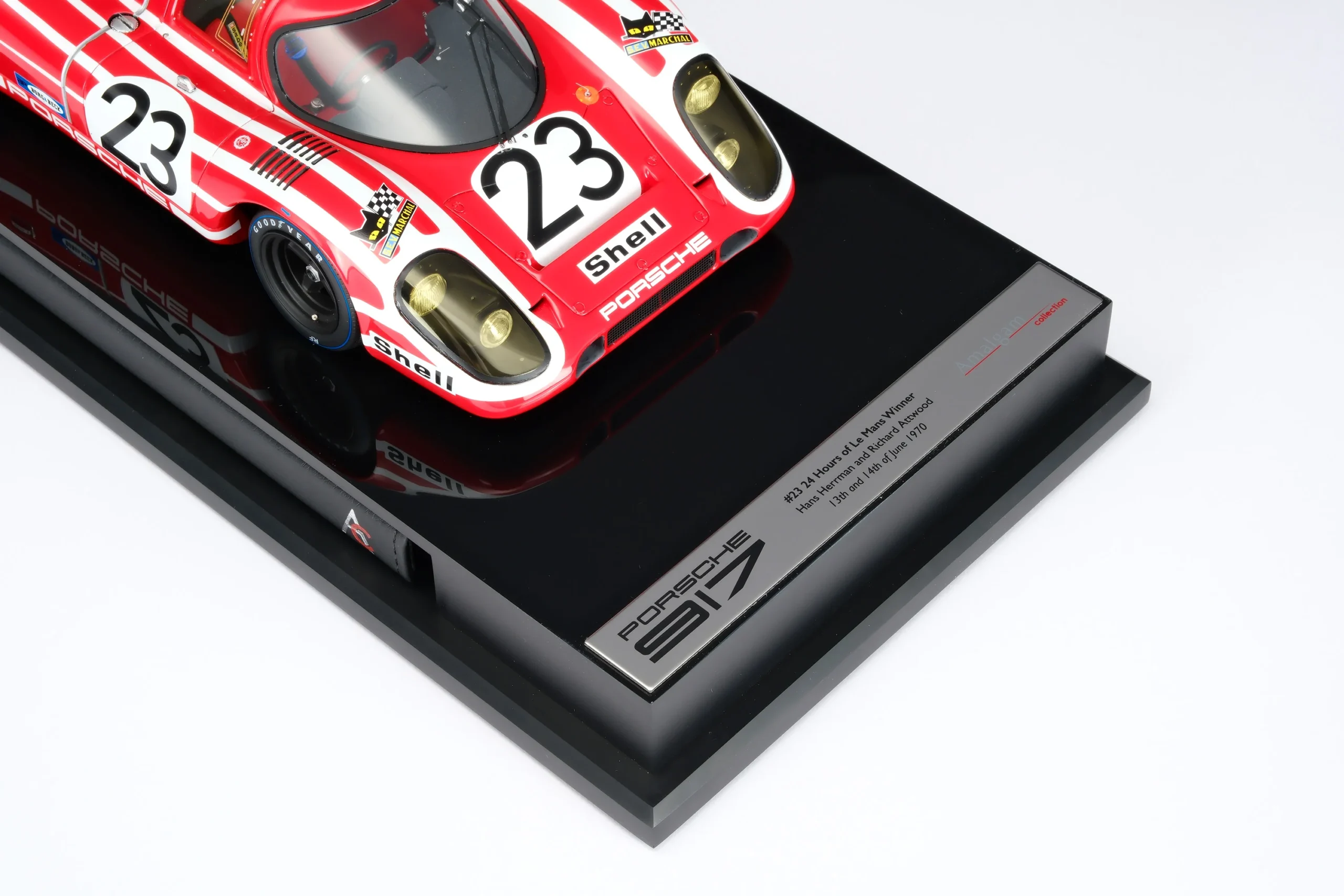
- Based on car no. 23, with which Hans Herrman and Richard Attwood won the 24 Hours of Le Mans on 13 and 14 June 1970
- Each model was handmade and assembled by a small team of craftsmen
- 1:18 scale model, over 26 cm/10 inches long
- Made from the highest quality materials
- Over 800 hours spent developing the model
- Precisely constructed parts: Castings, photo etchings and CNC machined metal components
- Built using exceptionally precise digital data obtained by scanning an original car
- Paint codes, material specifications and archive images were provided by Porsche
- Officially licensed 24 Hours of Le Mans product
The Porsche 917 is probably one of the most legendary racing cars in the history of motorsport. Its conception resulted from an unexpected change in the rules of the Commission Sportive Internationale, then the independent competition division of the FIA. After the 1967 racing season, it was announced that all future prototype engines would be limited to 3.0 litres in order to reduce the speeds achieved on the fast endurance circuits and at the same time attract manufacturers who were already building three-litre Formula 1 engines to endurance racing. Aware that few manufacturers were immediately up to the challenge, the CSI also announced a new Group 4 sports car series, which allowed engine capacities of up to 5.0 litres but had to produce at least 25 units for homologation. Porsche, which was already hard at work refining its 3.0-litre 908 racing car, surprised the world by unveiling a second racing car prototype for the Group 4 category: the 917. Despite the FIA's doubts, Porsche presented the FIA with 25 examples just three weeks after the 917's debut at the Geneva Motor Show in March 1969.
The early 917 was powered by a 4.5-litre twelve-cylinder boxer engine developed by the well-known Porsche engineer Hanz Mezger. In order to reduce development costs, the engine was borrowed heavily from its 3.0-litre counterpart in the Porsche 908. The 1969 racing engines produced 580 hp and 460 Nm of torque. Later models could optionally be powered by engines with larger displacements of 4.9, 5.0 and finally 5.4 litres, each of which brought a corresponding increase in performance. The flat-12 engine became the most characteristic feature of the 917.
While the engine was an instant success, the body and aerodynamics of the car were anything but. Early tests gave cause for concern. The car wobbled badly under braking and behaved fiendishly in high-speed corners. None of the regular Porsche drivers wanted to race with it. But Porsche engineers pressed on, eventually adding wider rear wheels and a few other changes that made the 917 a more controllable machine. Short and long-tail versions of the car were developed, but while the long-tail of the 917 is a feast for the eyes, the shape made famous by a string of victories is the short version, better known as the 917K, after „Kurtz“.
The 917K did not have to wait long for its success. On its public debut at the 1970 Daytona 24 Hours, John Wyer's Gulf-sponsored team finished first and second, with the winning car breaking the distance record by 190 miles. This victory marked the beginning of the 917K's dominance of the World Sportscar Championship for the next two seasons. This was soon followed by Porsche's first overall victory at the 24 Hours of Le Mans, a memorable event for the German marque, but just one of many to come. The triumphs that year came quickly and resoundingly, and in total the 917K's first full year of competition would bring seven major victories. 1971 was no exception, with six major victories, crowned by another overall win at Le Mans. Later that year, development began on the Can-Am version, a car so dominant that the series lost popularity in the United States and never regained it.
Today, the 917K is revered as one of the most iconic race cars of all time. It was the car that gave Porsche its first overall victory in the world's toughest race, and the car that would set one of the most impressive prototype racing series dominance records the world has ever seen. As if its racing successes alone were not enough, the car was later immortalised on screen by Steve McQueen in the film „Le Mans“.
This beautiful 1:18 scale model of the Porsche 917K is based on car no. 23, with which the German veteran Hans Herrman and the British racing driver Richard Attwood took victory in the 1970 24 Hours of Le Mans. Heavy rain made for a race of attrition, with only seven of the 57 cars that started finishing. Porsche dominated everything, with a car on every step of the podium and a class win. Victory was exceedingly sweet for Herrman on his thirteenth attempt, especially after missing out on the win last year by just 120 metres.
This model was handcrafted and finalised in our workshops in collaboration and with the support of Porsche in terms of original finishes, materials, archive images and drawings. By using extremely accurate digital scans of the original car, we were able to perfectly replicate every detail in scale. In addition, it has undergone detailed scrutiny by the engineering and design teams to ensure complete accuracy of representation.
Item number: M6240-SC1
 German
  English
  Italian
  French
  Spanish
  Arabic
  Japanese
Reviews
There are no reviews yet.