
Description
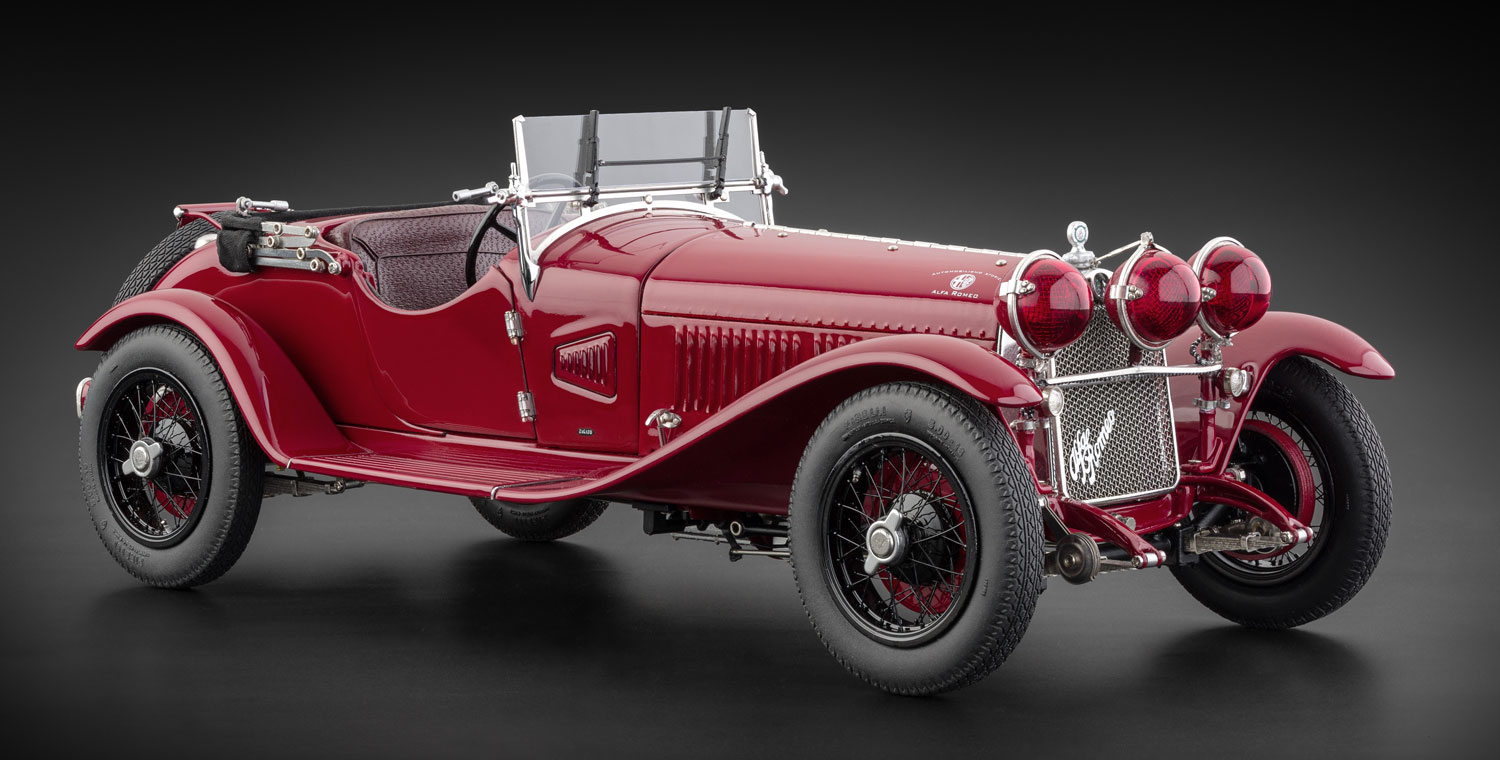
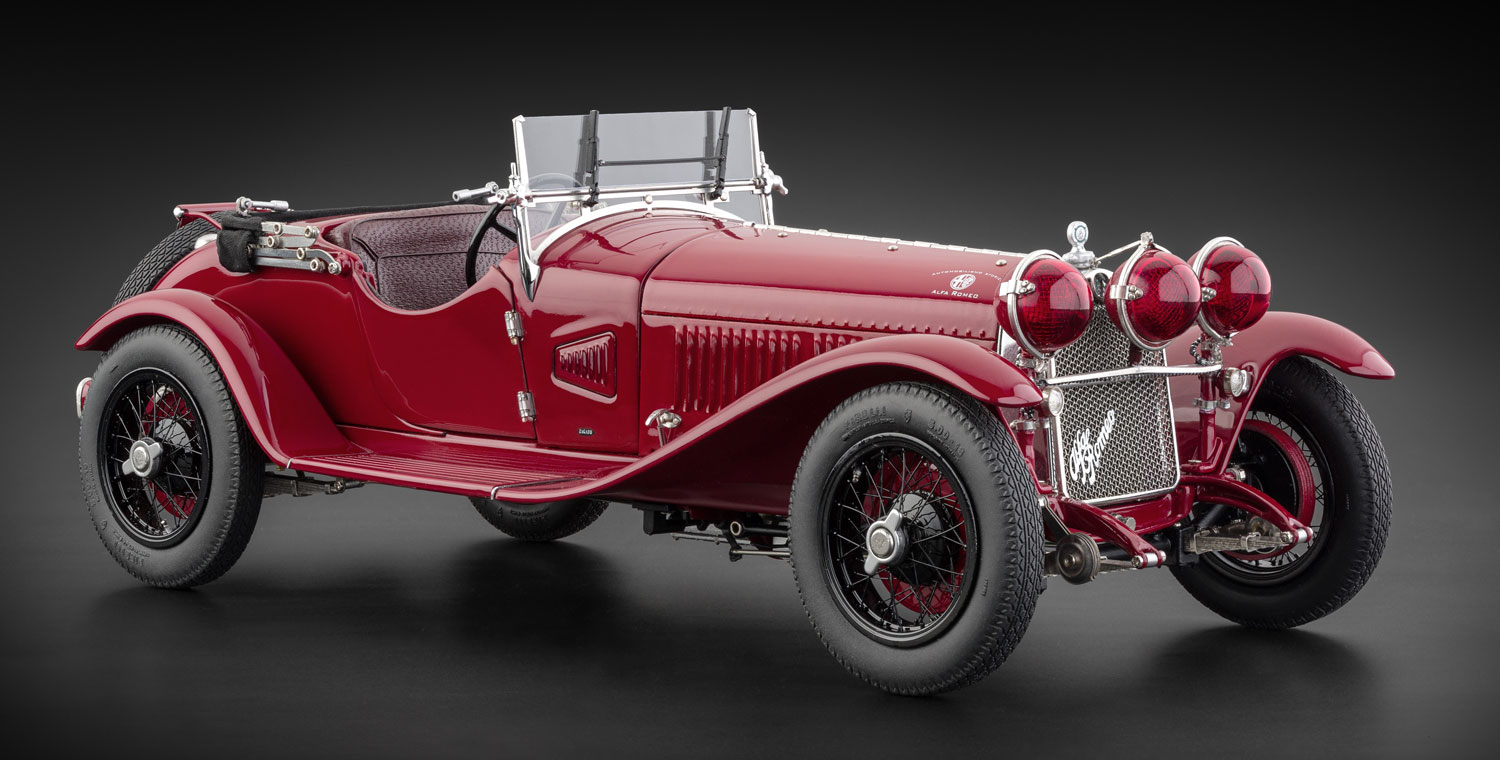
CMC Alfa Romeo 6C 1750 GS, 1930
The most fascinating and successful representative of the Alfa-Romeo 6C 1750 series was the Gran Sport from 1930. One such gem of automotive history can be found in the Alfa-Romeo Museum Storico in Arese / Italy and served as the model for our high-end model of superlatives. The Spyder was clothed by the famous coachbuilder Zagato.
- Hand-assembled metal precision model as a right-hand drive model made from 1,800 parts; 1,311 of which are metal parts alone
- Authentic and true-to-scale moulded Spyder body from the ingenious coachbuilder Zagato
- Vehicle frame as metal construction
- Highly detailed 6-cylinder in-line engine with front-mounted Roots compressor and all other add-on units and complete pipework/cabling
- Strikingly designed front section with the famous triple headlight/light unit.
Stone guard protects the headlight lens from damage. Removable red caps.
- Double-wing bonnet can be opened with storage option on metal pins
- Fine-meshed metal stone guard prevents damage to the radiator grille
- Windscreen with dimensionally stable metal mounting frame
- Movable doors hinged on finely modelled hinges
- Lateral filler neck of the oil tank housed in the cockpit and rear filler neck of the fuel tank made of stainless steel sheet, each with movable metal cap
- Luggage compartment behind the soft-top storage compartment with movable flap
- Detailed cockpit with genuine leather upholstery on the seats and door side panelling
- Detailed reproduction of the dashboard with all display instruments and control switches
- Functional holding device for double spare wheels. Wheels can be removed after loosening a tommy screw
- Perfect spoke wheels with aluminium rims and nippled stainless steel wire spokes. Screw-on centre locks with right/left-hand thread allow the wheels to be removed
- Elaborate floor assembly with front/rear axle in cast metal and representation of the mechanical brake linkage, leaf springs and friction shock absorbers each in metal
In the 1930s, Alfa-Romeo did not yet produce its own bodies but, as in the case of the 1750 GS, sourced the bodywork from coachbuilder Zagato. As it turned out, this was a good choice, because Zagato once again did a great job with its unmistakable design language. The four-metre-long car has two spare wheels housed in a rear recess. An emergency textile soft top provides a degree of rain protection in bad weather. The red, removable plastic covers on the three headlights, which are designed to improve the aerodynamics of the vehicle, are a striking distinguishing feature.
The Gran Sport is powered by a six-cylinder in-line engine developed by the ingenious chief designer of Alfa-Romeo, Vittorio Jano. With its Roots supercharger and the double flat-flow carburettor from Memini, the 6C 1750 GS produced an impressive 85 hp at 4500 rpm. A number of factory racing cars even had welded cylinder heads (testa fissa) and were able to produce an impressive 102 hp at 5000 rpm. With this outstanding power output, whether 85 or 102 hp, combined with a low vehicle weight of 920 kg and a wheelbase shortening to 2745 mm, which radically changed the handling of the GS for the better, the Gran Sport became the most famous Alfa Romeo of the time. Numerous important victories throughout Europe, such as at the Mille Miglia in 1930 and 1931 or in the rain race of the Irish Tourist Trophy, to name but a few, made it the undisputed dominator of the racing era of the time. The 6C 1750 GS was only too weak for the rigours of the 24 Hours of Le Mans.
Item number: M-138
 German
  English
  Italian
  French
  Spanish
  Arabic
  Japanese
Reviews
There are no reviews yet.