Description
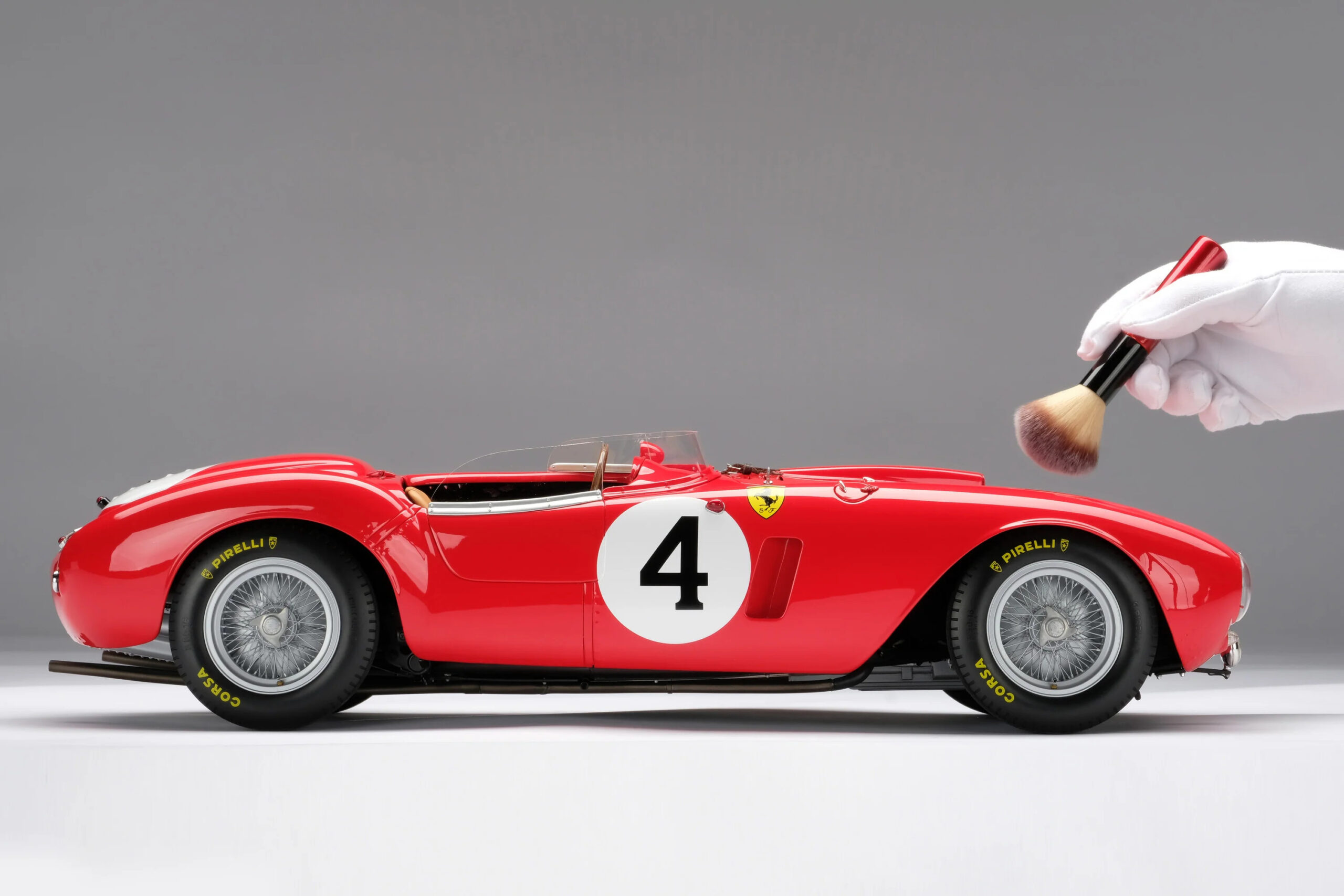
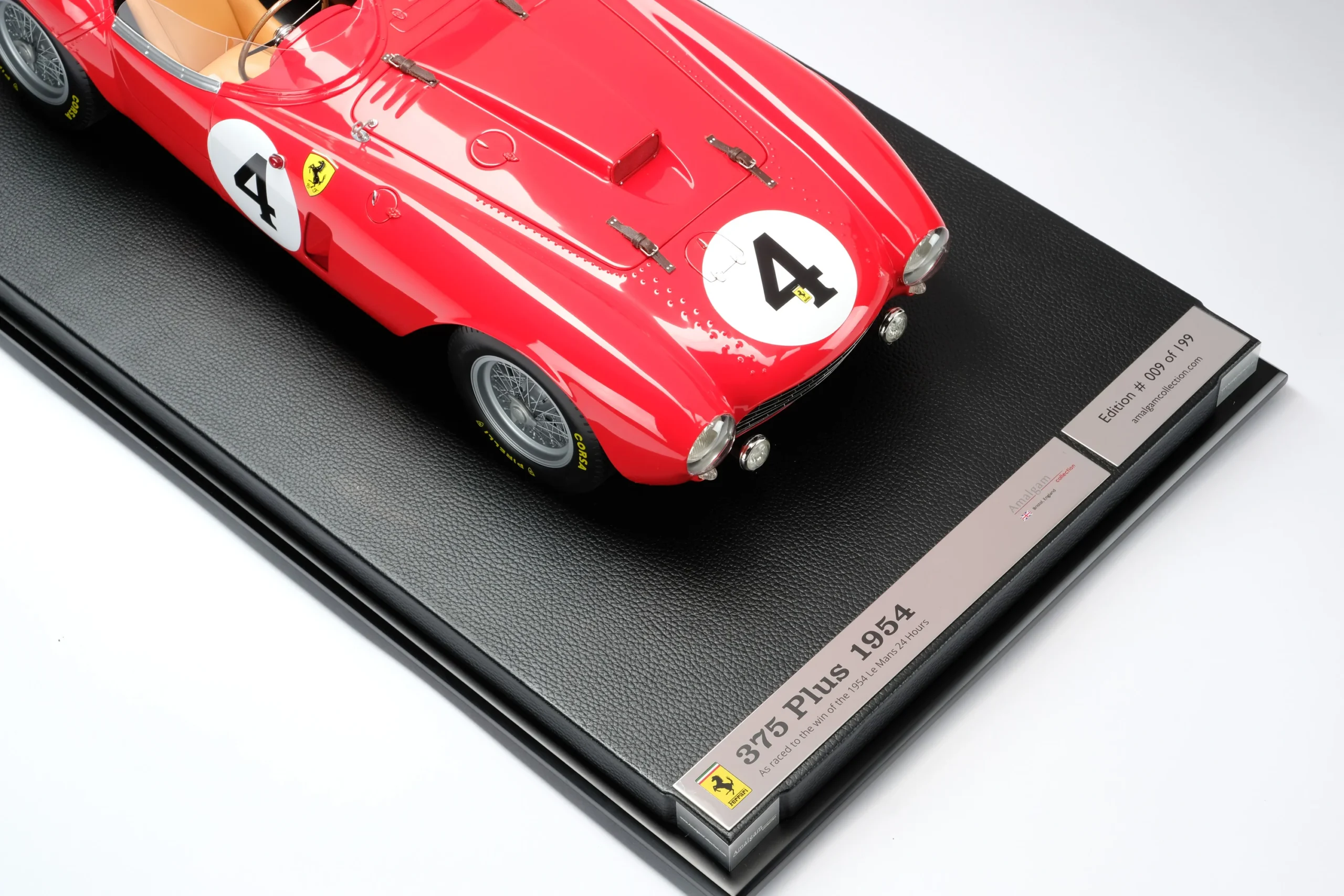
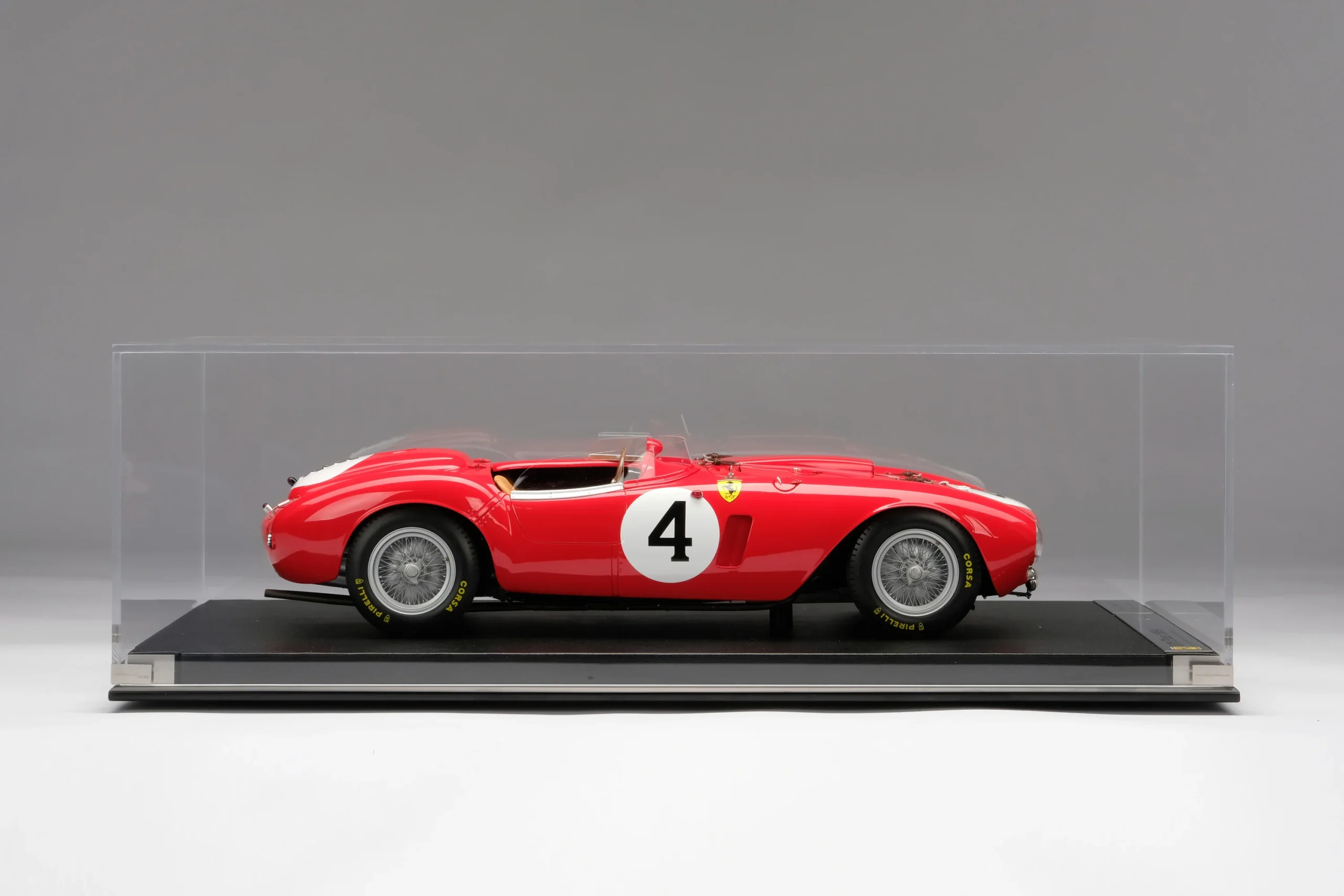
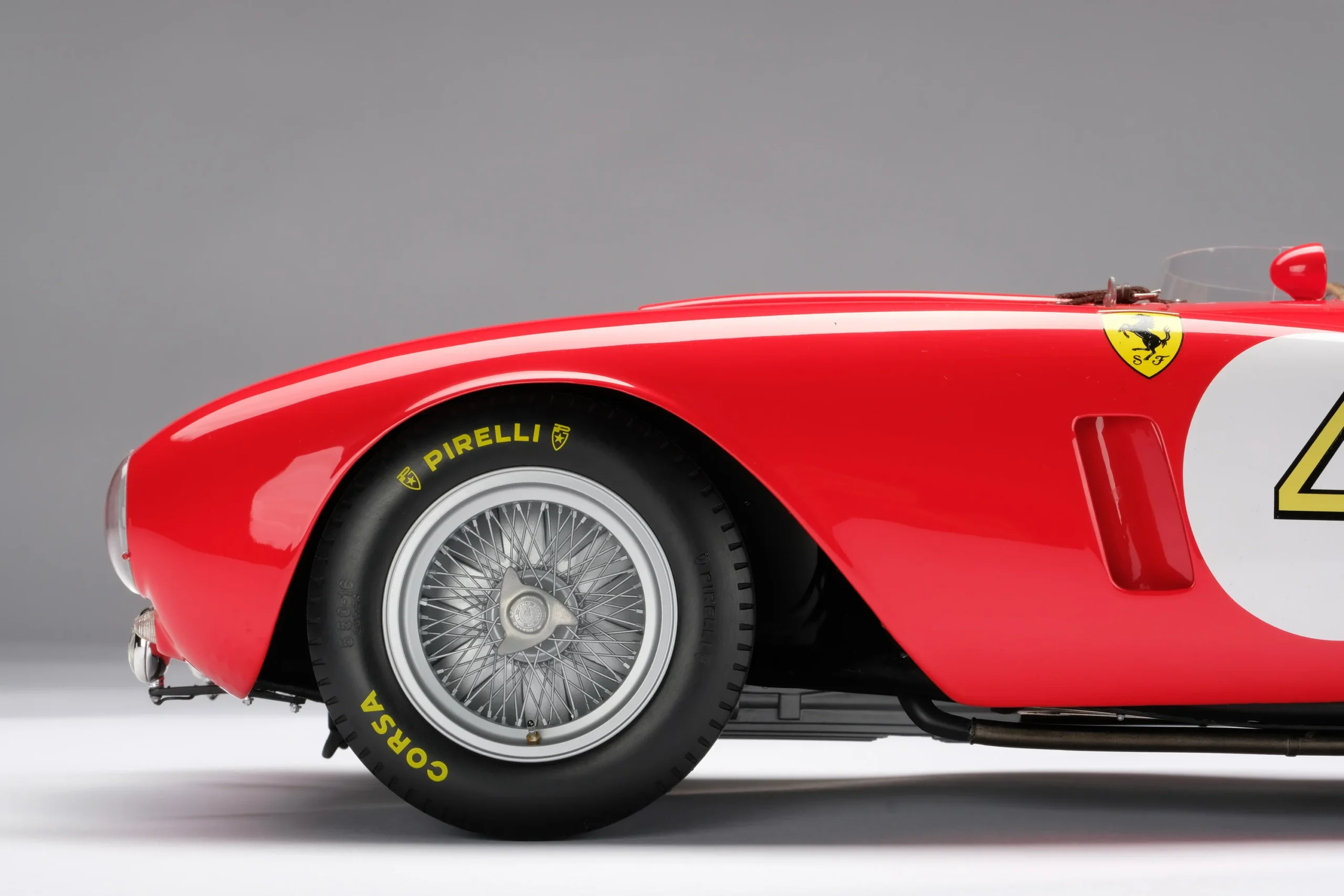
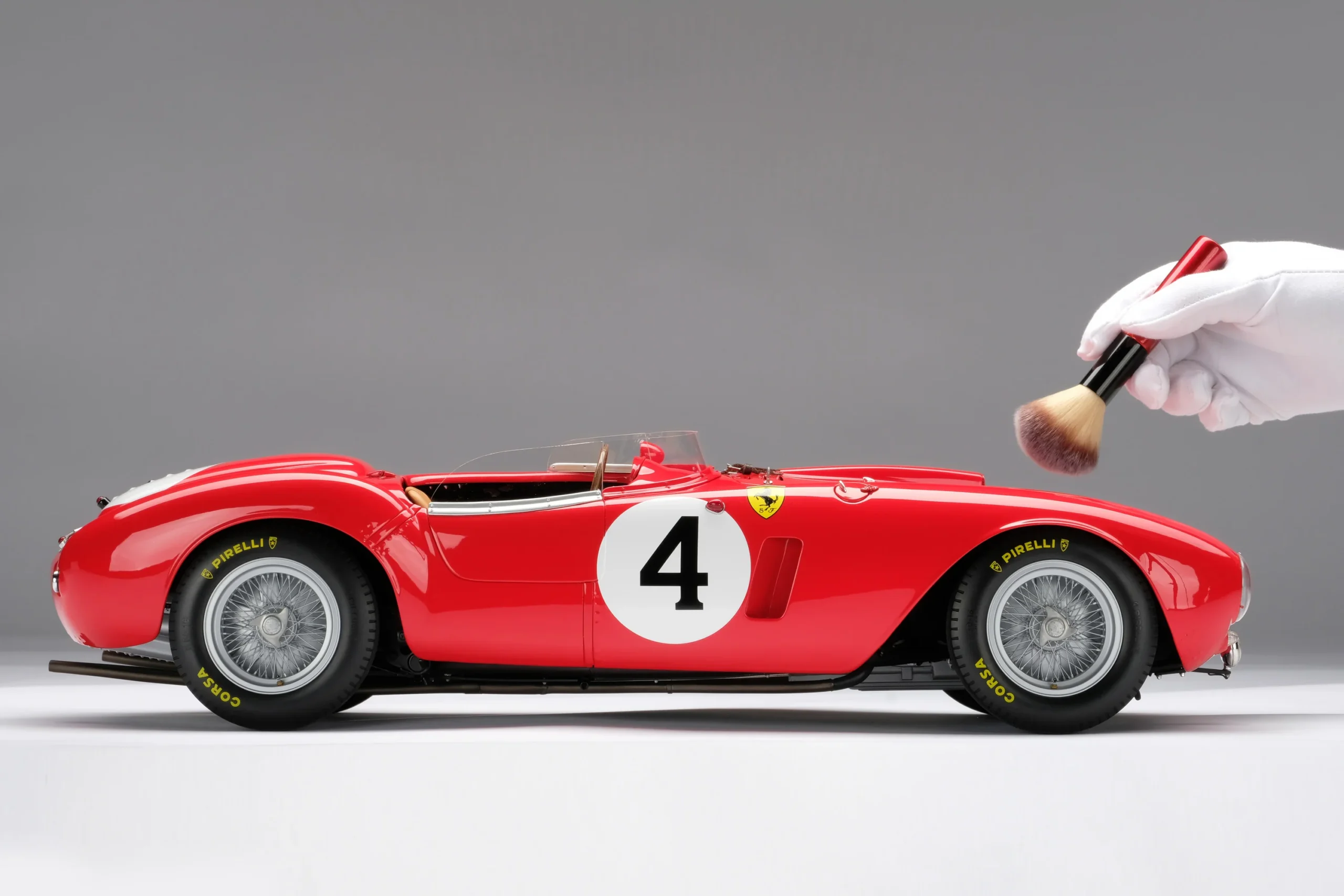
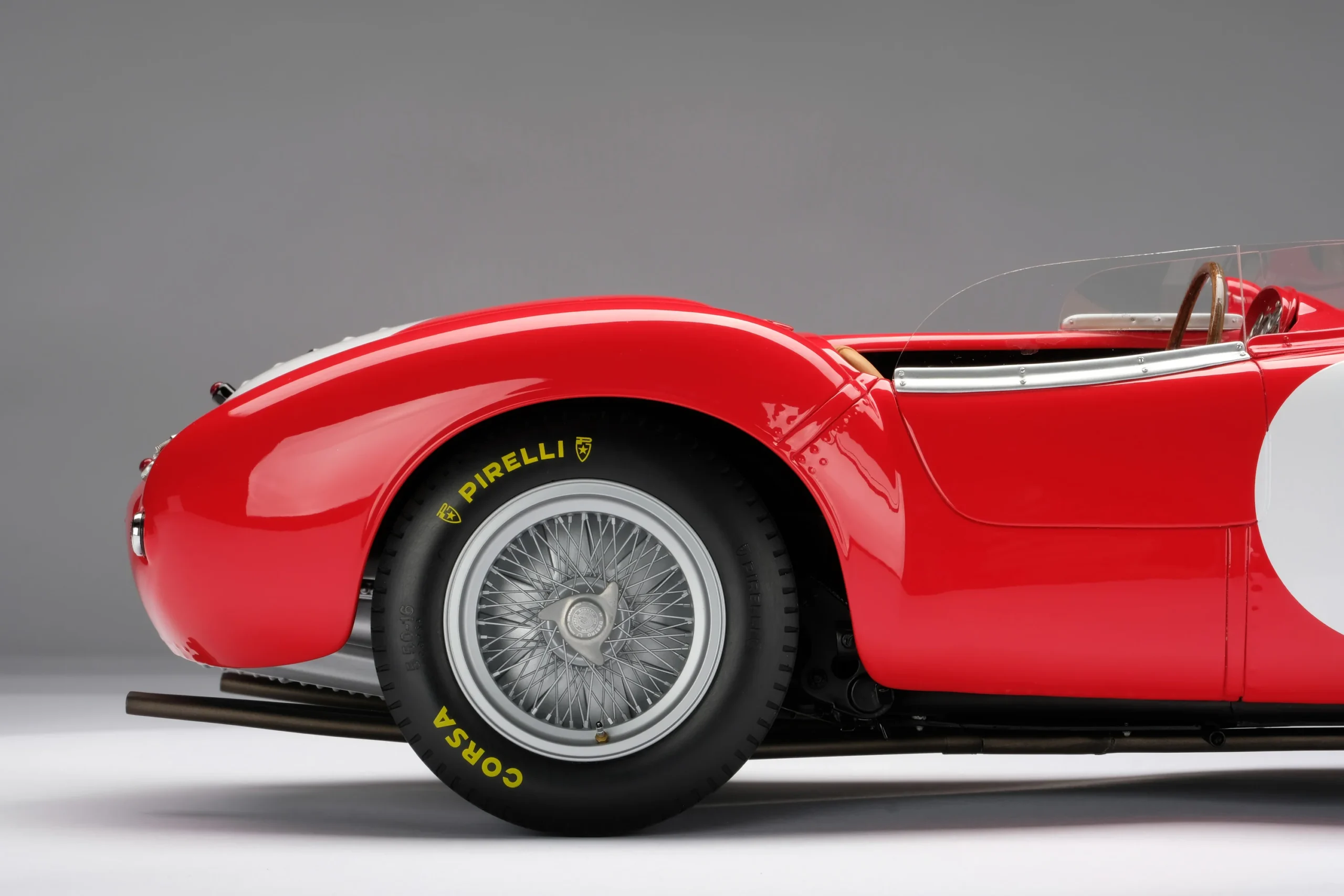
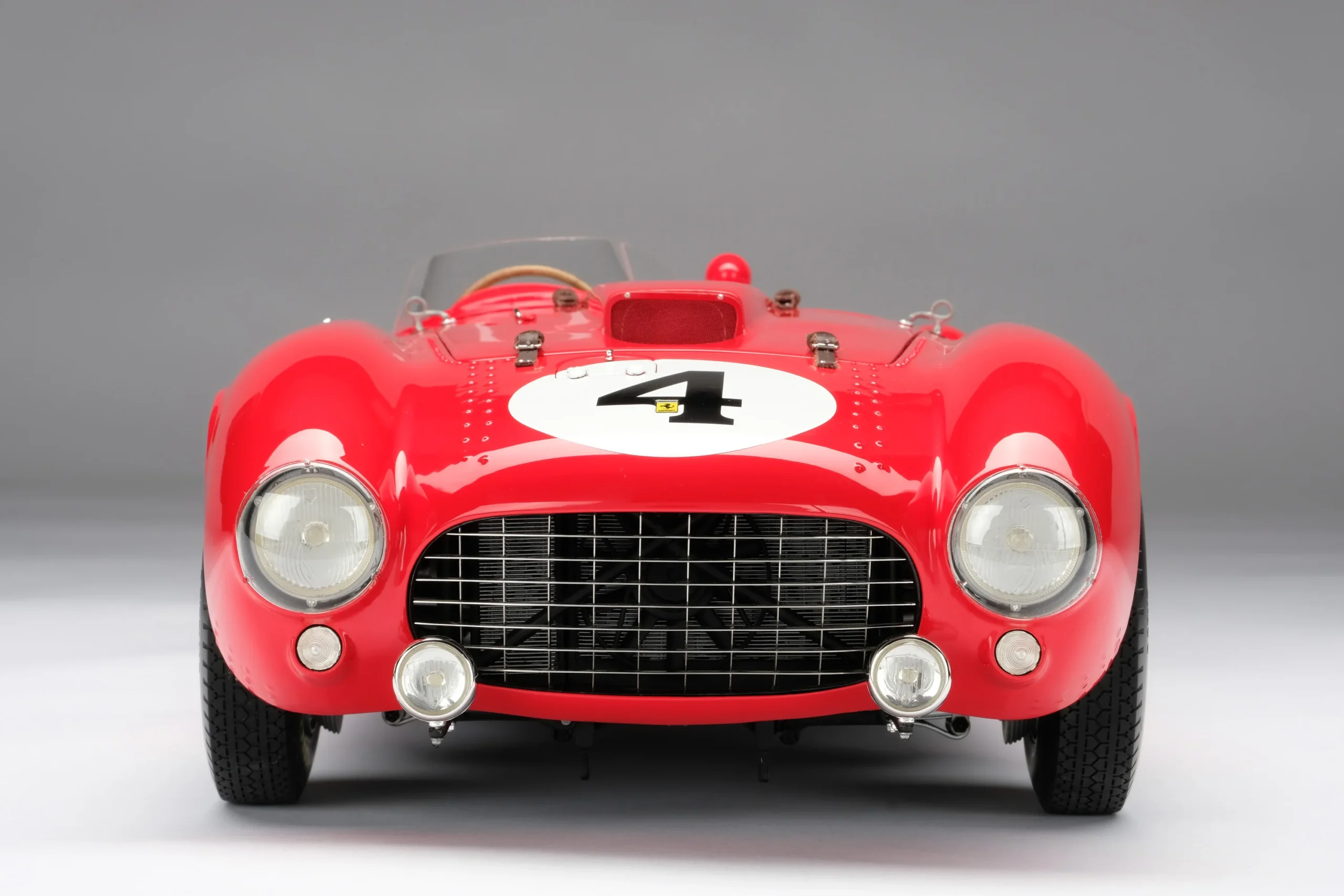
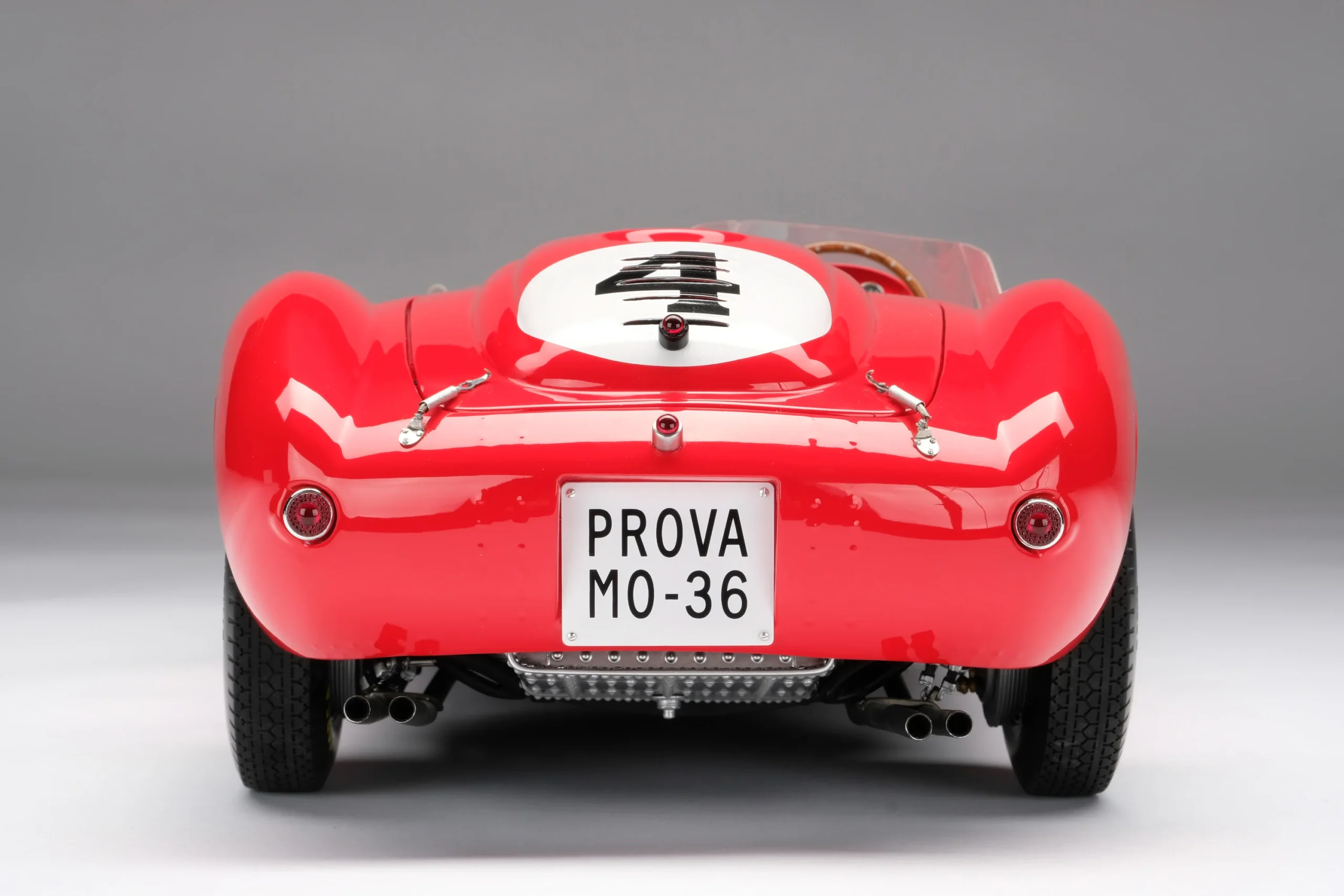
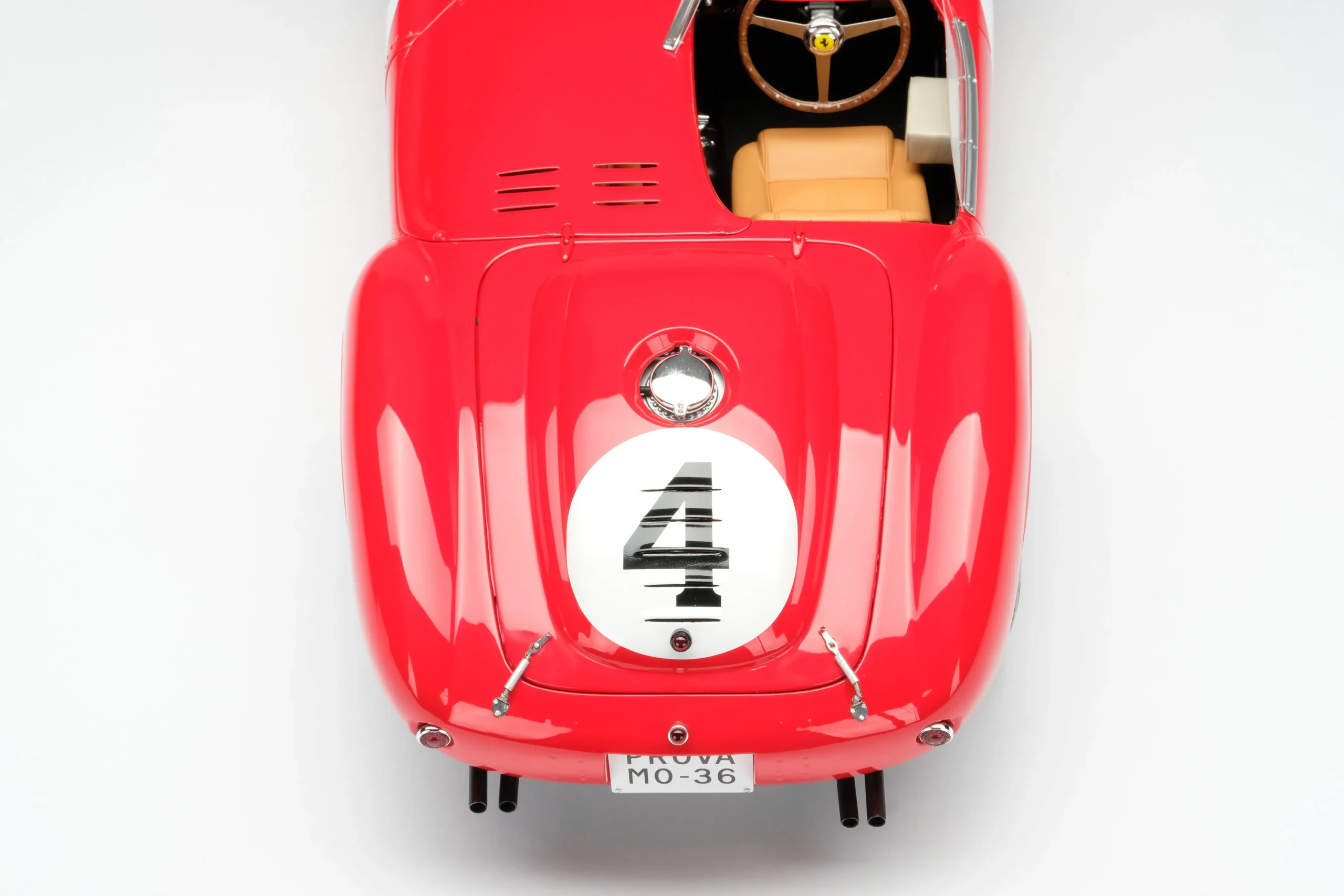
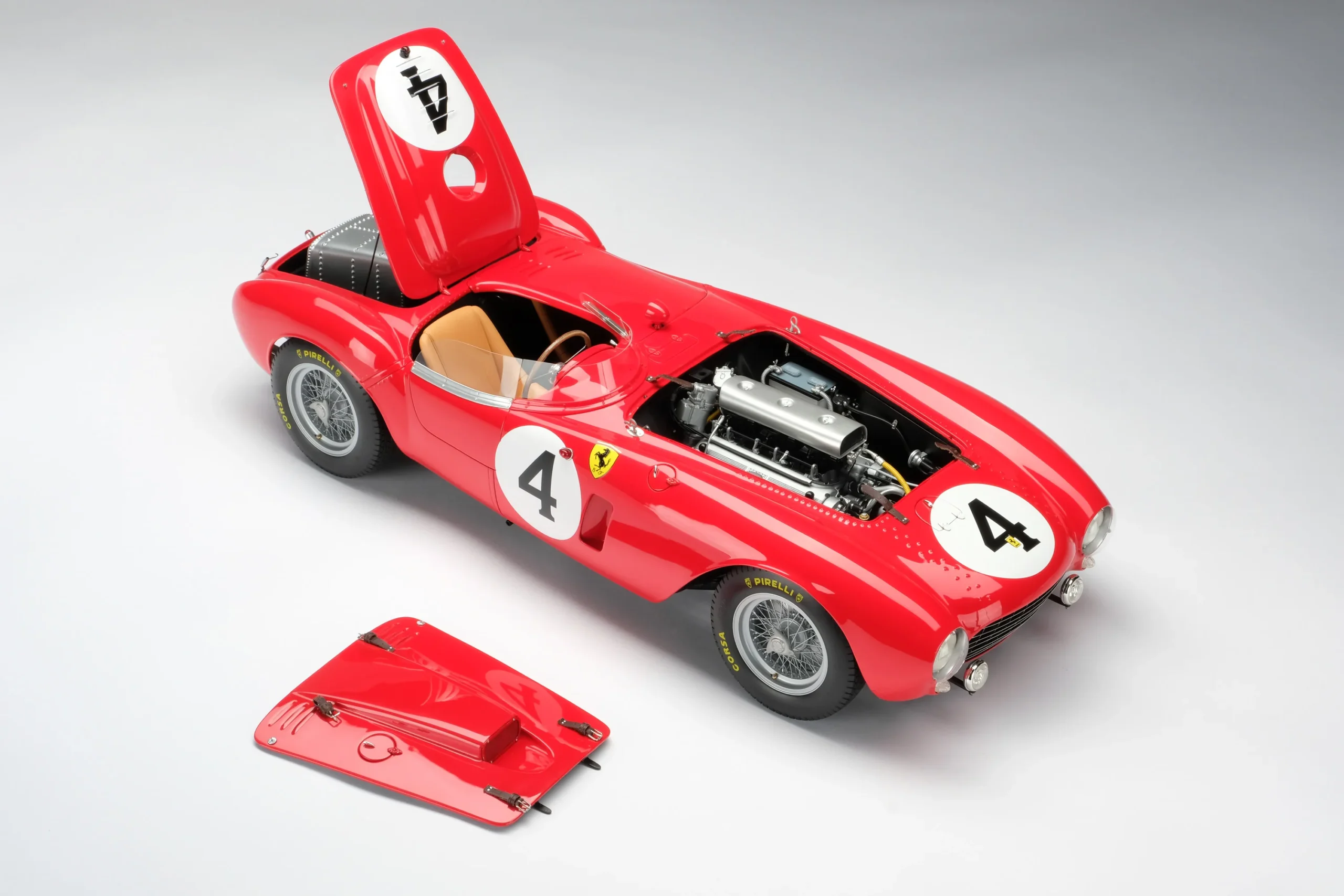
Amalgam Ferrari 375 Plus (1954) Le Mans Winner – 1/8
- Limited edition of 199 pieces
- As driven to victory by José Froilán González and Maurice Trintignant at the 24 Hours of Le Mans on the Circuit de la Sarthe on 12 and 13 June 1954
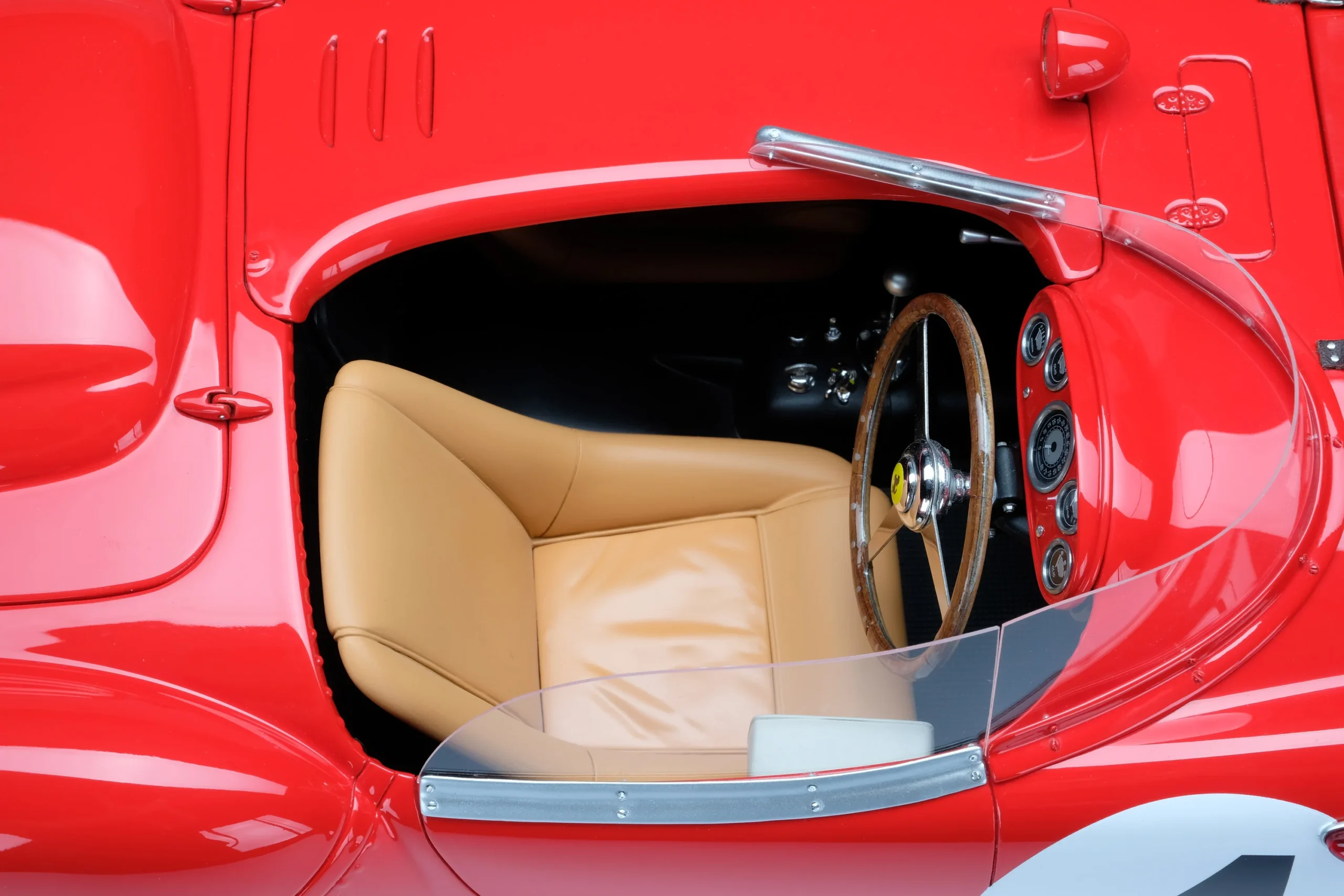
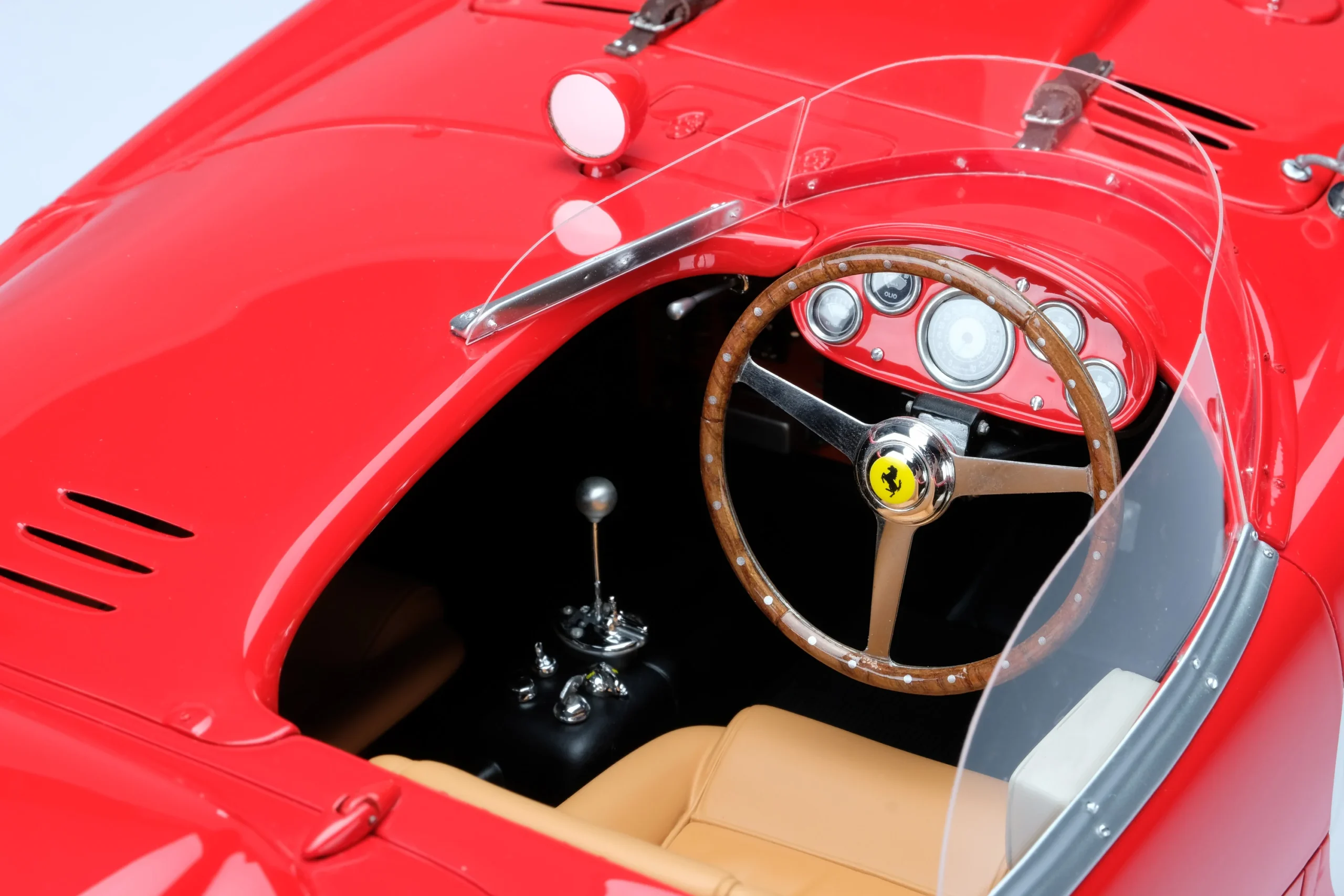
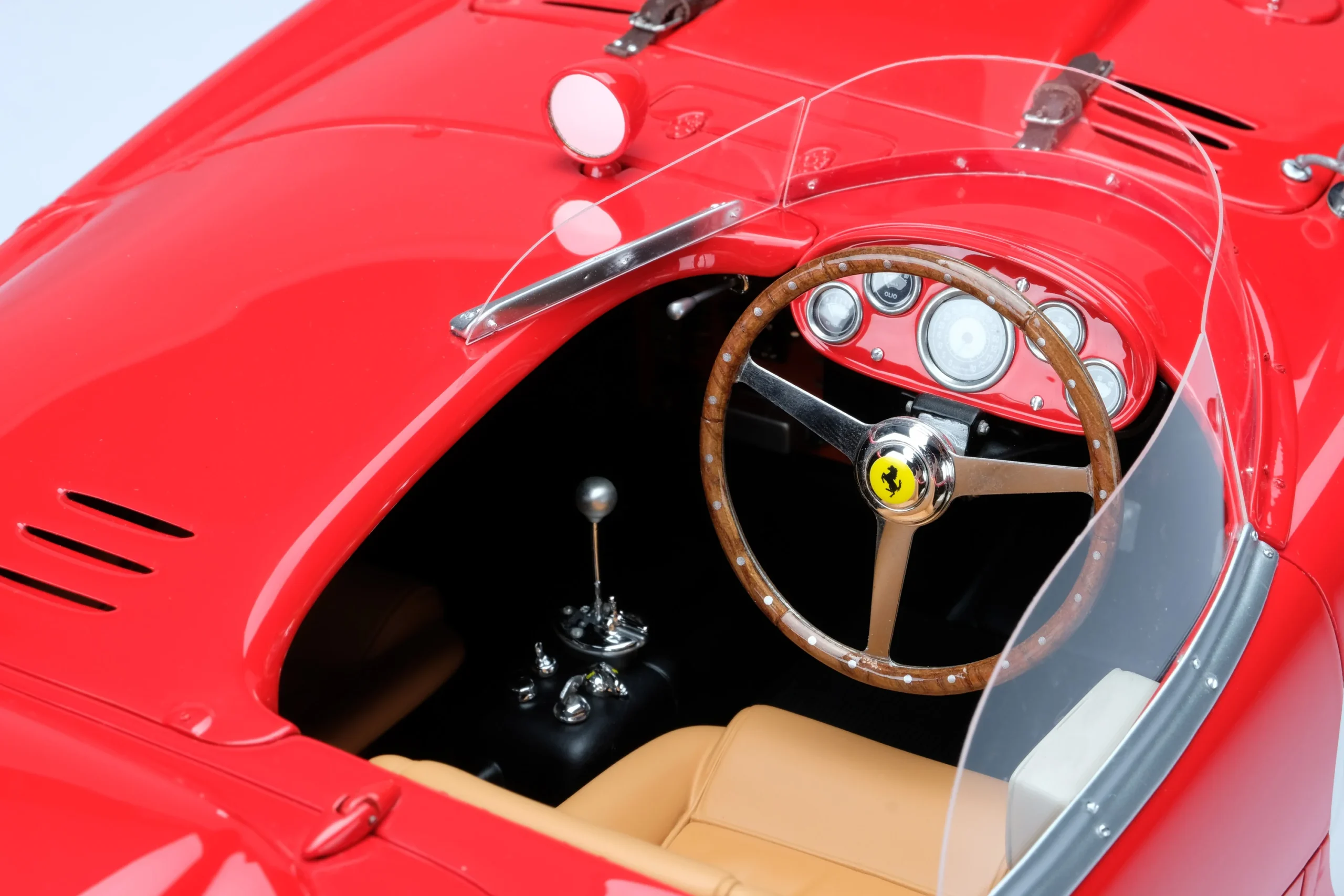
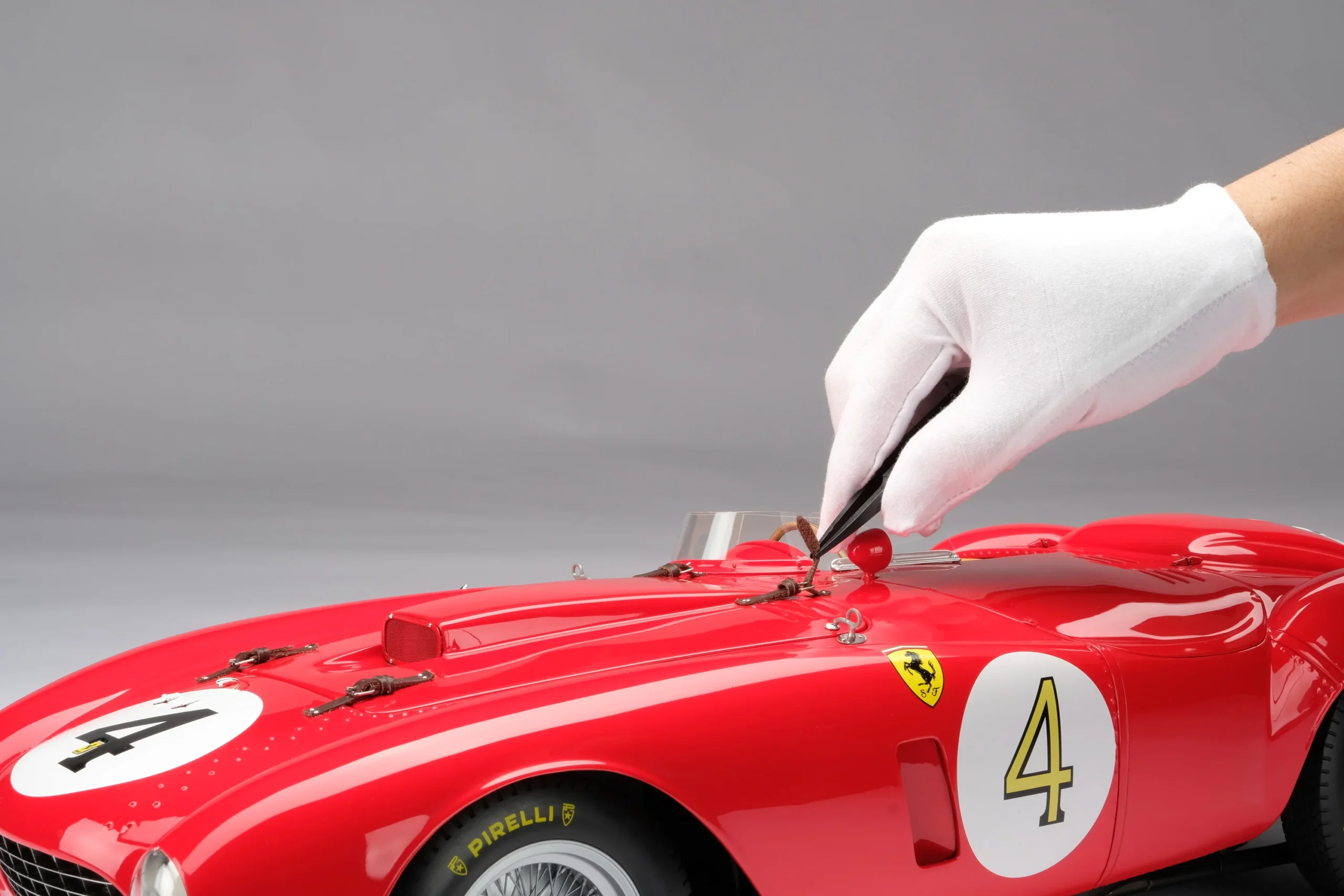
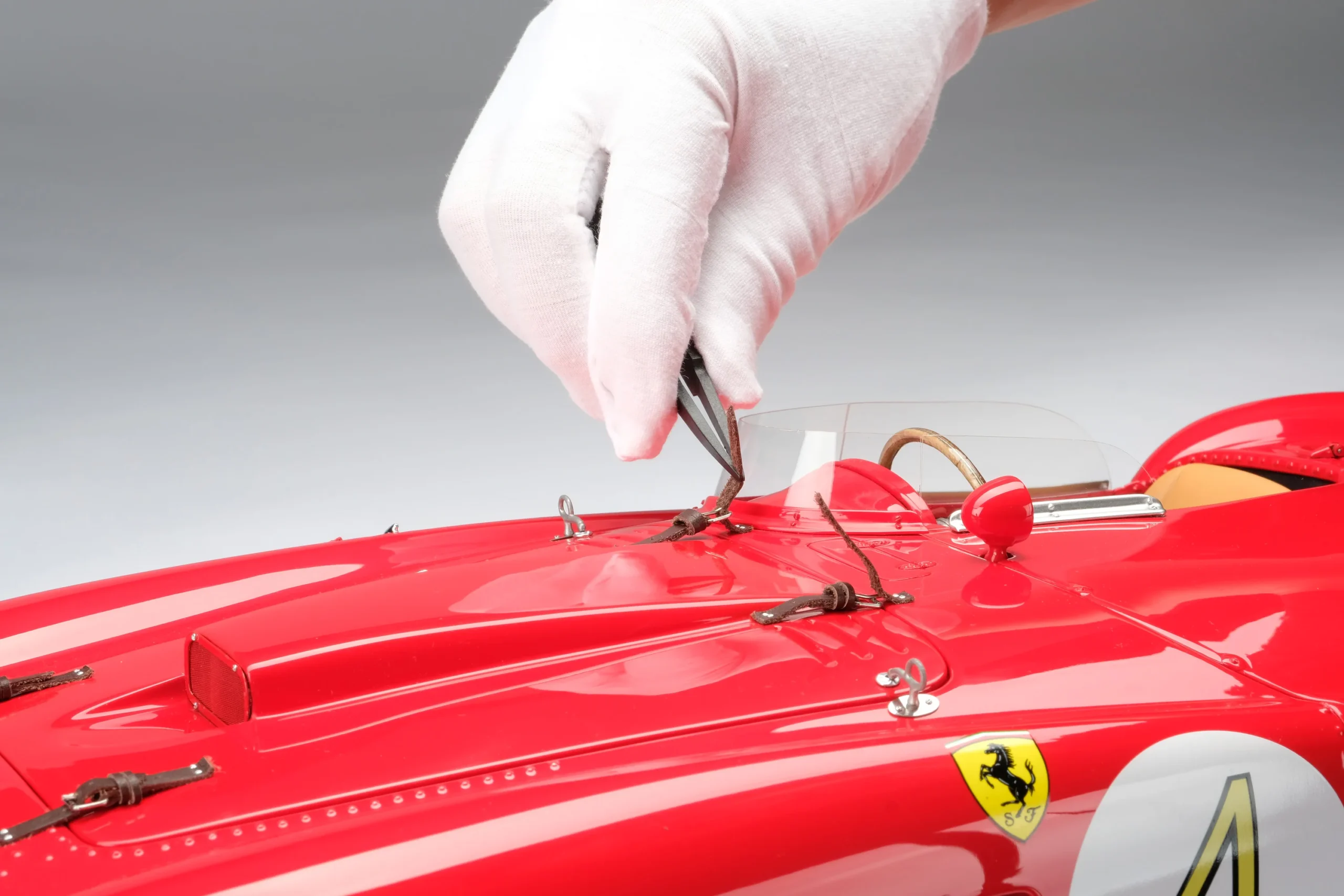
- Every model hand-built and assembled by a small team of craftsmen
- 1:8 scale model, over 56 cm/22 inches long
- Made from the highest quality materials
- Over 4000 hours to develop the model
- Over 400 hours to build each model
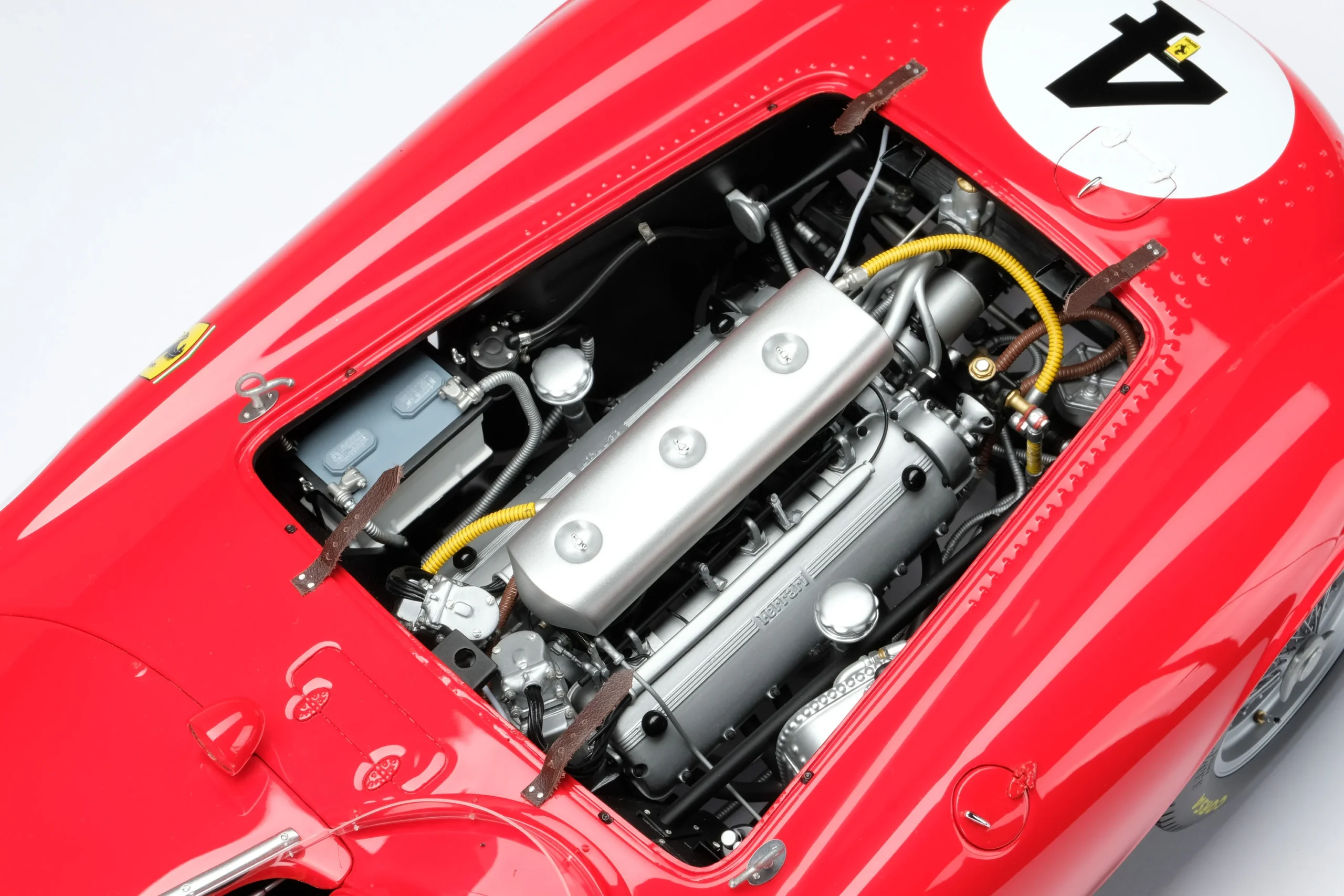
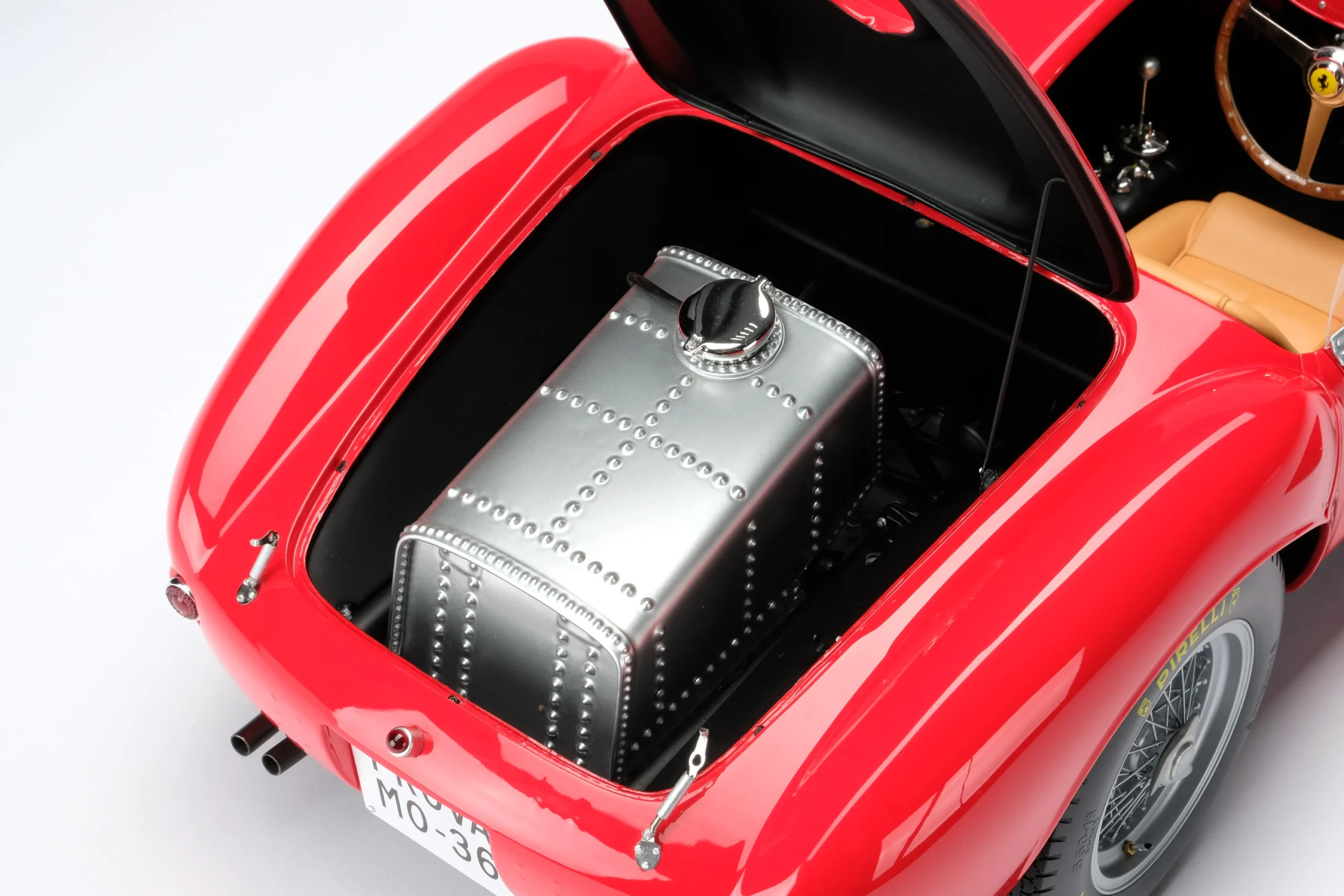
- Thousands of precisely engineered parts: Castings, photo etchings and CNC machined metal components
- Original CAD designs created from scans of an original car
- Archive images and colour codes from Scuderia Ferrari
- Officially licensed product for the 24 Hours of Le Mans
The Ferrari 375 Plus, one of the most important cars in Ferrari's illustrious history, was built to continue the success of the 375 MM, which led Ferrari to victory in the inaugural FIA World Sportscar Championship in 1953. Not suited to the sophisticated new 8-cylinder Formula 1 designs of Mercedes-Benz and Lancia, or even the 6-cylinder 250F of Maserati, Enzo Ferrari instead focused his attentions on perfecting a range of large-displacement sportscars. The result was known by the French racing community as „Le Monstre“ and by the British as „The Fearsome Four-Nine“. The 375 Plus competed and won at the most prestigious international races, giving Ferrari its first factory win at Le Mans, and cementing itself into sportscar legend in the process.
Taking the 375 MM as a starting point and the 375 Grand Prix car as inspiration, Aurelio Lampredi developed a truly potent 4.9-litre V12 engine, rated at almost 350bhp. The engine featured a single spark plug per cylinder configuration with dual magnetos and was fed by three Weber 46 DCF/3 carburettors. Consequently, the 375 Plus was capable of accelerating to speeds of around 175mph, an incredible feat for a car produced in the 1950s.
Pinin Farina and Carrozzeria Vignale designed the aluminium body, which featured flush wheelarches and a pronounced boot bulge to accommodate the car's spare wheel and 190-litre long-range fuel tank. The 375 Plus's new, strengthened chassis was constructed from steel tubing and, although it retained the same front suspension as its predecessors, the rear suspension was fitted with a new De Dion axle, double radius arms with transverse leaf springs, and Houdaille shock absorbers. The 375 Plus's new setup offered improved stability, balance, and roadholding at higher speeds.
The Ferrari 375 Plus secured a resounding victory in its debut race in Agadir, Morocco, driven by Giuseppe ‚Nino‘ Farina in February 1954. Although the same driver and car would retire from the Dakar Grand Prix the following week, they set a record-breaking fastest lap before doing so. In April, Umberto Maglioli and Nino Cassani drove a single 375 Plus in the Giro di Sicilia and, after just four hours of racing, were leading by three and a half minutes before the usually reliable Maglioli crashed the car, ending any hope of victory. Ferrari entered four cars in the Mille Miglia in May, although unfortunately none reached the chequered flag. Maglioli came closest to victory as he chased down Alberto Ascari’s leading Lancia before a single split pin fell out and the gearbox failed. This disappointment only served to spur Ferrari on, as José Froilán González celebrated a commanding triumph two weeks later at the Formula 1 support sports car race at Silverstone, leading virtually from start to finish and sensationally lapping the last-placed car of the 27 starters three times. The 1954 Le Mans 24 Hours followed. González, now partnered with Maurice Trintignant, emerged victorious from a race heavily influenced by the weather. It was a thrilling duel with Duncan Hamilton and Tony Rolt’s Jaguar D-Type right up to the finish, resulting in the closest finish at the Circuit de la Sarthe since 1933: less than 5 km (just half a lap). Ultimately, it was Ferrari that would win the most prestigious prize in sports car racing for the second time. The formidable „Four-Nines“ would not be driven by the Ferrari factory team again, but a number of entries for the five-day Carrera Panamericana in Mexico came from Mexico and the United States. Maglioli secured a commanding victory, finishing 25 minutes ahead of a 375 MM and almost two hours ahead of a Porsche in third place, which secured the maximum points for the Italian marque in the World Sportscar Championship.
Ferrari built just five examples, with chassis numbers 0384, 0386, 0392, 0396 and 0398, all bearing the suffix AM (America), making the 375 Plus far less common than the revered Ferrari 250 GTO. In June 2014, 0384 AM was sold at a Bonhams Goodwood Festival of Speed auction for 10,753.450 (18.3 million $ at the time), although this particular example had a controversial ownership history and was ultimately sold following a two-year legal dispute as part of a private settlement.< /p>
This fine 1:8 scale model of the Ferrari 375 Plus was driven to victory by José Froilán González and Maurice Trintignant in the 24 Hours of Le Mans on the Circuit de la Sarthe on 12–13 June 1954. The race was a thriller, affected by heavy rain, and viewed by many as a battle between brute force and science: the Ferrari 375 Plus versus the new 3.4-litre Jaguar D-Type with its sleek, aerodynamic body. Jaguar brought D-Types straight from the factory, so fresh that they still needed painting upon arrival. The British team retained most of their 1953 driver line-up: previous winners Tony Rolt & Duncan Hamilton, runner-up Stirling Moss and Peter Walker, and Peter Whitehead, paired this year with F1 driver Ken Wharton. Ferrari still fielded a team of top drivers despite the absence of Ascari, Farina and Hawthorn: Umberto Maglioli, José Froilán González and Maurice Trintignant were in the current Ferrari F1 works team; with them were Paolo Marzotto, ex-Gordini driver Robert Manzon, and Louis Rosier.
In practice, Ferrari and Jaguar were a cut above the rest of the field. The Jaguars had the edge in handling, braking and top speed, but Ferrari had superior power and acceleration. The race began under dark clouds, and the Ferraris raced into the lead early on. After five laps, the first downpour hit, wiping out the Ferraris’ performance advantage. Within an hour, the gap between the frontrunners and the rest of the field had already grown to a full lap. However, the Jaguars fought their way back through the heavy rain, with Moss taking the lead on lap 22. Wharton’s D-Type was held up early on by a blocked fuel filter, and over the next few hours the Jaguars suffered engine misfires, allowing the Ferraris to extend their lead once more. As night fell, the rain eased off, allowing the Jaguars to re-enter the fray just as the leading Ferraris suffered their first casualty: the Maglioli/Marzotto car, which retired shortly after 11 pm with a broken gearbox. The rain returned and caused problems for the British team; Wharton and Whitehead had issues with the fuel line before retiring with transmission problems of their own. The pair joined Moss and Walker’s retired D-Type, which had suffered a total brake failure at the end of the Mulsanne Straight at 260 km/h. It took two miles of run-off before the car came to a halt. Rolt and Hamilton moved up to second place in the remaining D-Type and set about chasing down the leading Ferrari driven by González and Trintignant. The Rosier/Manzon Ferrari was still running in third place until dawn broke, when the car’s gearbox seized in second gear, forcing it to retire. With nine hours to go, the major rivals were down to just one car each, and as the clouds gathered and the rain became an ever-present threat, the prospects for the aerodynamic D-Type began to look promising.
González and Trintignant could afford to play things cautiously, but any delay would serve to strengthen the pursuing Jaguar. Just as feared, the Ferrari hesitated during a routine restart at a pit stop, which boosted the Jaguar team. The gap closed to just three minutes, but in his haste, Rolt glanced at the bank that came out of Arnage, lapping a slower car, and two minutes were lost in the pits for a bout of improvised thrashings. With ninety minutes left, Trintignant held a two-lap lead, bringing the Ferrari in for a routine stop. González took over, but the V12 refused to restart. Ferrari lost seven minutes as mechanics worked frantically on the engine before discovering that rain had soaked the ignition wiring. Rolt was frantically waved on by his pit crew while the Ferrari was stationary, and when González rejoined the track, he only had a three-minute lead. With lightning and thunder now lashing the circuit, visibility was at a minimum, Rolt pitted and handed over to Hamilton for the final assault on the Ferrari lead. After some exceptional times in dreadful conditions, the lead was whittled down to just 90 seconds. González was exhausted, having neither eaten nor slept the whole weekend, but his pit crew urged him on. As the track dried, he was able to unwind the Ferrari's power again, reaching the chequered flag to win the 24 Hours of Le Mans by just under three minutes, which was approximately half a lap (less than 5 km). the closest finish for the race since 1933.
The Argentinian winner had cemented his special place in Ferrari's history: three years previously, he had achieved Ferrari's first F1 victory, and now, on his last appearance at La Sarthe, he was delivering their first works victory at Le Mans. This model has been handcrafted and finished in our workshops in collaboration with and with the support of Ferrari, with respect to original paint schemes, materials, archival pictures and drawings. The use of extremely accurate digital scanning of the original car has allowed us to perfectly replicate every detail on a 1:18 scale. Furthermore, it has undergone detailed scrutiny by both engineering and design teams to ensure the complete accuracy of its representation.
The Ferrari 375 Plus, as used in the 1954 24 Hours of Le Mans, is limited to 199 pieces in 1:8 scale.
Item number: M5344-L54

 German
  English
  Italian
  French
  Spanish
  Arabic
  Japanese
Reviews
There are no reviews yet.